





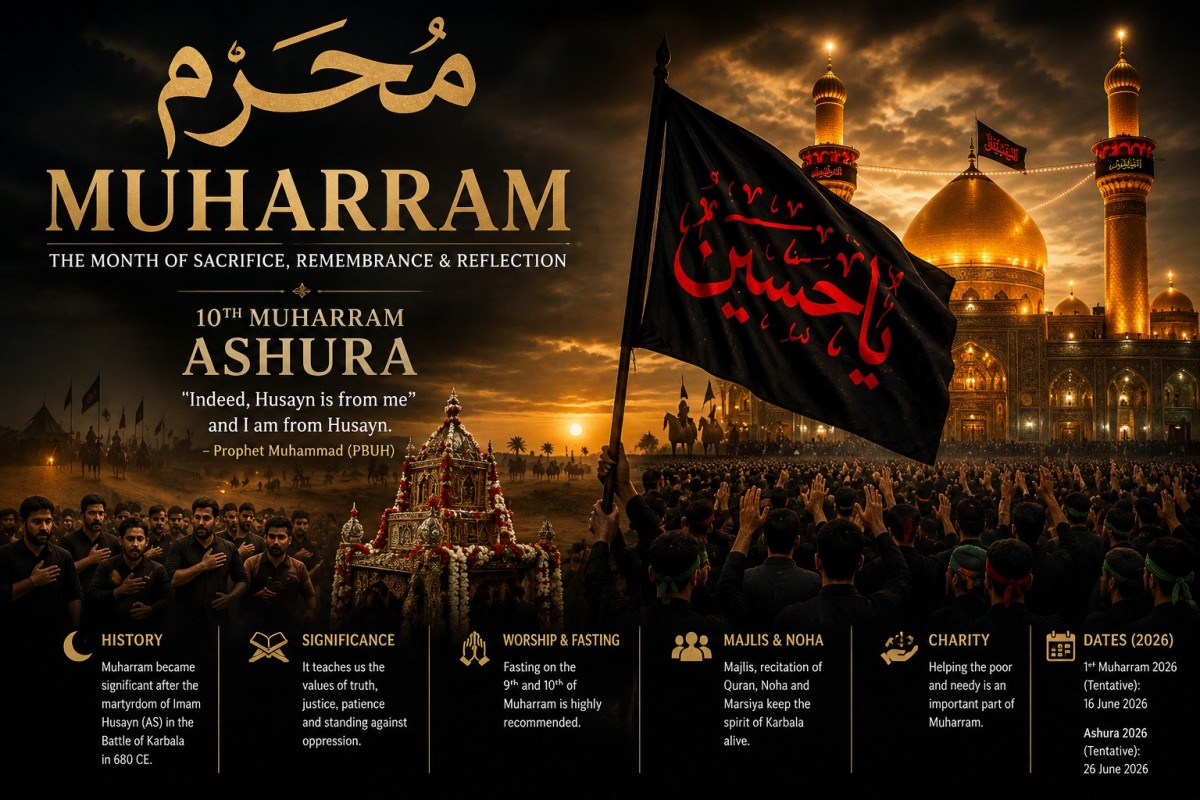
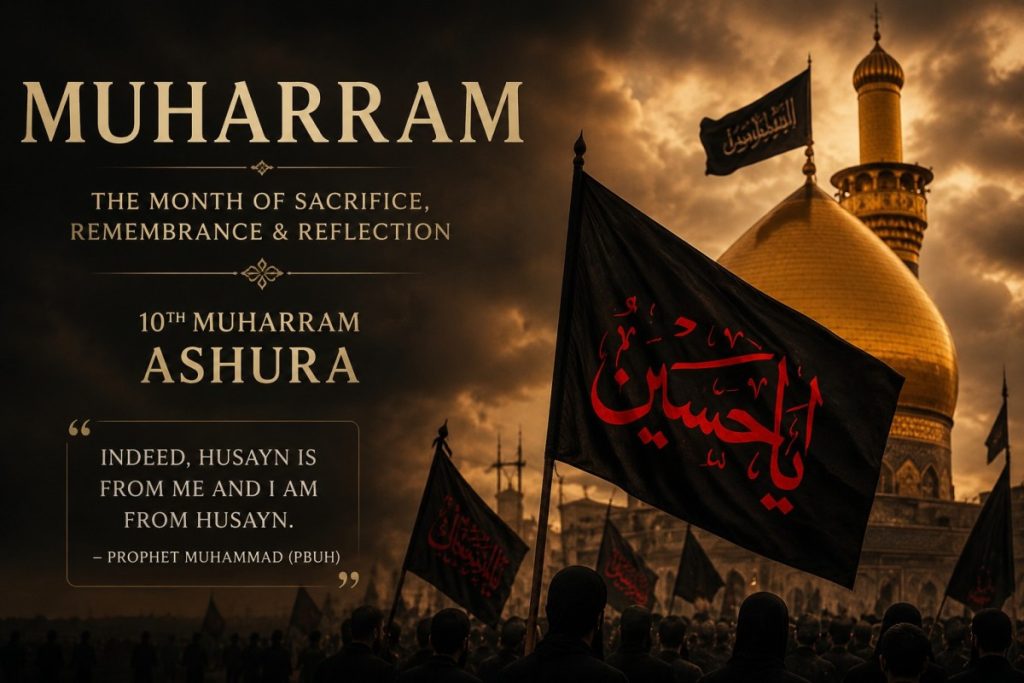
Muharram is one of the holiest months in Islam and marks the beginning of the Islamic New Year 2026 . Muslims around the world observe this sacred month with prayers, fasting, remembrance ceremonies, and acts of charity. Muharram holds deep spiritual and historical importance because it commemorates the sacrifice of Imam Husayn ibn Ali during the Battle of Karbala.
In 2026, Muslims across different countries will gather in mosques, imambaras, and public places to honor the values of truth, sacrifice, patience, and justice associated with Muharram.
Also Read: Brazilian Model Larissa Responds to Allegations of Rahul Gandhi’s Vote Chori Connection
Muharram 2026 Date and Timings
Muharram follows the Islamic lunar calendar, so the dates change every year according to moon sightings. In 2026, Muharram is expected to begin in late June or early July depending on the visibility of the moon in different countries.
Expected Muharram 2026 Timings
- Beginning of Muharram 2026: Expected after sunset on June 16, 2026
- Ashura (10th Muharram): Expected on June 26, 2026
- Timings may vary according to local moon sightings and Islamic authorities.
Muslims usually begin religious observances after the evening Maghrib prayer once the new moon appears.
History of Muharram
The word “Muharram” means “sacred” or “forbidden.” Islam recognizes Muharram as one of the four sacred months mentioned in the Holy Quran. During these months, Muslims focus on peace, worship, and spiritual reflection.
Muharram became especially significant after the tragic Battle of Karbala in 680 CE. Imam Husayn ibn Ali, the grandson of Prophet Muhammad, refused to accept injustice under the rule of Yazid I. Imam Husayn and his companions fought bravely in Karbala despite facing hunger, thirst, and overwhelming opposition.
On the 10th day of Muharram, known as Ashura, Imam Husayn and many of his family members and followers attained martyrdom. Their sacrifice became a symbol of truth, courage, and resistance against oppression.
Religious Importance of Muharram
Muharram holds great importance for both Sunni and Shia Muslims, though they observe the month in different ways.
Importance for Shia Muslims
Shia Muslims mourn the martyrdom of Imam Husayn through majlis gatherings, processions, elegies, and prayers. They remember the suffering faced by the family of Prophet Muhammad in Karbala.
Importance for Sunni Muslims
Sunni Muslims observe fasting on Ashura and engage in prayers and charity. Islamic traditions mention that Prophet Muhammad fasted on Ashura to thank Allah for saving Prophet Moses and his followers.
Step-by-Step Muharram Observance Process
Muslims observe Muharram with devotion and discipline throughout the first ten days of the month.
Step 1: Moon Sighting
Islamic authorities and religious scholars announce the beginning of Muharram after sighting the new moon. Mosques and Islamic organizations share official dates with the public.
Step 2: Begin Religious Gatherings
Many Muslims start attending prayer meetings and religious lectures from the first night of Muharram. Scholars narrate the events of Karbala and discuss Islamic teachings.
Step 3: Majlis and Mourning Ceremonies
Shia communities organize majlis gatherings where speakers explain the sacrifice of Imam Husayn. Participants recite nohas and marsiyas to express grief and remembrance.
Step 4: Fasting During Muharram
Many Sunni Muslims fast on the 9th and 10th days of Muharram or only on Ashura. Fasting usually begins before sunrise during Sehri and ends after sunset at Iftar.
Daily Fasting Timing Process
- Wake up before Fajr prayer for Sehri.
- Make the intention for fasting.
- Avoid food and drink during daylight hours.
- Offer prayers and recite the Quran.
- Break the fast after Maghrib prayer.
Step 5: Charity and Helping the Poor
Muslims donate food, water, clothes, and money to needy people during Muharram. Many organizations arrange free food stalls and water distribution services.
Step 6: Ashura Observance
The 10th day of Muharram, Ashura, remains the most important day of the month. Large processions, mourning events, and prayer gatherings take place in many countries.
Some devotees carry symbolic tazias representing the mausoleum of Imam Husayn. Communities also organize sermons that highlight the lessons of Karbala.
Muharram Traditions Around the World
Different countries observe Muharram according to local customs and traditions.
India
Cities such as Lucknow, Hyderabad, Mumbai, Srinagar, and Nagpur hold major Muharram processions and majlis gatherings. Thousands of people participate in religious events every year.
Iraq
Millions of pilgrims travel to Karbala to visit the shrine of Imam Husayn during Muharram.
Iran and Pakistan
Religious processions, chest-beating rituals, and public sermons form an important part of Muharram observances.
Important Lessons from Muharram
Muharram teaches humanity several powerful lessons.
- Stand for truth and justice.
- Remain patient during hardships.
- Protect human values and dignity.
- Help poor and needy people.
- Stay devoted to faith and morality.
The sacrifice of Imam Husayn continues to inspire people across generations and religions.
Conclusion
Muharram 2026 will once again remind Muslims about sacrifice, courage, spirituality, and devotion. The month encourages believers to strengthen their faith, help others, and remember the historic sacrifice made at Karbala.
Through prayers, fasting, charity, and remembrance ceremonies, Muslims honor the teachings and values associated with Muharram and continue to pass these traditions to future generations.
Also Read : Nagpur Style Mango Mastani Recipe: Perfect Blend of Mango, Ice Cream and Dry Fruits