





New Delhi, January 30, 2026 — India and the European Union (EU) have concluded a landmark Free Trade Agreement (FTA) after nearly two decades of negotiations, creating what leaders are calling the “Mother of All Deals.” This pact marks one of the most ambitious and far-reaching trade agreements in recent history, covering around 2 billion people and a significant share of global economic activity.
Historic Signing and Strategic Importance
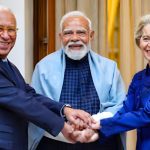
On 27 January 2026, Indian Prime Minister Narendra Modi and European Commission President Ursula von der Leyen signed the India-EU FTA at Hyderabad House in New Delhi. Both leaders described the agreement as historic and transformative for bilateral trade and global economic cooperation.
The deal cements a strategic partnership between India—now one of the world’s fastest-growing major economies—and the EU, the world’s second-largest economic bloc. Together, they represent nearly 25% of global GDP and roughly one-third of global trade.
Also Read: Basant Panchami and Netaji Jayanti Celebrated Nationwide on January 23, 2026
Breakdown of Key Provisions
Tariff Reductions and Market Access
The FTA eliminates or significantly reduces tariffs on the majority of goods traded between India and the EU:
- India will reduce or remove duties on more than 96% of EU exports by value, including automobiles, machinery, wine, spirits, and processed foods.
- The EU will eliminate tariffs on over 99% of Indian exports, giving Indian textiles, leather, gems and jewellery, marine products, chemicals, and other goods duty-free access to the EU market.
Annual tariff savings for EU exporters are expected to reach up to €4 billion, while Indian firms stand to benefit from broader access to European markets.
Services and Investment
The agreement goes beyond goods trade:
- India gains access to 144 EU services subsectors, including IT, finance, professional services, and education.
- EU markets open 102 sectors to Indian companies, enhancing cross-border investment opportunities.
The pact also includes customs facilitation measures, stronger intellectual property protection, and support for small and medium-sized enterprises (SMEs) to engage in bilateral trade more effectively.
Mobility and Strategic Cooperation
The FTA establishes frameworks that facilitate mobility for business visitors and professionals. It lays the groundwork for potential future agreements on student exchanges and social security arrangements.
Additionally, leaders agreed on enhanced security and defence cooperation, recognizing shared interests amid global geopolitical shifts.
Economic and Consumer Impact
For Indian consumers, the agreement is expected to bring lower prices on many European products over time, including olive oil, chocolates, pasta, and premium wines, as tariffs are phased down.
Manufacturers and exporters in India’s textiles, leather, and gems sectors will gain easier access to the EU market, potentially boosting employment and exports.
Experts also say the deal will help integrate India deeper into global value chains, reducing dependence on single-region supply networks and increasing competitiveness.
Challenges and Next Steps
Despite its promise, the deal faces some hurdles before coming into force:
- It must be ratified by the European Parliament, EU member states, and India’s Cabinet.
- Implementation is expected to begin by early 2027, following legal reviews and ratification procedures.
Analysts caution that while tariff cuts are significant, non-tariff barriers and regulatory compliance will influence how quickly businesses can capitalize on new opportunities.
Conclusion
The India-EU Free Trade Agreement represents a historic expansion of economic cooperation and trade liberalisation between two global powerhouses. By reducing tariffs, opening services markets, and fostering strategic collaboration, the deal sets a new benchmark in international trade. As it moves towards ratification and implementation, stakeholders across industries are preparing to seize the opportunities this pact offers. If executed effectively, the “Mother of All Deals” could reshape global trade patterns and strengthen India’s role as a central player in the international economy.
Also read: Sources: Mohsin Naqvi Presents Trophy to UAE Board as BCCI Considers Impeachment Action


