





Introduction
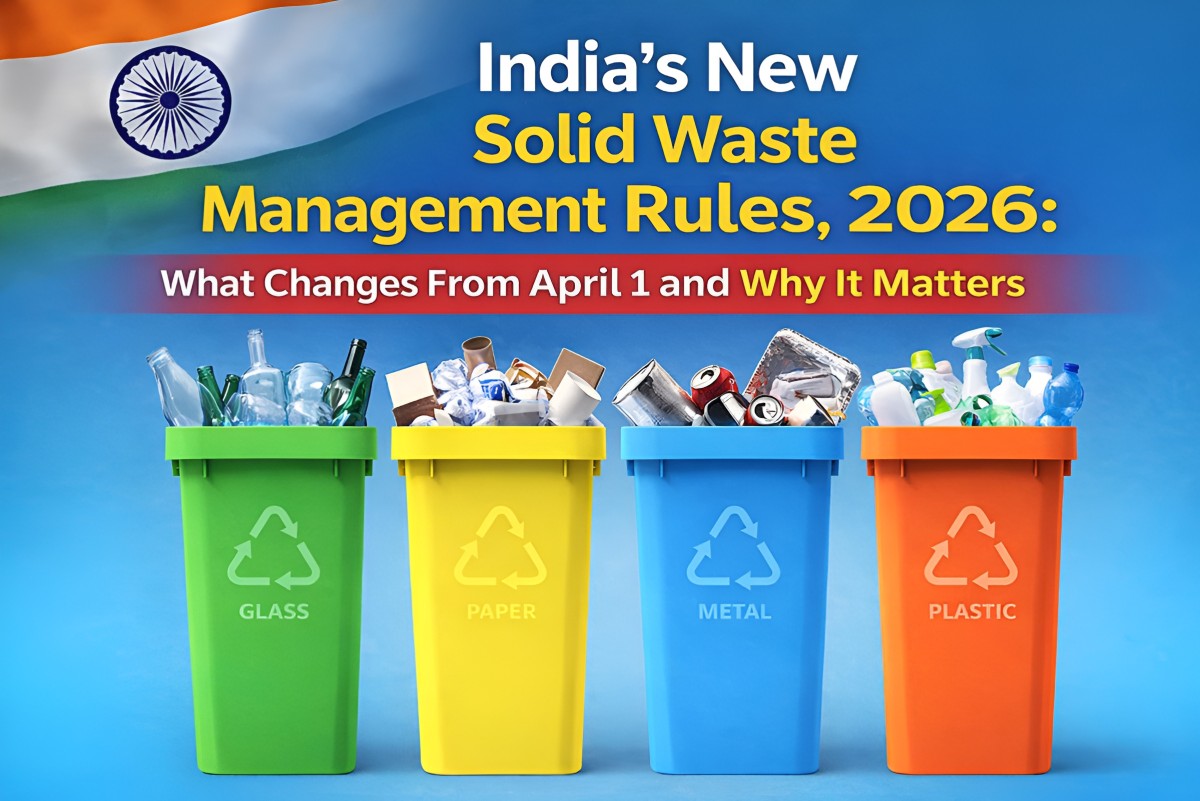
The Government of India has introduced the Solid Waste Management (SWM) Rules 2026 to enforce strict waste segregation and improve accountability in waste handling. These updated rules aim to tackle the growing waste problem, protect the environment, and promote sustainable practices. By making segregation and responsibility compulsory, the government seeks to transform how citizens and institutions manage waste.
Also Read: Brazilian Model Larissa Responds to Allegations of Rahul Gandhi’s Vote Chori Connection
Mandatory Waste Segregation
The SWM Rules 2026 require every household, institution, and business to segregate waste at the source. Citizens must separate waste into four categories—wet waste, dry waste, sanitary waste, and special care waste. This system ensures that authorities can process each type of waste efficiently.
Local bodies now monitor segregation practices closely. They encourage door-to-door collection of properly separated waste and reject mixed waste. This strict approach helps increase recycling rates and reduces the burden on landfills.
Increased Accountability
The new rules place strong responsibility on bulk waste generators, such as housing societies, offices, hotels, and educational institutions. These entities must treat or manage their waste on-site or coordinate with authorized waste processors.
Authorities have also enforced the “polluter pays” principle. They impose fines and penalties on individuals or organizations that fail to follow waste management rules. This measure ensures that everyone takes responsibility for the waste they produce.
Role of Local Authorities
Municipal corporations and local bodies play a crucial role in implementing these rules. They must provide proper infrastructure for waste collection, transportation, and processing. Authorities also conduct awareness campaigns to educate citizens about segregation and responsible disposal.
In addition, local governments must track waste management systems and ensure compliance with the new regulations. Their active involvement is essential for the success of the SWM Rules 2026
Environmental Benefits
The SWM Rules 2026 promote recycling, composting, and waste reduction. By reducing the amount of mixed waste, these rules help lower pollution levels in land, air, and water. They also minimize the use of landfills and encourage the reuse of materials.
The rules support the development of a circular economy, where waste becomes a resource. This approach not only protects the environment but also creates economic opportunities in recycling and waste management sectors.
Conclusion
The Solid Waste Management Rules 2026 mark a major step toward cleaner and more sustainable living in India. By mandating strict waste segregation and enforcing accountability, the government has strengthened environmental protection efforts. With active participation from citizens, businesses, and authorities, these rules can significantly reduce pollution and build a healthier future for the nation.
Also Read: NCERT apologises to Supreme Court withdraws Class 8 textbook after controversy