





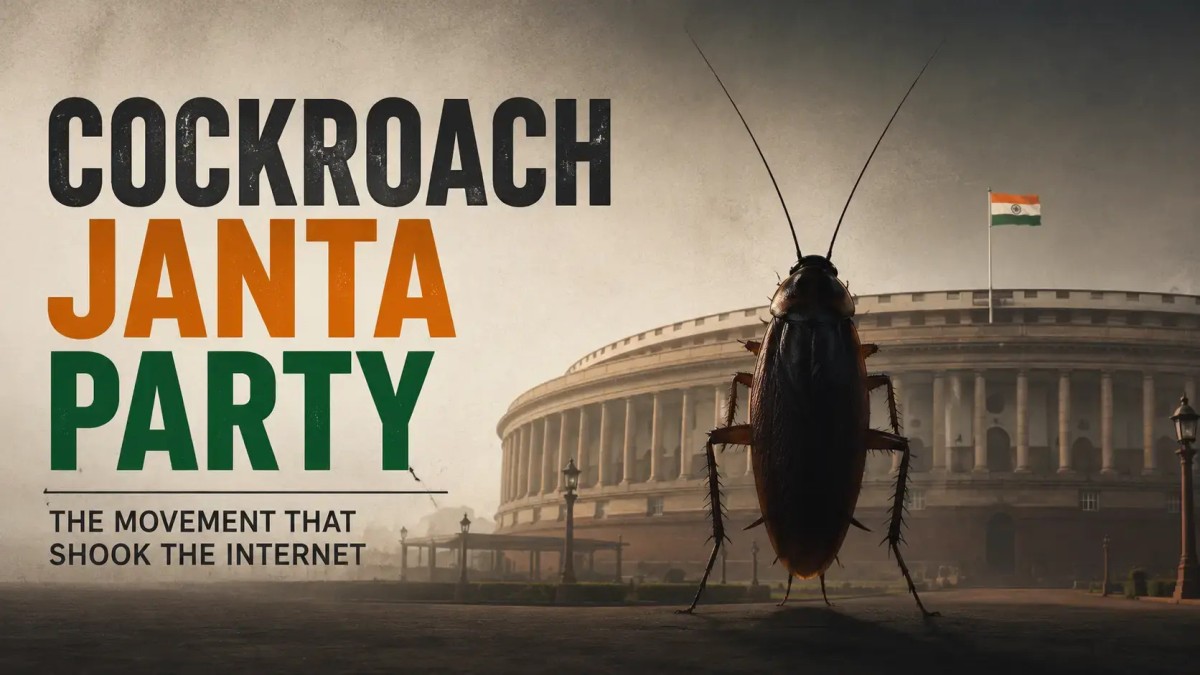
India’s internet culture has found a new obsession — the “Cockroach Janta Party” (CJP). What started as a meme-driven satire campaign has rapidly transformed into one of the most talked-about online movements among Gen Z users. Across social media platforms, especially Instagram and X, young users are sharing humorous political edits, sarcastic slogans, and viral reels connected to the fictional party.
The trend reflects growing frustration among young citizens over unemployment, inflation, political debates, and the constant flood of online propaganda. Instead of expressing anger through traditional protests, Gen Z has chosen satire, memes, and dark humor to make its point. The Cockroach Janta Party has now become a symbol of digital rebellion, where comedy meets criticism.
Also Read: Brazilian Model Larissa Responds to Allegations of Rahul Gandhi’s Vote Chori Connection
✦ How the “Cockroach Janta Party” Started
The movement reportedly began as a satirical social media page mocking modern political culture and online fan wars. Creators used the image of a cockroach because the insect symbolizes survival, adaptability, and resistance — qualities many young people jokingly associate with common citizens surviving daily struggles.
Soon, meme creators began designing fake campaign posters, slogans, party manifestos, and election speeches. The humorous content quickly connected with internet users who were already tired of toxic political arguments online.
Within weeks, hashtags linked to the Cockroach Janta Party started trending, and several pages gained millions of views through short-form video content.
✦ Why Gen Z Is Supporting the Trend
Young Indians are not necessarily supporting a real political organization. Instead, they are using the trend as a form of expression. Many Gen Z users feel disconnected from mainstream political narratives and believe traditional parties ignore issues affecting ordinary youth.
The movement became popular because it mixes humor with relatable frustrations. Topics like expensive education, job scarcity, rising living costs, exam pressure, and social media manipulation frequently appear in CJP-related content.
For many users, sharing memes feels easier and safer than participating in direct political activism.
✦ Social Media Algorithms Fueled the Viral Explosion
Instagram reels, meme pages, and AI-generated videos helped the trend spread rapidly. Viral audio clips and edited speeches gave the fictional party a realistic political appearance, making the satire even more entertaining.
Content creators used exaggerated promises such as:
- “Free Wi-Fi for cockroaches”
- “One-year leave from adulthood”
- “National nap policy”
- “Reservation for tired students”
These absurd campaign promises attracted millions of interactions because they reflected real-life stress through comedy.
Social media algorithms amplified the trend further as users continuously shared, reposted, and remixed the content.
✦ Political Satire Is Becoming India’s New Digital Language
Experts believe the popularity of Cockroach Janta Party highlights a larger shift in how young Indians discuss politics. Earlier generations relied on debates, television discussions, or newspaper columns. Today’s youth communicate through memes, reels, irony, and sarcasm.
Digital satire allows creators to criticize systems without directly targeting individuals. It also helps political conversations reach users who normally avoid serious news content.
Many internet observers compare the trend to global meme-based political movements where humor becomes a tool for commentary and resistance.
✦ Critics Warn About Misinformation Risks
While many users see the trend as harmless entertainment, critics warn that viral satire can sometimes confuse audiences. Fake campaign posters and edited speeches may mislead people who do not understand the joke.
Some analysts also fear that excessive meme culture may reduce serious political discussions into entertainment content. They argue that important public issues require factual debate rather than constant satire.
Despite these concerns, supporters say humor helps people cope with frustration and creates space for free expression online.
✦ Brands and Influencers Join the Trend
As the movement gained popularity, influencers and digital brands quickly jumped onto the trend. Several pages began posting “Cockroach Janta Party”-inspired advertisements, parody interviews, and fictional election campaigns.
Marketing experts say brands often join viral meme cultures to connect with younger audiences and increase engagement. However, some users criticized commercial pages for exploiting the movement purely for visibility.
✦ Could Online Satire Influence Real Politics?
Although the Cockroach Janta Party is not a registered political organization, the trend demonstrates the growing influence of internet culture on public conversations. Political parties increasingly monitor meme trends because they shape youth opinions and online narratives.
Digital satire now plays a major role in election campaigns, public image building, and social discourse. Viral content can influence perception faster than traditional media reports.
The rise of the Cockroach Janta Party proves that even fictional political ideas can dominate national attention when social media users actively participate.
✦ Conclusion
The Cockroach Janta Party represents more than just another viral meme. It reflects the frustrations, humor, creativity, and digital identity of Gen Z India. Young users have transformed satire into a powerful online language that mixes entertainment with social commentary.
Whether the trend fades quickly or evolves into a larger cultural phenomenon, it has already shown how internet humor can shape political conversations in modern India. In the age of reels and memes, satire no longer stays limited to comedy — it becomes a public voice.
Also Read: AI-Driven Layoffs in IT: The Future of Jobs, Skills & Innovation in India