










🌠 Introduction: A Timeless Celestial Show
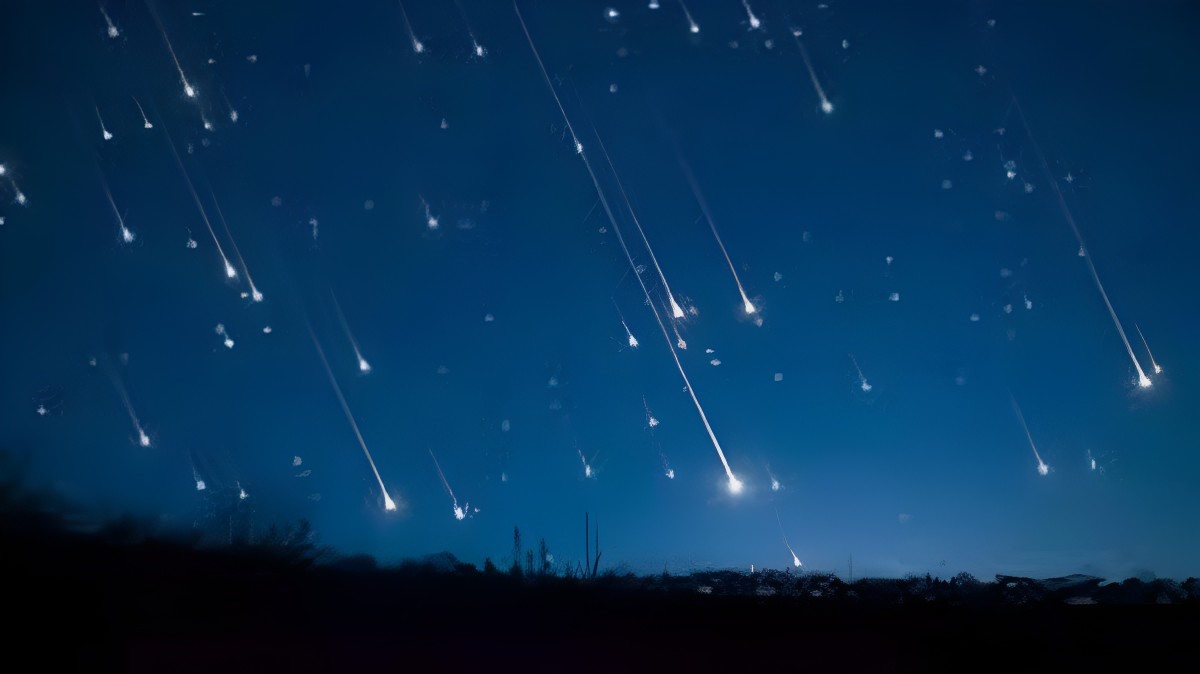
The Lyrid Meteor Shower has once again returned to captivate skywatchers across the globe. Beginning on April 16 and continuing until April 30, 2026, this annual event transforms ordinary nights into a dazzling display of light and motion. Known for its historical significance and sudden bursts of brilliance, the Lyrid meteor shower offers both scientists and casual observers an unforgettable experience.
Also Read: Brazilian Model Larissa Responds to Allegations of Rahul Gandhi’s Vote Chori Connection
A Meteor Shower with Ancient Roots
The Lyrids are not just another astronomical event—they hold a special place in human history. Records of this meteor shower date back more than 2,700 years, with ancient Chinese astronomers documenting a spectacular display as early as 687 BC.
This makes the Lyrids one of the oldest known meteor showers still observed today. Over centuries, civilizations have looked up at these same streaks of light, often associating them with myths, omens, or divine messages.
☄️ The Science Behind the Lyrids
The origin of the Lyrids lies in the long orbit of Comet Thatcher, a comet that takes about 415 years to complete one journey around the Sun. As it travels through space, the comet leaves behind a trail of dust and rocky debris.
Each year, Earth passes through this debris stream. When these tiny particles collide with Earth’s atmosphere at speeds of up to 49 kilometers per second, friction causes them to heat up and burn brightly. This process creates the glowing streaks we call meteors.
Despite their dramatic appearance, most meteors are no larger than grains of sand, yet they produce brilliant flashes visible from the ground.
Best Time and Techniques for Viewing
While the Lyrid meteor shower remains active for two weeks, the peak occurs around April 21–22, when the number of visible meteors increases significantly. Under ideal conditions, viewers may witness 15 to 20 meteors per hour, although occasional surges can produce even higher rates.
To maximize visibility:
- Observe the sky during the late night to early morning hours, when your location faces the direction of Earth’s movement
- Find a dark, open area away from artificial lights
- Lie back comfortably and scan a wide section of the sky instead of focusing on one point
- Avoid using phones or bright lights, as they reduce night vision
No telescopes or binoculars are required, making this event accessible to everyone.
🌌 Unique Characteristics of the Lyrids
The Lyrids are known for their speed and brightness. Unlike some meteor showers that produce steady and predictable rates, the Lyrids often surprise observers with sudden outbursts.
Another striking feature is the occasional appearance of fireballs—exceptionally bright meteors that can briefly illuminate the sky. Some meteors also leave behind glowing trails that linger for several seconds before fading away.
These unpredictable elements add excitement, ensuring that no two viewing experiences are exactly the same.
Global Visibility and Public Interest
The Lyrid meteor shower is best viewed from the Northern Hemisphere, but parts of the Southern Hemisphere can also enjoy the display. Countries with clear skies and minimal light pollution offer the best conditions.
In recent years, interest in such celestial events has grown rapidly due to social media and increased awareness of astronomy. Amateur astronomers, photographers, and families often gather during peak nights to witness the spectacle together.
📷 Capturing the Moment
Astrophotographers eagerly wait for the Lyrids each year. Capturing meteors requires patience, a tripod-mounted camera, and long-exposure settings. Even beginners can try photographing the event using smartphones with night mode features.
The sight of a meteor streaking across a star-filled sky creates not just a photograph, but a lasting memory.
🌟 Why the Lyrids Matter
Beyond their beauty, meteor showers like the Lyrids help scientists study the composition of comets and the behavior of space debris. They also remind us of Earth’s place in a vast and dynamic universe.
For the general public, the Lyrids provide a rare opportunity to slow down and reconnect with nature. In a world dominated by screens and busy schedules, looking up at the night sky can be both calming and inspiring.
Conclusion: A Must-Watch Celestial Event
The Lyrid meteor shower stands as one of April’s most anticipated astronomical events. With its rich history, scientific importance, and breathtaking visuals, it offers something for everyone—from curious beginners to experienced stargazers.
As the meteors streak across the sky between April 16 and April 30, they invite people everywhere to pause, look up, and witness the wonders of the universe. Missing this event would mean missing a timeless natural spectacle that has fascinated humanity for thousands of years. 🌠
Also Read: NCERT apologises to Supreme Court withdraws Class 8 textbook after controversy