








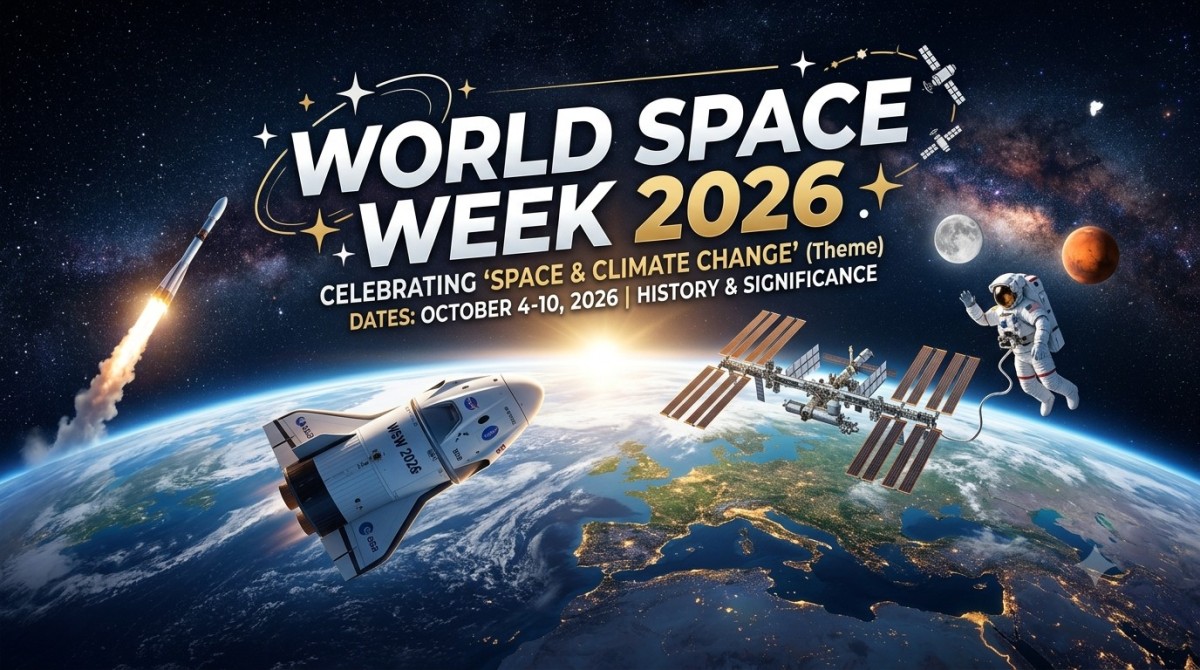
World Space Week 2026 is a global celebration of space science, technology, innovation and exploration. Observed every year from October 4 to October 10, the event brings together students, scientists, educators, space agencies and astronomy enthusiasts to explore how space technology is changing our world.
The theme for 2026 is “Rocket Revolution,” which highlights the rapid transformation of rocket technology and the growing accessibility of space through reusable launch vehicles, commercial space companies and new innovations.
📅 World Space Week 2026: Important Dates
04
OCTOBER
Beginning of World Space Week
Marks the anniversary of the launch of Sputnik 1 in 1957, the first artificial satellite to orbit Earth.
04–10
OCTOBER
World Space Week celebrations
A week of educational activities, exhibitions, discussions and space outreach programmes worldwide.
10
OCTOBER
Final day of World Space Week
Associated with the anniversary of the Outer Space Treaty entering into force in 1967.
World Space Week 2026 runs from Sunday, October 4, to Saturday, October 10. The United Nations established the annual observance in 1999.
🌌 What Is World Space Week?
World Space Week is an international event dedicated to recognising the contributions of space science and technology to humanity. It encourages people to learn about astronomy, satellites, rockets, planetary exploration and the practical benefits of space research.
The event is coordinated internationally with support from the United Nations and the World Space Week Association. Schools, universities, museums, planetariums, space organisations and astronomy clubs participate by organising activities for people of different ages.
🛰️ What Is the Theme of World Space Week 2026?
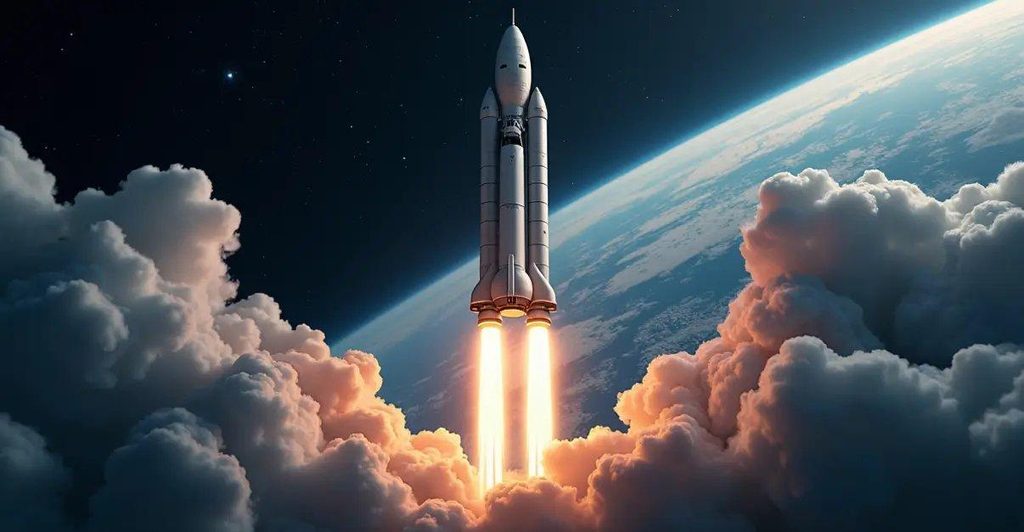
The official theme of World Space Week 2026 is “Rocket Revolution.” It focuses on how advances in rocket technology are transforming access to space and opening new opportunities for exploration, research and commercial activity.
The theme highlights several important developments:
- Reusable rockets: Launch vehicles designed to be recovered and used again can help reduce the cost of accessing space.
- Commercial spaceflight: Private companies are expanding launch services and developing new space technologies.
- Scientific missions: Modern rockets help carry satellites, scientific instruments and spacecraft into orbit and beyond.
- New opportunities: Universities, startups and emerging space programmes are finding more ways to participate in space exploration.
- Inspiring young minds: Rocket science encourages students to explore science, technology, engineering and mathematics (STEM).
The central message of “Rocket Revolution” is that space is becoming accessible to a wider range of countries, organisations and innovators.
📖 History of World Space Week
World Space Week has its roots in two important milestones in the history of space exploration.

🪐 October 4, 1957 — Launch of Sputnik 1
The Soviet Union launched Sputnik 1, the first artificial Earth satellite, marking the beginning of the Space Age and opening a new chapter in space exploration.

🌍 October 10, 1967 — Outer Space Treaty
The Outer Space Treaty entered into force, establishing key principles for the peaceful exploration and use of outer space by countries.
In December 1999, the United Nations General Assembly officially proclaimed World Space Week through Resolution 54/68. Since then, the annual celebration has helped promote space education, international cooperation and public awareness of space science.
🎯 Why Is World Space Week Celebrated?
World Space Week is celebrated to help people understand how space research and technology contribute to everyday life and humanity’s future.
Its main objectives include:
- Promoting space education: Making space science more accessible to students and the general public.
- Encouraging scientific curiosity: Inspiring people to explore astronomy, physics, engineering and related fields.
- Highlighting space technology: Explaining the role of satellites, rockets and space missions in modern society.
- Supporting international cooperation: Encouraging countries and organisations to work together on peaceful space activities.
- Inspiring future scientists: Motivating young people to consider careers in science, technology and aerospace.
- Raising public awareness: Showing how space applications support communication, weather forecasting, navigation and environmental monitoring.
🌏 Importance of Space Science in Everyday Life
Space exploration is not limited to astronauts and distant planets. Many technologies developed through space programmes support activities people rely on every day.
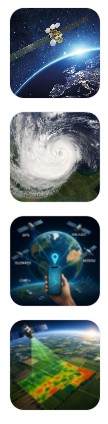
📡 Communication
Satellites support television broadcasting, satellite internet and communications over long distances.
🌦️ Weather Forecasting
Satellite observations help meteorologists monitor storms, clouds and large-scale weather patterns.
📍 Navigation and Mapping
Satellite navigation systems support route planning, transportation, surveying and location services.
🌱 Agriculture and the Environment
Earth-observation satellites help monitor crops, forests, water resources, land use and environmental changes.
These applications demonstrate why investment in space science matters beyond exploration: space-based information can support public services, research, disaster management and sustainable development.
🇮🇳 How India Celebrates World Space Week

India has a strong connection with space science through the Indian Space Research Organisation (ISRO) and its scientific and educational programmes. During World Space Week, ISRO centres and other participating institutions organise activities that introduce students and the public to space technology.
Common activities may include:
- 🚀 Rocket science demonstrations and educational talks.
- 🔭 Astronomy sessions and stargazing events.
- 🧪 Science exhibitions and space technology displays.
- 🧠 Space quizzes, essay competitions and science projects.
- 👩🚀 Interactions with scientists, engineers and space experts.
- 🛰️ Educational sessions about satellites, launch vehicles and planetary missions.
The specific programmes vary by institution and location. Readers can check official ISRO centre announcements for confirmed 2026 event schedules.
🎉 How Can Students Celebrate World Space Week 2026?
- Build a Model Rocket
Create a paper rocket or a model launch vehicle to learn about rocket design and propulsion. - Create a Solar System Model
Use craft materials to represent the Sun, planets and their relative positions. - Organise a Space Quiz
Prepare questions about astronauts, planets, satellites, rockets and space missions. - Make a Space Poster
Design a poster highlighting space exploration, the Rocket Revolution theme or India’s achievements in space. - Explore the Night Sky
With suitable supervision and safe viewing conditions, observe the Moon, bright planets or stars.
🌠 Interesting Facts About World Space Week 2026
- 🌍 World Space Week is observed annually from October 4 to October 10.
- 🚀 The 2026 theme is “Rocket Revolution.”
- 🛰️ The celebration commemorates the launch of Sputnik 1 in 1957 and the Outer Space Treaty entering into force in 1967.
- 🇺🇳 The United Nations General Assembly officially proclaimed World Space Week in 1999.
- 🔬 Space-based technology contributes to navigation, communications, weather forecasting and environmental monitoring.
- 🎓 Schools, universities, museums, planetariums and space organisations can participate in the global celebration.
 United Nations+2
🔮 What Is the Future of Rocket Technology?
Rocket technology is evolving as researchers and companies work on reusable launch systems, more efficient engines and new ways to transport payloads into space.
These developments could support more frequent satellite launches, scientific missions, lunar exploration and future journeys to Mars. However, progress also depends on engineering challenges, safety, costs and environmental considerations.
The theme “Rocket Revolution” encourages people to understand these changes and consider how expanding access to space may shape science, industry and international cooperation in the coming years.
💫 Conclusion
World Space Week 2026, celebrated from October 4 to October 10, highlights humanity’s continuing journey into space. Its theme, “Rocket Revolution,” draws attention to the innovations making space launches more accessible and transforming the future of exploration.
From reusable rockets and satellites to classroom experiments and astronomy activities, the celebration offers an opportunity for everyone to discover the importance of space science. By encouraging curiosity, education and collaboration, World Space Week can help inspire the next generation of scientists, engineers and explorers.