










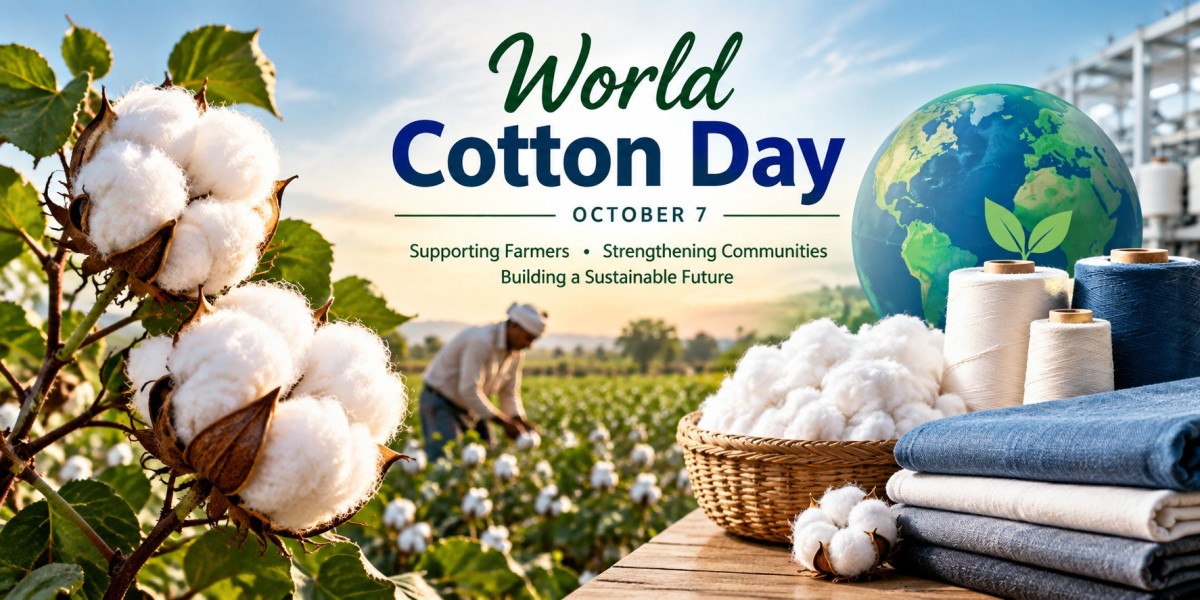
Every year on October 7, the world observes World Cotton Day to recognise the economic, social and industrial importance of cotton. The crop supports millions of farmers and workers and supplies a major raw material to the global textile industry. Cotton connects agriculture with manufacturing, trade, fashion and everyday life. The observance also gives governments, international organisations, farmers and businesses an opportunity to discuss the challenges facing the cotton sector and explore new ways to make production more sustainable.
Also Read: Brazilian Model Larissa Responds to Allegations of Rahul Gandhi’s Vote Chori Connection
🌿 World Cotton Day: History and Origin
The World Trade Organization (WTO) and its partner organisations launched World Cotton Day in 2019. The initiative came from the Cotton-4 countries — Benin, Burkina Faso, Chad and Mali, which sought greater international attention for the role of cotton in economic development. The first official World Cotton Day event took place at the WTO headquarters in Geneva on October 7, 2019. Since then, the day has created a global platform where stakeholders can discuss cotton production, international trade, technological development and the livelihood of communities that depend on the crop.
Cotton has played an important role in human civilisation for centuries. Farmers in different parts of the world have cultivated the crop for generations, while textile producers have transformed its natural fibre into clothing, household products and industrial materials. Today, the cotton supply chain involves much more than farming. It includes seed production, cultivation, harvesting, ginning, spinning, weaving, garment manufacturing, transportation and international trade. Every stage creates economic activity and employment.
🌍 Why Cotton Matters to the Global Economy
Cotton contributes significantly to rural economies because millions of farmers grow the crop as an important source of income. The industry also supports workers who process, transport and manufacture cotton-based products. Countries that produce cotton can strengthen their agricultural and industrial sectors by improving productivity, investing in technology and developing efficient supply chains. International cotton trade further connects producing countries with textile and garment markets around the world.
Cotton also holds major importance for consumers because people use cotton products in their daily lives. Manufacturers use cotton fibre to make shirts, trousers, dresses, bedsheets, towels and many other textile products. Its natural properties, including softness, breathability and versatility, make it a popular choice for clothing and household textiles. The cotton industry therefore influences both large-scale global trade and everyday consumer life.
💧 Sustainability and Challenges in Cotton Production
The cotton sector faces several challenges, including climate change, water management, soil health, pests, production costs and changing market conditions. Farmers need reliable weather conditions and adequate resources to maintain productivity, while changing climate patterns can make cultivation more difficult. Cotton production can also require significant amounts of water, making efficient irrigation and responsible water management important for sustainable agriculture.
Technology can help farmers respond to these challenges. Modern irrigation systems, improved seeds, precision agriculture, weather information, digital farming tools and better pest-management techniques can help farmers use resources more efficiently. Sustainable farming practices can also protect soil, reduce unnecessary chemical use and improve long-term productivity. World Cotton Day encourages governments, researchers and industry leaders to support such innovations and create better conditions for cotton-growing communities.
🧵 World Cotton Day and the Future of the Cotton Industry
World Cotton Day also draws attention to the need for stronger and more inclusive cotton value chains. Farmers need access to markets, technology, finance, training and reliable information. At the same time, businesses and consumers increasingly look for products that follow responsible environmental and social practices. By improving transparency and sustainability across the supply chain, the cotton industry can create greater value for producers while meeting changing consumer expectations.
The observance also encourages international cooperation. Cotton-producing countries, textile manufacturers, traders, development organisations and policymakers can work together to address common challenges. Research and innovation can improve crop productivity, reduce resource consumption and strengthen farmers’ resilience. Such cooperation can help the industry balance economic growth with environmental responsibility.
🌱 Conclusion: A Day to Recognise Cotton’s Global Contribution
World Cotton Day 2026 reminds the world that cotton represents much more than a raw material for clothing. It supports farmers, creates employment, drives trade and supplies an essential resource to the textile industry. October 7 gives the global community an opportunity to recognise these contributions while focusing on the challenges that could shape the future of cotton production.
As agriculture and industries adopt new technologies, the cotton sector can build a more sustainable and resilient future. Supporting farmers, improving resource efficiency, encouraging responsible production and strengthening international cooperation can help the industry continue to grow. World Cotton Day therefore serves as an important reminder that a stronger cotton industry can contribute to stronger rural communities, sustainable development and a more responsible global economy.
Also Read; Words of Wisdom: Dr. B.R. Ambedkar Quotes That Inspire Generations