









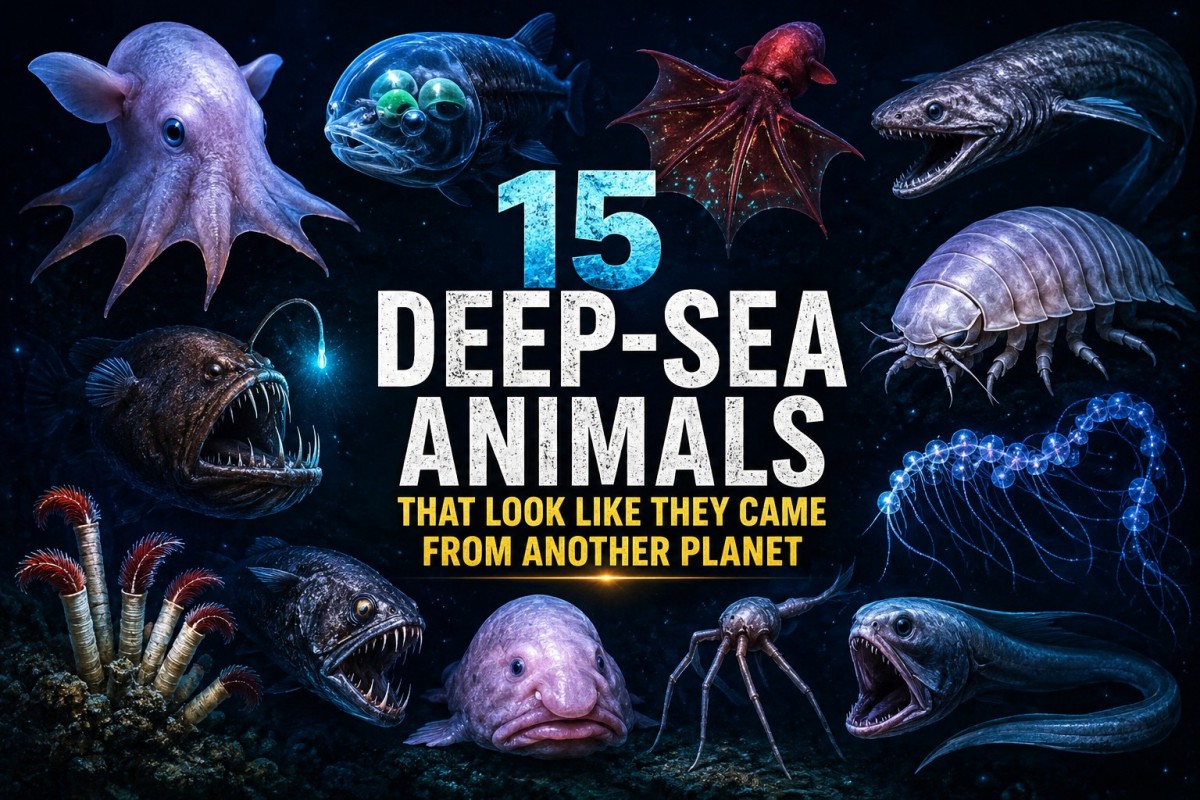
Far below the ocean’s surface lies a world filled with strange and fascinating animals that feels almost completely alien. There is no sunlight, the pressure can be crushing, temperatures can be freezing, and food can be incredibly scarce. Yet these remarkable deep-sea animals have adapted to these extreme conditions in some of the strangest ways imaginable.
From transparent heads and enormous mouths to glowing bodies and bizarre tentacles, these animals look less like creatures from Earth and more like characters from a science-fiction movie.
Here are 15 incredible deep-sea animals that look like they came from another planet.
Also Read : Revanth Reddy Warns Congress Leaders as Telangana SIR Puts 21% Votes at Risk
🐙 1. Dumbo Octopus — The Flying Octopus
With ear-like fins on either side of its head, the dumbo octopus looks remarkably like a tiny underwater elephant.
It lives thousands of meters below the surface, where sunlight never reaches. Unlike many shallow-water octopuses, it doesn’t rely on camouflage among reefs. Instead, it slowly “flies” through the water by moving its fins.
Some species have been observed at depths of several thousand meters.
👽 2. Barreleye Fish — The Fish With a Transparent Head
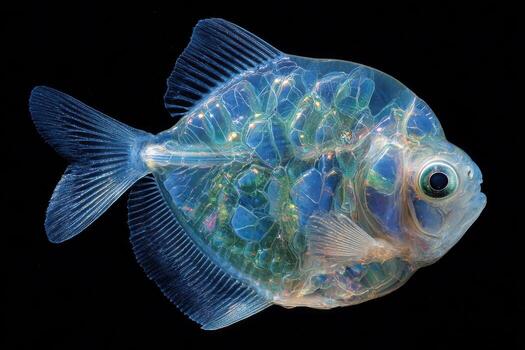
The barreleye fish looks like something designed by an alien engineer.
Its most extraordinary feature is its transparent, fluid-filled head. Inside this transparent dome are its tubular eyes.
Even stranger, those eyes can rotate. They can point upward while the fish searches for silhouettes of prey above it, then rotate forward when it is feeding.
Scientists only began to understand this unusual adaptation after observing living barreleye fish in their natural environment.
🦑 3. Vampire Squid — A Name That Sounds Like Horror Fiction
Despite its terrifying name, the vampire squid isn’t actually a blood-sucking monster.
Its scientific name, Vampyroteuthis infernalis, roughly translates to “vampire squid from hell.” Its dark body, large eyes and webbed arms certainly make the name understandable.
It lives in the oxygen-poor deep ocean and has a remarkable ability to produce bioluminescent displays.
Instead of hunting like a typical squid, it often feeds on drifting organic particles known as marine snow.
😱 4. Frilled Shark — A Living Relic
The frilled shark looks like something from prehistoric times.
Its long, eel-like body and unusual rows of teeth give it an appearance unlike most modern sharks.
It usually lives in deep waters and is rarely encountered by humans. Its strange appearance has earned it comparisons to ancient sea monsters.
The species belongs to a very old lineage of sharks, making it especially interesting to researchers studying shark evolution.
🦐 5. Giant Isopod — The Ocean’s Giant Woodlouse
Imagine taking an ordinary woodlouse and making it enormous.
That’s roughly what a giant isopod looks like.
These deep-sea crustaceans can grow far larger than their land relatives. Their armored bodies and multiple legs make them look like giant underwater insects.
They are scavengers and can survive for long periods when food is scarce.
👹 6. Anglerfish — The Creature With Its Own Fishing Rod
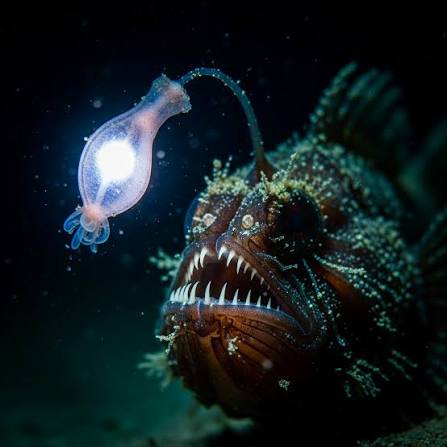
Few animals look more alien than the deep-sea anglerfish.
Its most famous feature is a glowing structure that extends from its head like a miniature fishing rod. This light can help attract prey in the darkness.
Its enormous mouth and long teeth allow it to swallow surprisingly large prey relative to its body.
The deep ocean has little available food, so having an effective way to find and capture prey can be a major survival advantage.
🪱 7. Giant Tube Worms — Animals Without a Normal Digestive System
Giant tube worms live around hydrothermal vents, where superheated, mineral-rich water emerges from the seafloor.
What makes them particularly strange is that adult giant tube worms don’t have a conventional digestive tract.
Instead, they depend on bacteria living inside their bodies. These bacteria use chemicals from the vent environment to produce energy.
It’s an extraordinary example of an ecosystem powered not by sunlight, but by chemical energy.
🐟 8. Deep-Sea Dragonfish — A Predator With Built-In Night Vision
Dragonfish have an appearance that seems almost deliberately terrifying.
They can have enormous teeth, elongated bodies and glowing organs called photophores.
Some deep-sea dragonfish can produce red bioluminescent light, which is unusual because much of the deep ocean’s natural bioluminescence is blue or green.
That gives certain species a potential advantage when searching for prey in the darkness.
🐡 9. Blobfish — The Famous Face of the Deep
The blobfish became famous online for its unusual appearance.
But there’s an important misconception: the blobfish doesn’t normally look like the famous droopy creature seen in photographs.
Its body is adapted to life under enormous pressure in deep water. When brought rapidly to the surface, the change in pressure can dramatically alter its appearance.
In its natural environment, it looks much more like a normal deep-sea fish.
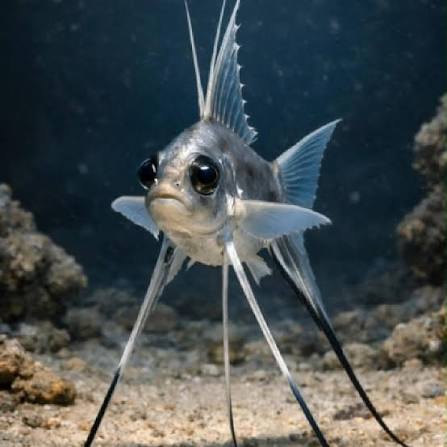
👁️ 10. Tripod Fish — The Fish That Stands on the Seafloor
The tripod fish has extremely elongated fins that can extend beneath its body like legs.
It uses these structures to position itself above the seafloor while waiting for food drifting through the water.
This strange posture is a perfect example of how deep-sea animals can evolve body structures that seem completely bizarre from a human perspective.
🪼 11. Siphonophores — One Creature or a Colony?
Siphonophores are among the strangest organisms in the ocean.
They can resemble enormous glowing strings or underwater chains.
But here’s the truly strange part: what appears to be one animal can actually be a colony of specialized individuals called zooids, working together as a single functional unit.
Some siphonophores can reach astonishing lengths, although exact size estimates for fragile deep-sea specimens can be difficult.
🐉 12. Gulper Eel — The Fish With an Enormous Mouth
The gulper eel, sometimes called the pelican eel, looks almost cartoonish.
Its mouth is enormous compared with the rest of its body and can expand dramatically.
This unusual design may allow it to capture prey in an environment where meals can be unpredictable.
Its long, slender body and tiny eyes make it look more like a creature from an alien ocean than a fish from Earth.
🦑 13. Bigfin Squid — The Squid With Extremely Long Arms
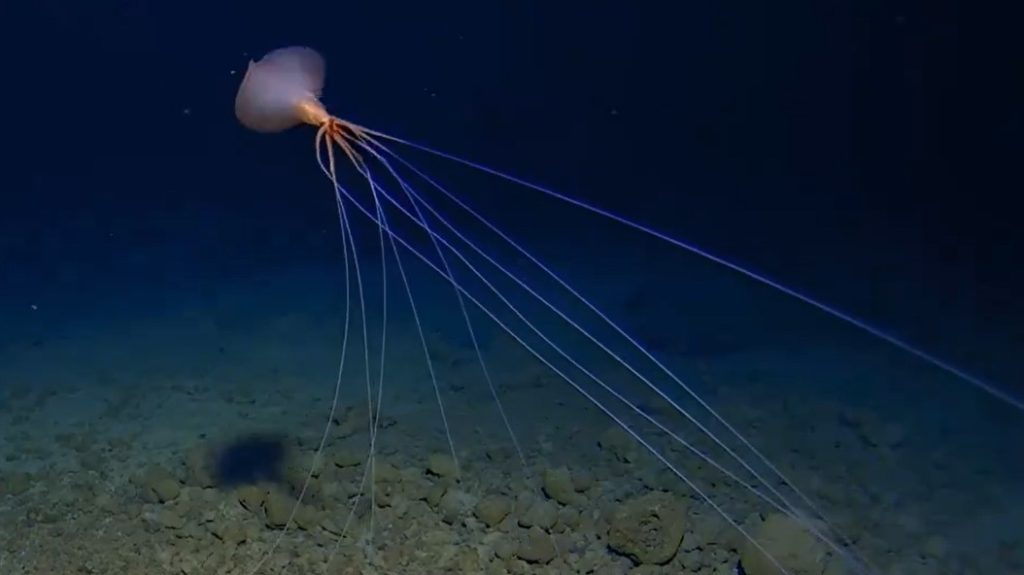
Bigfin squid are among the most mysterious squid ever observed.
They have extremely long, thin arms and tentacles that can hang beneath their bodies in strange, angular shapes.
Very few observations have been made because these animals live at enormous depths.
For years, scientists had only limited information about them, making every confirmed observation valuable.
🦷 14. Fangtooth Fish — Tiny Body, Terrifying Teeth
The fangtooth fish looks like a creature that belongs in a monster movie.
Its teeth are enormous compared with its body. In fact, its teeth are so large that special structures in its head help accommodate them.
Despite its frightening appearance, the fangtooth is relatively small.
Its extreme dental equipment is another example of how the deep ocean has produced some remarkably specialized predators.
🦐 15. Deep-Sea Giant Amphipods — Monsters From the Abyss
Most people imagine amphipods as tiny shrimp-like creatures.
But some deep-sea amphipods can become surprisingly large.
Species such as Alicella gigantea have been recorded at considerable sizes compared with their shallow-water relatives.
Their unusual size is part of a phenomenon known as deep-sea gigantism, in which some deep-ocean species grow much larger than related species living in shallower environments.
🌌 Why Does the Deep Ocean Produce Such Strange Animals?
The deep sea is one of Earth’s most extreme environments.
There is little or no sunlight. Temperatures can be very low. Food may arrive only occasionally. And water pressure increases dramatically with depth.
These conditions create intense evolutionary challenges.
As a result, deep-sea animals have evolved solutions that seem almost unbelievable:
✨ Bioluminescence to communicate, attract prey or confuse predators
👁️ Unusual eyes for detecting tiny amounts of available light
🦷 Huge teeth and mouths for capturing rare meals
🎈 Flexible bodies capable of functioning under extreme pressure
🦠 Symbiotic bacteria that provide energy in places without sunlight
🫥 Transparency and camouflage to become harder to detect
🌊 The Biggest Mystery Is What We Haven’t Found Yet
Perhaps the most fascinating thing about the deep ocean isn’t the creatures we already know about.
It’s the creatures we haven’t discovered yet.
Large areas of the deep seafloor remain difficult to explore, and many deep-sea animals are rarely observed alive. New species continue to be described as scientists explore previously inaccessible environments.
So the next time you look out across the ocean, remember: beneath that apparently empty surface is an enormous ecosystem filled with creatures that seem almost impossible—and we’ve only seen a fraction of it.
The strangest animals on Earth may still be waiting in the darkness. 🌊👽
Also Read : Sawan Somwar 2026: History, Significance, Puja Vidhi, Mantras and Fasting Rules