









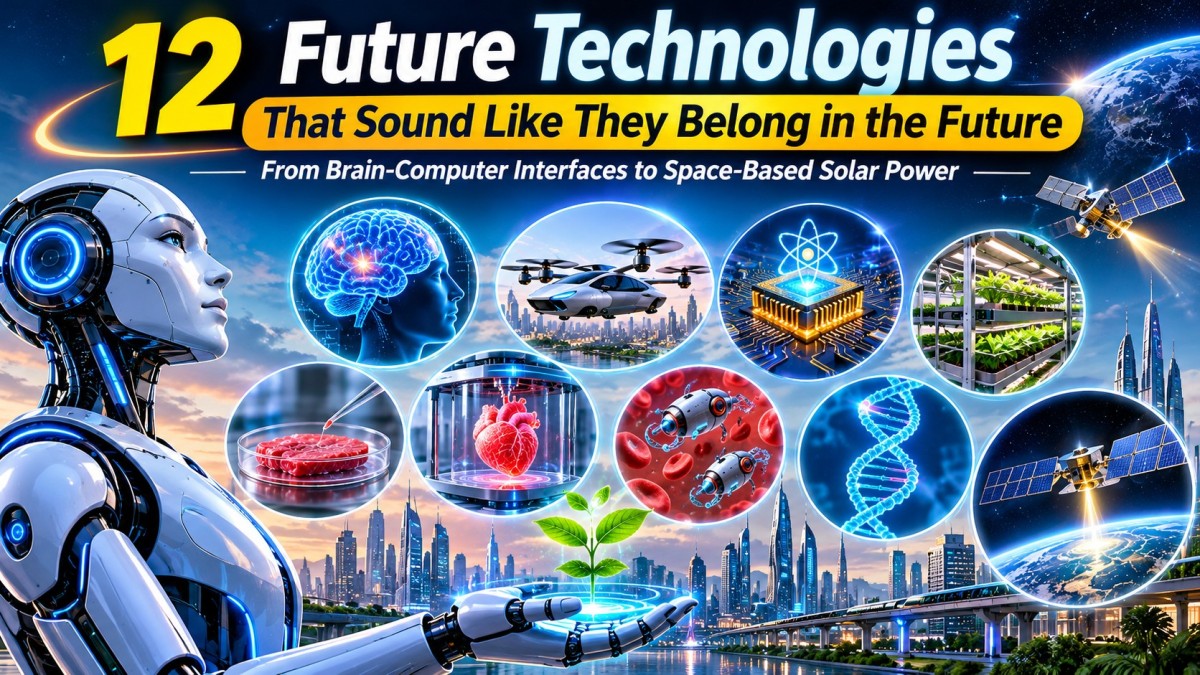
Technology is advancing faster than ever before. Things that once seemed possible only in science-fiction movies are now becoming reality. From computers that can understand human thoughts to robots that perform complicated surgeries, scientists and engineers are developing technologies that could completely change the way we live.
Some of these innovations are already being used, while others are still being tested in laboratories. Here are 12 incredible technologies that sound like they belong in the future but are actually real.
🧠 1. Brain-Computer Interfaces
Imagine controlling a computer, smartphone or even a robotic arm using nothing but your thoughts. It may sound impossible, but brain-computer interfaces (BCIs) are making it a reality.
These technologies detect electrical signals produced by the brain and translate them into commands that computers can understand. They could help people with paralysis communicate, operate devices and regain some independence.
🧬 2. 3D-Printed Human Organs
What if doctors could print a human organ instead of waiting for a suitable donor? Scientists are working on a technology called 3D bioprinting, which uses living cells and special biological materials to create tissue-like structures.
Researchers have already produced experimental tissues and small organ models. Although printing fully functional replacement organs for routine transplantation is still a major challenge, this technology could transform medicine in the future.
🤖 3. Humanoid Robots
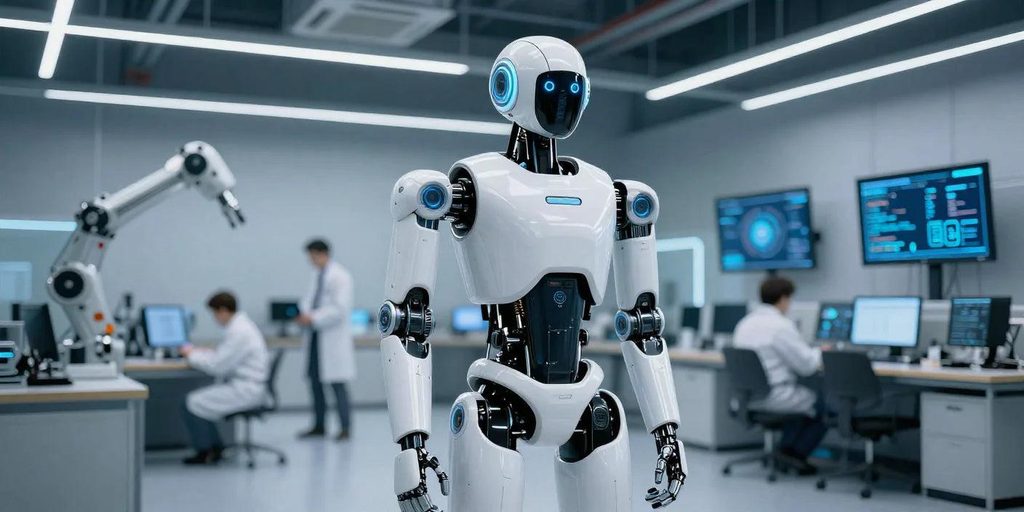
Robots are no longer limited to factories and repetitive tasks. Modern humanoid robots are being designed to walk, talk, recognize objects and perform tasks that normally require human involvement.
Some can carry objects, navigate unfamiliar environments and interact with people. In the future, humanoid robots could assist in hospitals, factories, warehouses and even homes.
🧊 4. Room-Temperature Superconductors
Imagine electricity travelling through a material without losing energy as heat. This is what superconductors can do under suitable conditions.
Most known superconductors require extremely low temperatures or high pressures. Scientists are researching materials that could achieve superconductivity under much more practical conditions.
If room-temperature superconductors become commercially viable, they could revolutionize power transmission, medical imaging, transportation and electronic devices.
🧫 5. Lab-Grown Meat
What if meat could be produced without raising or slaughtering animals?
Lab-grown meat, also known as cultivated meat, is produced by growing animal cells in controlled environments. Scientists provide these cells with nutrients so they can multiply and develop into muscle and fat tissue.
This technology could offer another way to produce meat while potentially reducing the land and resources required by conventional livestock farming. However, large-scale production and affordability remain important challenges.
🛸 6. Flying Cars and Electric Air Taxis
Flying cars have been a dream of humanity for decades. Today, companies are developing electric vertical take-off and landing aircraft, commonly called eVTOLs.
These aircraft can take off and land vertically, much like helicopters, but use electric propulsion systems. They are being developed for possible applications such as urban air taxis, emergency transportation and short-distance travel.
Although they are not yet a common form of transport, they could change how people travel within crowded cities.

🧑⚕️ 7. Nanorobots Inside the Human Body
Imagine tiny machines travelling through your bloodstream to detect diseases or deliver medicine directly to specific cells.
Researchers are exploring nanoscale devices and nanorobotic systems that could perform highly targeted medical tasks. Some experimental systems can move through biological environments and respond to specific chemical signals.
In the future, such technologies might help improve cancer treatment, drug delivery and disease detection. However, fully autonomous medical nanorobots are still largely experimental.
🌱 8. Vertical Farming
Traditional agriculture requires large areas of land, suitable weather and plenty of water. Vertical farming offers a different approach.
It involves growing plants in vertically stacked layers, often inside buildings with controlled lighting, temperature and humidity. Some systems use hydroponics or aeroponics instead of traditional soil.
This technology can allow crops to grow throughout the year and closer to urban populations. It may become increasingly useful as cities expand and agricultural land becomes more limited.
🧊 9. Quantum Computers
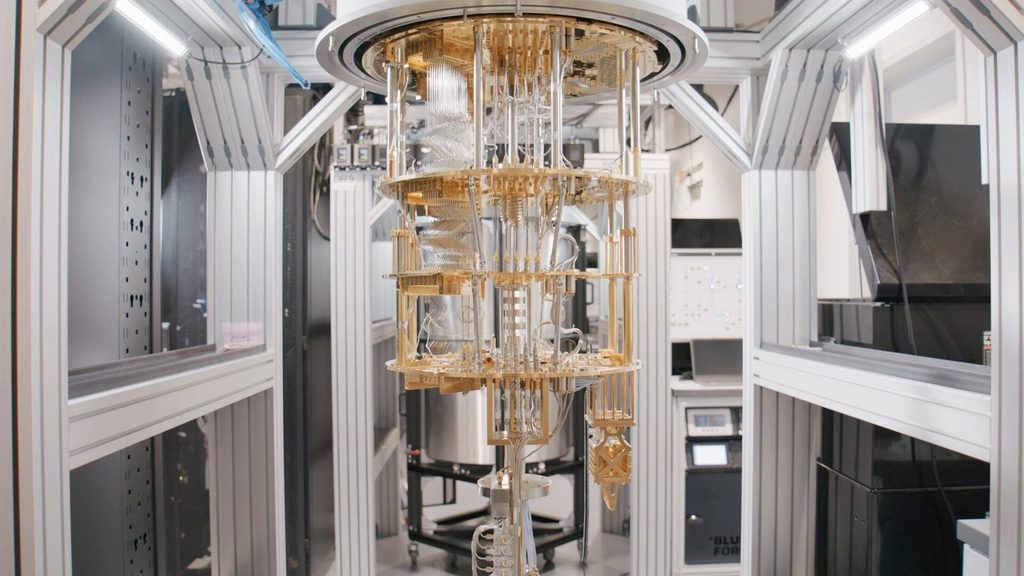
Ordinary computers process information using bits, which represent either 0 or 1. Quantum computers use quantum bits, known as qubits, which can exploit quantum properties such as superposition and entanglement.
This allows certain quantum algorithms to approach problems differently from traditional computers.
Quantum computers could eventually help researchers study complex molecules, develop new materials and solve specialized mathematical problems. However, they are still experimental and are not expected to replace everyday computers.
🌍 10. Artificial Photosynthesis
Plants use sunlight, water and carbon dioxide to produce energy-rich substances through photosynthesis. Scientists are trying to develop artificial systems that imitate parts of this natural process.
Artificial photosynthesis aims to use sunlight to convert water and carbon dioxide into useful fuels or chemical products.
If researchers can make these systems efficient, affordable and scalable, they could provide new ways to store renewable energy and potentially reduce dependence on fossil fuels.
🧬 11. Gene Editing With CRISPR
What if scientists could edit DNA almost like correcting a spelling mistake in a document?
CRISPR is a gene-editing technology that allows researchers to make targeted changes to genetic material. It has already opened new possibilities in medical research, agriculture and biotechnology.
One remarkable development is the use of CRISPR-based treatments for certain inherited diseases. In 2023, the United Kingdom and United States approved the first CRISPR-based treatments for sickle cell disease.
Although the technology has enormous potential, it also raises important questions about safety, ethics and how far humans should go in changing genetic information.
🌌 12. Space-Based Solar Power
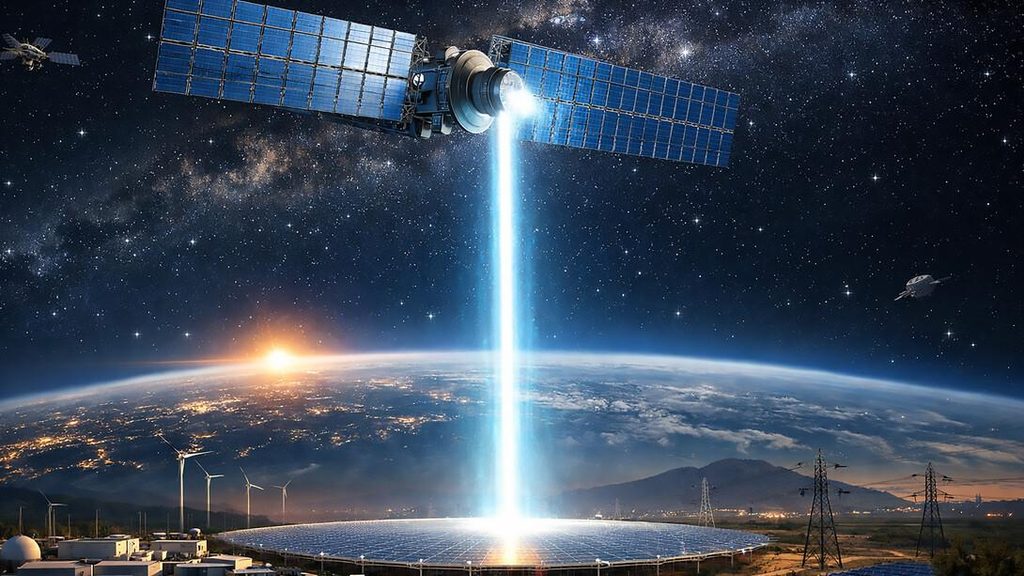
Imagine collecting sunlight in space and sending the energy down to Earth.
Space-based solar power is a concept in which large solar panels orbit Earth and collect sunlight. The collected energy could then be transmitted to receiving stations on the ground using technologies such as microwaves or lasers.
Unlike solar panels on Earth, space-based systems could potentially collect sunlight without interruptions from clouds or nighttime.
Although several research projects are investigating the concept, building a commercially practical system remains a significant engineering challenge.
🔮 Conclusion: The Future Is Closer Than We Think
Many technologies that once belonged only in science-fiction stories are slowly becoming part of the real world. Brain-computer interfaces, gene editing, humanoid robots and quantum computing are already pushing the boundaries of what humans can achieve.
However, these innovations also bring important challenges involving safety, affordability, privacy, ethics and environmental impact.
One thing is certain: the technologies we develop today could make the world of tomorrow look very different from the one we know.