









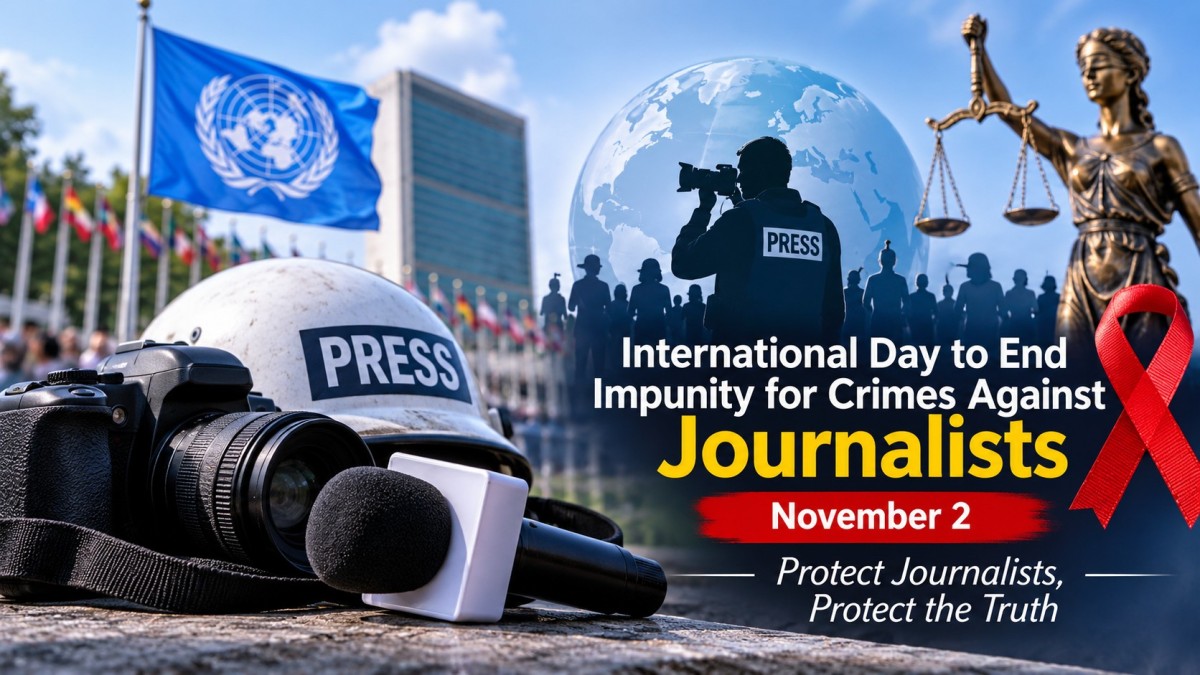
The International Day to End Impunity for Crimes Against Journalists 2026 falls on Monday, November 2. The United Nations and UNESCO observe this annual occasion to highlight violence against journalists and demand justice for crimes committed against media professionals. The day reminds governments, law enforcement agencies and societies that journalists deserve protection while reporting the truth. The 2026 campaign carries the powerful message, “Threats Evolve. Impunity Endures.” It highlights how modern technology, armed conflicts and digital platforms have changed the nature of threats against journalists, while accountability continues to remain inadequate. The observance also encourages countries to strengthen legal protections, investigate attacks and ensure that perpetrators face justice.
Also Read: Brazilian Model Larissa Responds to Allegations of Rahul Gandhi’s Vote Chori Connection
📅 Date and History of the International Day
The United Nations General Assembly proclaimed November 2 as the International Day to End Impunity for Crimes Against Journalists through Resolution A/RES/68/163 in 2013. The date commemorates the assassination of two French journalists in Mali on November 2, 2013. Their deaths highlighted the serious dangers journalists face while reporting from conflict-affected regions. The resolution called on member states to take concrete measures against impunity, prevent violence against media workers and ensure accountability for crimes committed against them. Since its establishment, the observance has encouraged international cooperation and strengthened discussions on press freedom and journalist safety. UNESCO leads global awareness initiatives and publishes reports that examine killings, investigations and accountability worldwide.
🌍 Significance and Global Importance
Journalists play a crucial role in democratic societies because they investigate corruption, expose human rights violations, report public concerns and provide reliable information. Their work helps citizens understand important developments and hold institutions accountable. However, threats, intimidation, imprisonment, physical assaults and killings continue to restrict independent journalism in many countries. UNESCO reports that more than 1,600 journalists were killed between 2006 and 2025, while nearly six out of seven cases remained judicially unresolved. These figures demonstrate how impunity weakens justice and encourages further violence. When authorities fail to investigate attacks, criminals gain confidence and journalists face greater risks. Protecting journalists therefore strengthens democracy, transparency, freedom of expression and the public’s right to information.
⚖️ Theme of 2026: Threats Evolve, Impunity Endures
The 2026 observance adopts the theme “Threats Evolve. Impunity Endures.” UNESCO highlights how emerging technologies and modern weapons have transformed the risks journalists encounter while reporting from dangerous locations. Drone attacks, digital surveillance, online harassment and technology-enabled intimidation have created new challenges for media professionals. However, authorities continue to struggle to deliver justice for crimes against journalists. UNESCO’s 2026 findings reveal that 189 journalists lost their lives in violent attacks during 2024 and 2025, with 67% of these killings occurring in conflict zones. The report also records an alarming global impunity rate of 86%, meaning authorities have not judicially resolved most journalist killings. These figures underline the urgent need for stronger investigations, effective accountability and international cooperation.
🚨 Major Threats Facing Journalists Worldwide
Journalists face several forms of violence and intimidation that threaten their safety and independence. Armed conflicts expose reporters to bombings, shootings, drone attacks and dangerous battlefield conditions. Criminal groups and powerful individuals sometimes threaten journalists who investigate corruption, organised crime or human rights abuses. Digital platforms have also created new avenues for harassment, including threats, doxxing, surveillance, manipulated images and deepfake content. Women journalists frequently encounter gender-based online abuse and targeted intimidation that can affect their professional and personal lives. Authorities sometimes use arbitrary detention, legal harassment and restrictive measures to discourage critical reporting. These threats create fear, restrict independent journalism and prevent citizens from receiving important information. Governments and media organisations must address these dangers through preventive measures, stronger legal safeguards and effective protection systems.
🕊️ Role of UNESCO and the United Nations
UNESCO and the United Nations actively promote journalist safety, freedom of expression and accountability for crimes against media workers. UNESCO monitors journalist killings through its Observatory of Killed Journalists and publishes the Director-General’s Report on the Safety of Journalists and the Danger of Impunity. These reports track investigations, judicial developments and international progress towards accountability. The United Nations also introduced the UN Plan of Action on the Safety of Journalists and the Issue of Impunity in 2012. This initiative brings governments, international organisations, media institutions and civil society together to prevent attacks and improve protection mechanisms. On November 2, 2026, UNESCO will present its latest report at its headquarters in Paris and organise discussions on journalist safety. These initiatives encourage governments to strengthen investigations, protect media professionals and prosecute perpetrators.
📢 How Countries Can End Impunity
Governments must take concrete steps to protect journalists and prevent crimes against media professionals. Law enforcement agencies should investigate every attack promptly, preserve evidence and identify those responsible. Judicial authorities must conduct fair proceedings and ensure that perpetrators face appropriate legal consequences. Governments should establish effective protection mechanisms for journalists who receive threats or face immediate danger. Media organisations must provide safety training, emergency assistance and protective equipment to reporters working in conflict zones. Authorities should also address online abuse, digital surveillance and gender-based threats against women journalists. International organisations can support countries through training, monitoring and cooperation. Citizens can contribute by supporting independent journalism, reporting threats and rejecting violence against media professionals. Strong accountability systems can discourage future attacks and restore public confidence in justice.
🌟 Conclusion: Protect Journalists, Protect the Truth
The International Day to End Impunity for Crimes Against Journalists 2026 serves as a powerful reminder that freedom of the press cannot survive without justice and safety. Journalists risk their lives to uncover facts, expose wrongdoing and inform society about issues that affect millions of people. When criminals silence journalists and escape punishment, they weaken democracy, human rights and public accountability. The theme “Threats Evolve. Impunity Endures.” urges the international community to confront modern dangers and strengthen justice systems. Governments, media organisations and citizens must unite to protect journalists, investigate crimes and hold perpetrators accountable. A society that protects journalists protects its right to truth, justice and freedom. Ending impunity is not merely a responsibility towards media professionals; it is a commitment to safeguarding democracy and humanity itself.