








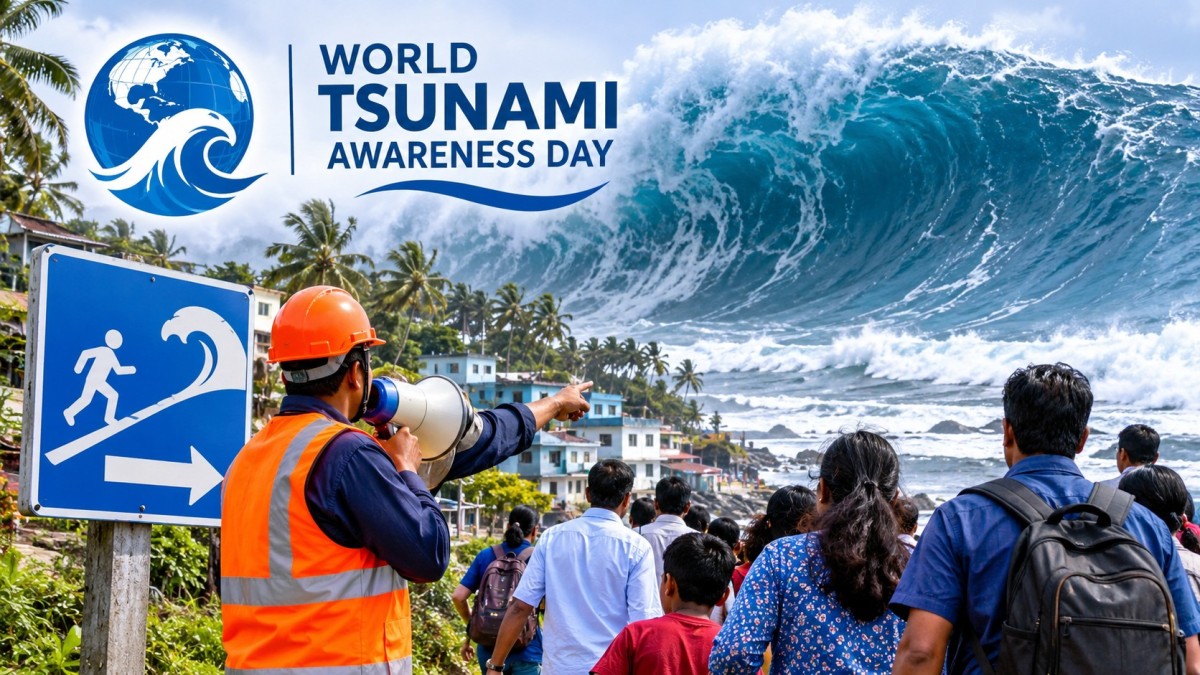
World Tsunami Awareness Day 2026 takes place on November 5 to promote tsunami preparedness, disaster awareness and coastal community resilience. The United Nations observes this international day to encourage governments, communities and individuals to understand tsunami risks and adopt effective safety measures. This year’s theme, “Be Tsunami Ready: Resilience Starts With You,” highlights the importance of individual responsibility and collective preparedness. The campaign encourages people to recognise natural warning signs, understand evacuation routes and prepare emergency plans. It also calls for stronger early warning systems, inclusive disaster management and community participation. Through education, awareness and cooperation, World Tsunami Awareness Day promotes a safer future for vulnerable coastal populations.
Also Read: Brazilian Model Larissa Responds to Allegations of Rahul Gandhi’s Vote Chori Connection
🌊 Understanding World Tsunami Awareness Day
The United Nations General Assembly officially designated November 5 as World Tsunami Awareness Day in December 2015 through Resolution 70/203. Japan proposed this international observance because the country has experienced several devastating tsunamis throughout its history. The date also connects with the historical story of “Inamura-no-hi,” which describes a Japanese villager who warned his community about an approaching tsunami in 1854. His quick action helped residents evacuate and survive the disaster. This inspiring incident highlights the importance of recognising warning signs and responding immediately. Today, the United Nations Office for Disaster Risk Reduction (UNDRR) coordinates global activities and promotes international cooperation to reduce tsunami-related risks.
🎯 Theme of World Tsunami Awareness Day 2026
The 2026 theme, “Be Tsunami Ready: Resilience Starts With You,” focuses on strengthening individual and community preparedness. It encourages people to take responsibility for their safety instead of depending entirely on official warnings. Individuals can improve preparedness by learning evacuation routes, preparing emergency kits and participating in disaster drills. Families should develop emergency communication plans and identify safe meeting locations. Communities must also ensure that children, older people, persons with disabilities and tourists receive clear safety information. The theme reinforces the message that preparedness begins with individuals and grows through collective action.
🌍 What Is a Tsunami and How Does It Occur?
A tsunami is a series of powerful ocean waves that usually develop after an underwater earthquake displaces a large volume of seawater. Underwater volcanic eruptions, submarine landslides and other sudden disturbances can also generate tsunamis. These waves travel across oceans at high speeds and may become extremely destructive when they reach shallow coastal waters. Unlike ordinary ocean waves, tsunamis can flood large coastal areas and carry debris far inland. Their successive waves may arrive over several hours, and the first wave does not always produce the greatest damage. Therefore, people must remain in safe locations until authorities officially declare the danger over.
⚠️ Why Tsunami Awareness Matters
Tsunamis can cause devastating human, environmental and economic losses within a short period. They can destroy homes, roads, ports, hospitals, schools and coastal infrastructure. Powerful waves can also damage fishing communities, tourism facilities and agricultural land. The 2004 Indian Ocean tsunami demonstrated the catastrophic consequences of inadequate preparedness and warning coverage. The disaster killed more than 230,000 people across 14 countries and exposed serious gaps in regional disaster management. Awareness campaigns help communities understand these risks and encourage them to prepare before emergencies occur. By promoting education, evacuation planning and early action, tsunami awareness can significantly improve survival and reduce disaster-related losses.
🛡️ Importance of Global Disaster Preparedness
Global disaster preparedness requires cooperation between governments, scientific institutions, international organisations and local communities. Governments must strengthen coastal infrastructure, develop evacuation plans and establish effective disaster management policies. Scientists and monitoring agencies must improve earthquake detection, ocean monitoring and tsunami forecasting. Educational institutions should teach students about natural hazards and conduct regular safety exercises. Communities must identify vulnerable locations, maintain emergency supplies and support people who require additional assistance. International cooperation also helps countries share scientific knowledge, technical expertise and warning information. These combined efforts strengthen resilience and reduce the devastating effects of future tsunamis.
📡 Early Warning Systems: Technology That Saves Lives
Tsunami early warning systems play a crucial role in protecting coastal populations. These systems use seismic monitoring stations, ocean sensors, tide gauges and communication networks to detect potential tsunami threats. Scientists analyse earthquake information and ocean measurements to estimate tsunami risks. Authorities then distribute alerts through sirens, mobile messages, radio broadcasts and other communication channels. However, warning systems alone cannot guarantee safety. Communities must understand warnings and respond immediately by following evacuation instructions. Governments should also improve communication coverage in remote coastal areas and ensure that alerts reach vulnerable populations. Reliable technology, public awareness and timely action together create an effective disaster warning system.
🏃 Natural Warning Signs and Essential Safety Measures
People living near coastlines should recognise natural tsunami warning signs because waves may arrive before official alerts reach them. Strong or prolonged ground shaking can indicate a potential tsunami threat. An unusual rise or sudden recession of seawater may also signal danger. A loud ocean roar can provide another important warning. When people notice these signs, they should immediately move to higher ground or travel inland without waiting for official confirmation. They must avoid beaches, river mouths and low-lying coastal areas. Residents should follow marked evacuation routes and listen to emergency authorities. Preparedness drills help people respond quickly and confidently during real emergencies.
🤝 Community Participation and Inclusive Preparedness
Community participation strengthens disaster preparedness and creates safer coastal environments. Local authorities, schools, hospitals, businesses and neighbourhood organisations should work together to develop emergency plans. Communities can organise evacuation exercises, awareness campaigns and educational programmes. Hotels and tourism operators should inform visitors about tsunami risks and nearby evacuation routes. Disaster planners must also consider the needs of children, older persons and persons with disabilities. Accessible warning messages, transportation support and assistance arrangements can help vulnerable people evacuate safely. When communities share knowledge and support one another, they improve collective resilience and reduce the possibility of preventable casualties.
🇮🇳 India’s Tsunami Preparedness and Coastal Safety
India also recognises the importance of tsunami preparedness because several coastal regions face potential tsunami hazards. The country’s extensive coastline supports millions of people through fishing, tourism, trade and maritime activities. The Indian National Centre for Ocean Information Services (INCOIS), under the Ministry of Earth Sciences, operates the Indian Tsunami Early Warning Centre. The centre monitors earthquakes and sea-level information and provides tsunami advisories to relevant authorities. India also participates in regional tsunami warning cooperation across the Indian Ocean. Coastal communities can improve safety by following official alerts, learning evacuation routes and participating in local disaster management programmes. Public awareness remains essential for protecting coastal populations and strengthening national disaster resilience.
🌱 Building a Tsunami-Resilient Future
A tsunami-resilient future requires long-term investment in safer infrastructure, environmental protection and disaster education. Governments should avoid unsafe development in highly vulnerable coastal zones and strengthen risk-informed urban planning. Coastal ecosystems such as mangroves and coastal wetlands can support protection against several coastal hazards, although they cannot stop every tsunami. Communities should preserve these ecosystems while improving evacuation facilities and emergency communication networks. International organisations must continue supporting vulnerable countries through technical assistance, scientific cooperation and preparedness programmes. Sustainable development and disaster risk reduction should work together to protect lives, livelihoods and coastal environments.
📌 Conclusion
World Tsunami Awareness Day 2026 reminds the world that preparedness begins with awareness and resilience grows through action. The theme “Be Tsunami Ready: Resilience Starts With You” encourages individuals, families and communities to recognise risks and adopt practical safety measures. Governments must strengthen warning systems, improve infrastructure and ensure inclusive disaster management. Citizens should learn natural warning signs, prepare emergency plans and follow evacuation instructions without delay. International cooperation, scientific innovation and public participation can reduce tsunami risks and protect vulnerable populations. By building a culture of preparedness today, the world can create safer coastal communities and save countless lives in the future.