










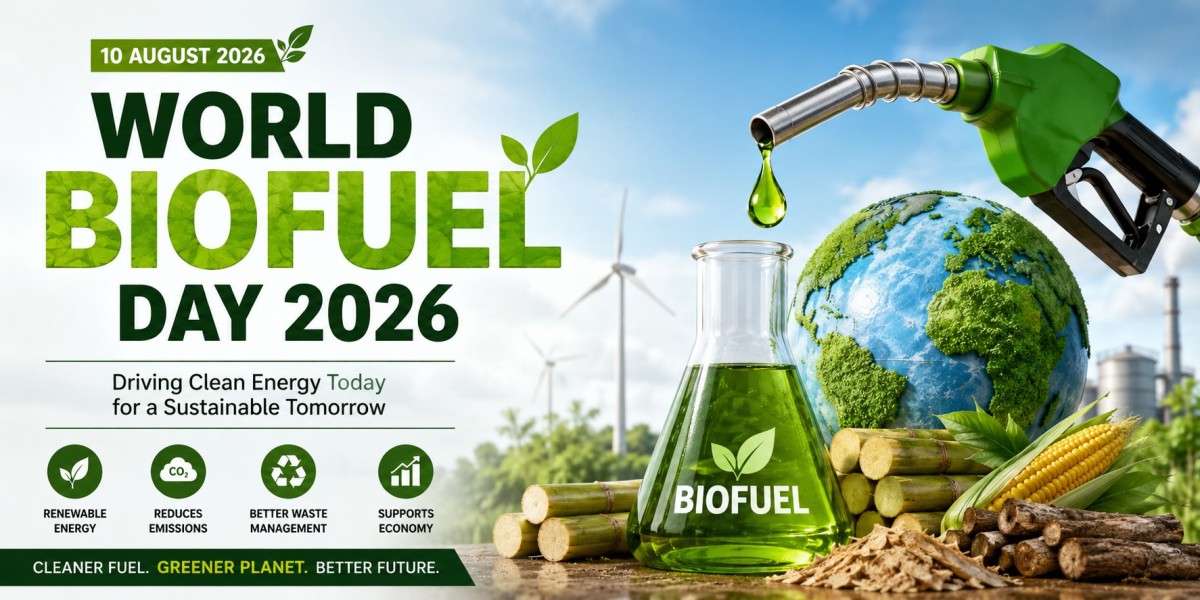
World Biofuel Day 2026 is observed on August 10 every year to highlight the importance of biofuels and their potential to reduce dependence on conventional fossil fuels. The day also creates awareness about cleaner energy alternatives that can support economic development, reduce pollution and contribute to a more sustainable future. 🌍
Biofuels come from renewable biological materials such as plants, agricultural residues, animal waste and other organic matter. Unlike fossil fuels, which take millions of years to form, biofuels can be produced from resources that can be replenished within a relatively short period.
Also Read: Brazilian Model Larissa Responds to Allegations of Rahul Gandhi’s Vote Chori Connection
🌿 What Are Biofuels?
Biofuels are fuels produced from biomass, which refers to organic materials obtained from plants, animals and other biological sources.
Common examples include:
- 🌾 Ethanol – Produced mainly from crops such as sugarcane, corn and other starch-rich materials.
- 🛢️ Biodiesel – Produced from vegetable oils, animal fats and used cooking oil.
- ♻️ Biogas – Produced when microorganisms break down organic waste in the absence of oxygen.
- 🌱 Bio-CNG – Purified biogas that can serve as a cleaner alternative to conventional natural gas.
- 🔥 Biomass fuels – Made from agricultural and forestry residues and other organic materials.
These fuels can support transportation, industries, electricity generation and household energy needs.
📅 Why Do We Celebrate World Biofuel Day?
World Biofuel Day aims to increase awareness about the potential of biofuels as an alternative to traditional fossil fuels.
The day encourages governments, industries, researchers and citizens to explore renewable energy sources and adopt technologies that can reduce environmental damage.
Biofuel development can also provide additional income opportunities for farmers by creating markets for agricultural residues and energy crops. 🚜
📜 History of World Biofuel Day
World Biofuel Day is observed on August 10 to commemorate an important milestone in the development of biofuel technology.
The day is associated with Sir Rudolf Diesel, the inventor of the diesel engine. On August 10, 1893, Diesel demonstrated an early version of his engine in Augsburg, Germany. His work later became closely connected with the possibility of using vegetable oils as fuel.
The Government of India began observing World Biofuel Day on August 10 to promote awareness about alternative fuels, energy security and the development of sustainable fuel technologies.
🇮🇳 Importance of Biofuels in India
Biofuels have significant potential in India because the country has a large agricultural sector and produces substantial quantities of agricultural residues.
India has promoted biofuels as part of its efforts to reduce dependence on imported crude oil and increase the use of domestic renewable resources.
The country has also encouraged the production and blending of ethanol with petrol. Sugarcane, maize and other feedstocks can contribute to ethanol production, while agricultural residues and organic waste can support advanced biofuel and biogas projects.
🚜 Benefits for Farmers
Biofuel production can create additional economic opportunities for farmers.
Instead of treating agricultural residues only as waste, producers can use suitable residues as raw materials for bioenergy projects. This approach can create additional revenue streams and encourage better waste management.
🇮🇳 Supporting Energy Security
India imports a significant amount of its crude oil requirements. Increasing the use of domestically produced biofuels can help diversify the country’s energy sources.
Greater use of renewable fuels can reduce some dependence on imported fossil fuels and strengthen long-term energy security.
🌍 Environmental Importance of Biofuels
Biofuels can contribute to environmental protection when producers source, process and use them sustainably.
🌱 1. Lower Dependence on Fossil Fuels
Biofuels provide an alternative to petroleum-based fuels. Greater use of renewable sources can help reduce reliance on finite fossil fuel reserves.
♻️ 2. Better Waste Management
Biogas and other bioenergy technologies can convert organic waste into useful energy. This approach can help reduce waste accumulation and improve resource utilisation.
🌾 3. Utilisation of Agricultural Residues
Technologies can convert suitable crop residues into energy instead of allowing them to remain unused or be burned.
🌎 4. Potential Reduction in Emissions
Depending on the feedstock, production method and overall lifecycle, biofuels can reduce greenhouse-gas emissions compared with conventional fossil fuels.
However, biofuel production does not automatically guarantee environmental benefits. Sustainable farming practices, responsible land use and efficient production systems remain important.
🔬 Types of Biofuels
Biofuels generally fall into different categories based on the raw materials and technologies used.
🌾 First-Generation Biofuels
First-generation biofuels use food crops or other conventional agricultural feedstocks.
Examples include:
- Ethanol from sugarcane and corn
- Biodiesel from vegetable oils
These fuels are relatively well established, but their production can raise concerns about food security and land use.
🌿 Second-Generation Biofuels
Second-generation biofuels use non-food materials such as:
- Agricultural residues
- Crop waste
- Wood residues
- Other lignocellulosic biomass
These technologies can reduce competition with food crops and make better use of agricultural waste.
🧬 Third-Generation Biofuels
Third-generation biofuels mainly focus on advanced feedstocks such as algae.
Researchers continue to study algae because they can potentially produce oils and other materials suitable for fuel production without relying on conventional agricultural land in the same way as some traditional crops.
🚗 Biofuels and Transportation
The transportation sector remains one of the major areas where biofuels can play an important role.
Ethanol blending can reduce the amount of petrol required for certain applications, while biodiesel can be used in suitable diesel engines.
Bio-CNG can also support cleaner mobility, particularly in vehicles designed or adapted to use compressed natural gas.
🚛 From cars and buses to agricultural machinery and commercial vehicles, biofuels can contribute to the transition toward a more diversified energy system.
⚡ Biofuels and the Rural Economy
Biofuel development can connect the energy sector with agriculture and rural communities.
Farmers can potentially earn additional income by supplying suitable agricultural residues and feedstocks. Rural areas can also benefit from biogas plants, biomass processing facilities and other renewable-energy projects.
This connection can support:
Agriculture → Biomass → Biofuel Production → Energy → Economic Opportunity 🔄
💼 Employment and Economic Opportunities
The biofuel sector can create employment opportunities across several stages, including:
- 🌾 Feedstock cultivation
- 🚜 Biomass collection
- 🏭 Processing and manufacturing
- 🔬 Research and development
- 🚛 Transportation and logistics
- ⚙️ Plant operation and maintenance
- ♻️ Waste management
As biofuel technologies develop, they can create opportunities for entrepreneurs, farmers, engineers, researchers and skilled workers.
⚠️ Challenges in Biofuel Production
Despite their advantages, biofuels also face several challenges.
1. 🌾 Availability of Feedstock
Biofuel plants need a consistent supply of suitable raw materials. Seasonal agricultural production can make supply management difficult.
2. 💰 Production Costs
Advanced biofuel technologies can require significant investment in infrastructure, equipment and research.
3. 💧 Water and Land Requirements
Some biofuel crops can require land and water resources. Poor planning can create pressure on food production and natural ecosystems.
4. 🚚 Collection and Transportation
Agricultural residues are often scattered across large areas. Collecting and transporting them to processing facilities can increase costs.
5. 🔬 Need for Advanced Technology
Second- and third-generation biofuels require advanced technologies to achieve efficient and commercially viable production.
🌏 Biofuels and a Sustainable Future
Biofuels alone cannot solve all global energy and environmental challenges. However, they can form an important part of a broader renewable-energy strategy.
A sustainable energy system can combine:
☀️ Solar energy
💨 Wind energy
💧 Hydropower
🌱 Bioenergy
🔋 Energy storage
⚡ Energy efficiency
🚗 Electric mobility
♻️ Waste-to-energy technologies
Using different energy sources can make the overall energy system more flexible and resilient.
🇮🇳 India’s Biofuel Vision
India continues to promote biofuels as part of its broader clean-energy and energy-security efforts. Ethanol blending, compressed biogas, waste-to-energy projects and advanced biofuel technologies can contribute to this transition.
The country’s large agricultural sector gives it considerable potential to produce biofuels from suitable crops, agricultural residues and organic waste.
The success of this transition will depend on sustainable feedstock management, technological innovation, efficient infrastructure and cooperation between farmers, industries and policymakers.
💡 How Can We Support a Cleaner Energy Future?
Individuals may not produce biofuels themselves, but they can contribute to sustainable energy practices by:
- ♻️ Reducing unnecessary waste
- 🌱 Supporting responsible renewable-energy initiatives
- 🚗 Using public transport or shared mobility where practical
- 🔋 Saving electricity and improving energy efficiency
- 🗑️ Separating organic and recyclable waste
- 🌾 Supporting responsible agricultural-waste management
- 📢 Learning about renewable-energy technologies and spreading awareness
Small changes, when adopted by large communities, can contribute to meaningful environmental benefits.
🌟 World Biofuel Day 2026: Key Message
World Biofuel Day reminds us that energy production and environmental protection must move together.
Biofuels can convert agricultural resources and organic waste into useful energy, support farmers, create employment and reduce dependence on conventional fossil fuels. At the same time, society must produce biofuels responsibly and consider their impact on food security, land, water and biodiversity.
🕊️ Conclusion
World Biofuel Day 2026 provides an opportunity to recognise the growing importance of renewable fuels in the global energy transition. 🌍🌱
Biofuels can support energy security, rural development, waste management and cleaner transportation when people produce and use them sustainably.
The future of energy will require a combination of technologies rather than dependence on a single fuel. By investing in innovation, improving efficiency and responsibly using renewable resources, countries can build a cleaner and more sustainable energy system.
🌱 Biofuels are not just an alternative source of energy; they represent an opportunity to turn biological resources and waste into valuable energy while supporting a more sustainable future.
Also Read: National Handloom Day 2026: History, Theme, Significance and Celebrations Explained