








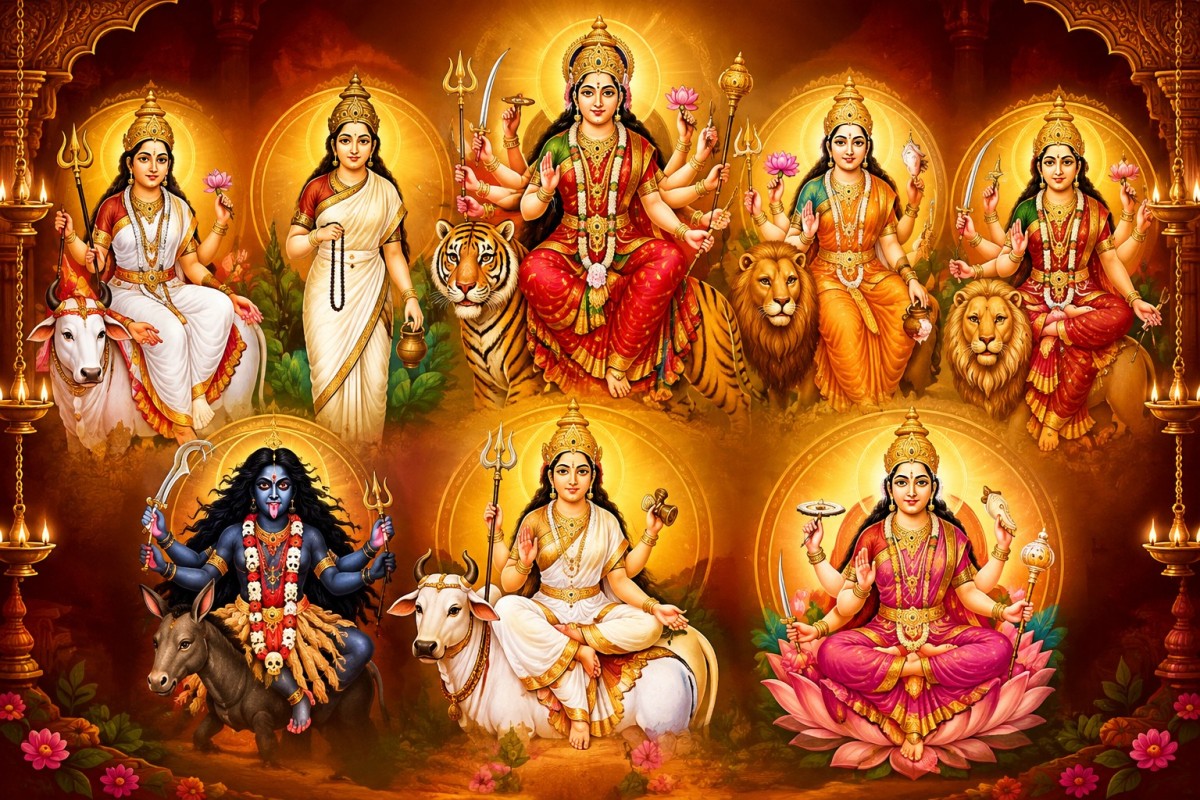
Navratri is one of India’s most important Hindu festivals, celebrated with devotion, prayers, fasting and traditional rituals. During these nine sacred days, devotees worship Goddess Durga and honour her nine divine manifestations, collectively known as Navdurga. Each manifestation represents important qualities, including courage, patience, wisdom, compassion, determination, purity and spiritual fulfilment. Hindu traditions explain how these forms express the extraordinary power of Shakti, the divine feminine energy sustaining universal balance. Devotees worship one manifestation daily and seek blessings for prosperity, protection, happiness and spiritual growth.
The traditional sequence begins with Maa Shailputri and continues through eight other powerful forms. These manifestations include Maa Brahmacharini, Maa Chandraghanta, Maa Kushmanda, Maa Skandamata, Maa Katyayani, Maa Kalaratri, Maa Mahagauri and Maa Siddhidatri. Each Goddess carries a unique story, symbolic meaning and spiritual message for devotees. Together, their stories encourage people to develop positive qualities and overcome challenges through faith. Understanding Navdurga helps devotees appreciate Navratri’s spiritual significance and celebrate the enduring power of divine feminine energy.
Also Read: Brazilian Model Larissa Responds to Allegations of Rahul Gandhi’s Vote Chori Connection
🌺 1. Maa Shailputri: The Goddess of Strength and New Beginnings
Maa Shailputri represents strength, stability, determination and the courage to embrace new beginnings. Devotees worship her on the first day of Navratri and seek blessings for confidence. Her name means daughter of the mountains, connecting her divine identity with the mighty Himalayas. Hindu traditions describe Himavan, the personification of the Himalayas, as her father.
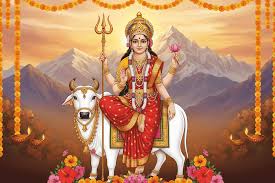
Devotional accounts identify Shailputri with Goddess Parvati, who appeared after Goddess Sati left her previous earthly form. Artists usually portray her riding Nandi, the sacred bull associated with Lord Shiva. She carries a trident in one hand and a lotus in the other. The trident represents divine strength, while the lotus symbolises purity and spiritual awakening. Her connection with mountains teaches devotees to remain firm during difficult circumstances. People worship Maa Shailputri when beginning important journeys, responsibilities or personal transformations. Her story encourages everyone to build strong foundations and pursue meaningful goals with patience and faith.
🕉️ 2. Maa Brahmacharini: The Goddess of Devotion and Penance
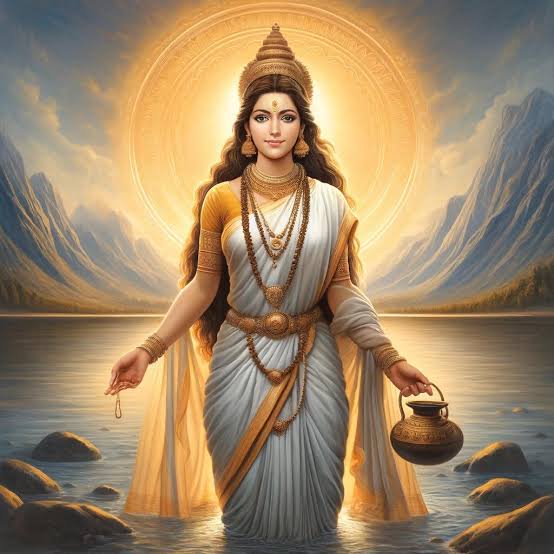
Maa Brahmacharini represents devotion, discipline, patience and unwavering commitment to spiritual goals. Devotees worship her on the second day of Navratri and remember her extraordinary determination. Hindu mythology describes Goddess Parvati performing intense penance to attain Lord Shiva as her consort.
Her dedication demonstrates the importance of perseverance when pursuing meaningful personal and spiritual ambitions. Traditional images portray Brahmacharini walking barefoot while carrying a rosary and a kamandalu. The rosary represents meditation and devotion, while the water pot symbolises simplicity and spiritual discipline. Her peaceful appearance reflects a life guided by purpose rather than material possessions. Devotees seek her blessings for concentration, mental strength and the patience to overcome obstacles. Her story reminds people that meaningful achievements often require consistent effort and self-control. She encourages individuals to maintain their principles even when circumstances challenge their determination. Through her worship, devotees celebrate the transformative power of dedication, faith and inner discipline.
🔔 3. Maa Chandraghanta: The Goddess of Courage and Protection
Maa Chandraghanta represents courage, bravery, protection and the determination to confront harmful forces. Devotees worship her on the third day of Navratri and seek blessings for fearlessness. Her name comes from the crescent moon resembling a bell that adorns her forehead. Hindu devotional traditions associate this powerful manifestation with Goddess Parvati after her marriage to Lord Shiva.
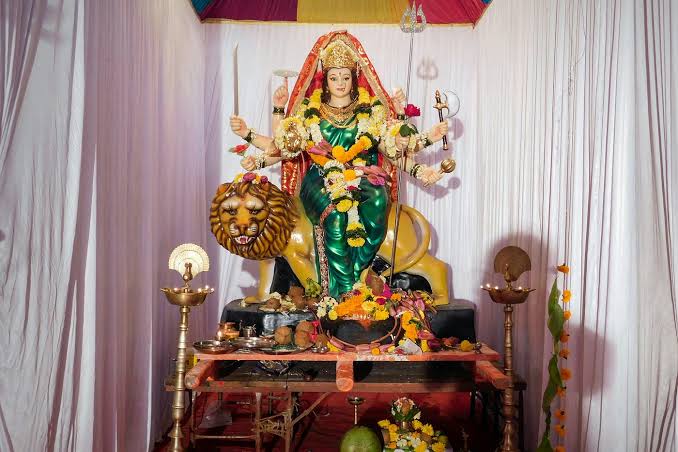
Unlike her gentler appearances, Chandraghanta displays a formidable warrior form that protects devotees. Traditional paintings show her riding a tiger or lion while carrying several divine weapons. These weapons symbolise readiness to defend righteousness and confront injustice whenever necessary. The bell associated with her name represents alertness and the power to overcome negativity. Devotees pray to her for confidence, inner peace and strength during difficult situations. Her story teaches people to oppose injustice without abandoning compassion or responsible judgement. Through Chandraghanta’s example, devotees learn that genuine courage protects others and supports harmony.
☀️ 4. Maa Kushmanda: The Goddess of Creation and Cosmic Energy
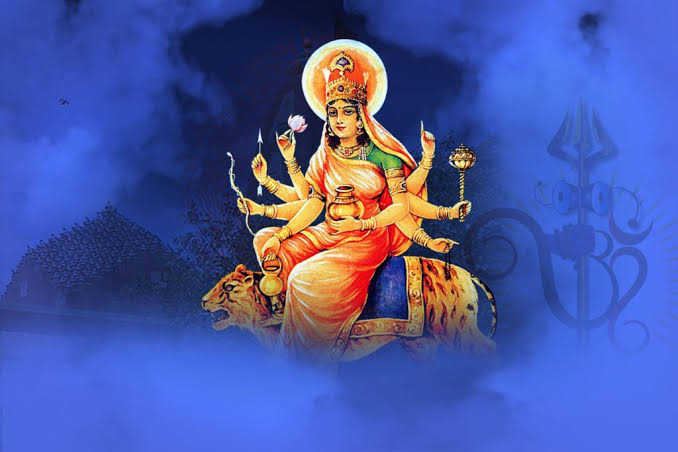
Maa Kushmanda represents creation, vitality, cosmic energy and the forces sustaining the universe. Devotees worship her on the fourth day of Navratri and seek blessings for prosperity. Hindu devotional accounts associate her radiant smile with the creation of light and universal existence. Her name traditionally connects with the cosmic egg, representing the universe’s origin and development.
Artists frequently portray Kushmanda with eight arms holding sacred objects, weapons and a rosary. She rides a lion, symbolising courage, authority and mastery over powerful natural forces. Her association with solar energy reflects brilliance, warmth and the power supporting life. Devotees believe her worship inspires enthusiasm, health, optimism and spiritual strength. Her manifestation celebrates the creative energy that sustains living beings and supports natural balance. She reminds people to use their talents constructively and contribute positively to society. Through her example, devotees recognise the importance of creativity, generosity and responsibility in everyday life.
👩👦 5. Maa Skandamata: The Goddess of Motherhood and Compassion
Maa Skandamata represents motherhood, unconditional love, compassion and the protective strength of family relationships. Devotees worship her on the fifth day of Navratri and seek blessings for family happiness. Her name means mother of Skanda, another name for Lord Kartikeya, the Hindu god of warfare. Traditional images portray her seated on a lotus or riding a lion with her son.
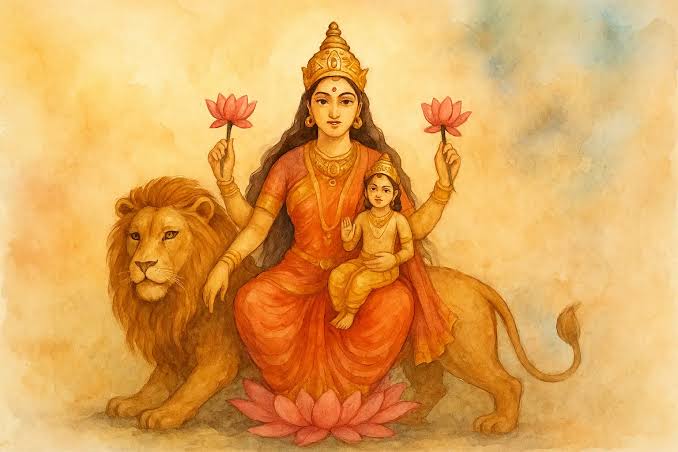
She holds Skanda in her lap, expressing maternal affection and divine protection. Her gentle appearance highlights the nurturing qualities that help families develop love, trust and understanding. Devotees pray to her for children’s wellbeing, wisdom, prosperity and harmony within their households. Her manifestation demonstrates that tenderness and strength can work together in difficult circumstances. A loving mother can nurture her children while protecting them against challenges and dangers. Her story encourages people to support vulnerable individuals and treat others with empathy. Through Skandamata’s example, devotees celebrate the enduring importance of care, sacrifice and compassion.
⚔️ 6. Maa Katyayani: The Goddess of Justice and Victory
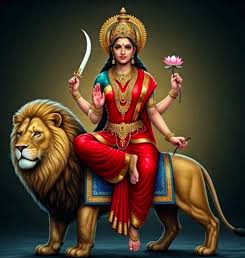
Maa Katyayani represents courage, determination, justice and the triumph of righteousness over evil. Devotees worship her on the sixth day of Navratri and seek strength against difficulties. Hindu traditions associate her manifestation with the divine battle against Mahishasura, the powerful buffalo demon.
According to popular accounts, the sage Katyayana performed intense devotion and received the Goddess’s divine presence. Maa Katyayani subsequently fought Mahishasura and helped restore balance within the universe. Traditional depictions show her riding a lion while carrying weapons that represent divine authority. These symbols express her readiness to challenge injustice and protect those facing harmful forces. Devotees seek her blessings for confidence, determination and success during challenging circumstances. Her story encourages people to defend their principles and oppose wrongdoing responsibly. She teaches that individuals must use strength wisely while protecting others from injustice. Through Katyayani’s example, devotees celebrate courage, accountability and the victory of good over evil.
Also Read: World Mental Health Day 2026: Theme, Significance and Why Mental Well-Being Matters
🌑 7. Maa Kalaratri: The Goddess Who Destroys Fear and Darkness
Maa Kalaratri represents fearlessness, protection and the destruction of ignorance and harmful forces. Devotees worship her on the seventh day of Navratri and seek courage during adversity. Her fierce appearance distinguishes her from the gentler manifestations of Goddess Durga.
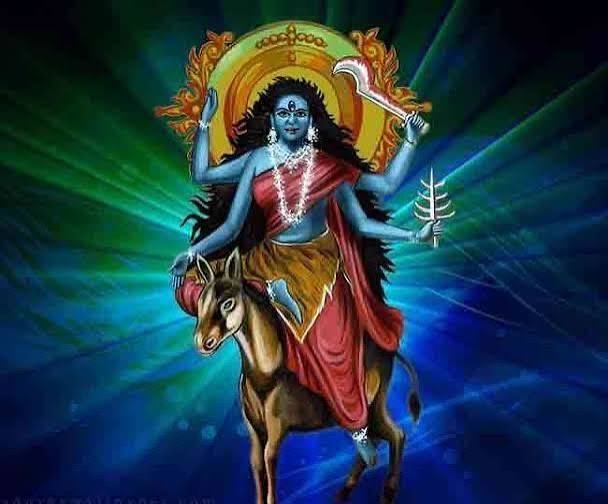
However, devotees recognise her as a compassionate protector who removes obstacles and defends righteousness. Traditional images portray her with a dark complexion, dishevelled hair and a powerful expression. She commonly rides a donkey and carries weapons representing her ability to confront evil. Her fearsome appearance symbolises the strength required to challenge destructive forces without hesitation. Devotees pray to Maa Kalaratri for protection, confidence and freedom from overwhelming fears. Her story reminds people that difficult circumstances require determination, courage and clear judgement. She also encourages individuals to confront ignorance and harmful habits within themselves. Through her worship, devotees celebrate the power that transforms fear into strength and darkness into understanding.
🤍 8. Maa Mahagauri: The Goddess of Purity and Peace
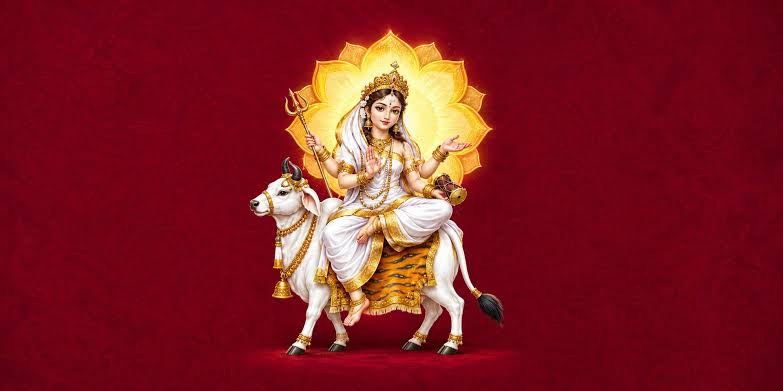
Maa Mahagauri represents purity, serenity, compassion, forgiveness and spiritual renewal. Devotees worship her on the eighth day of Navratri and seek blessings for peace. Her name means extremely fair, and traditional artwork often portrays her wearing beautiful white garments. Artists commonly show her riding a bull while holding a trident and a damaru.
Hindu devotional stories describe Goddess Parvati performing severe penance to win Lord Shiva’s love. According to a popular account, her prolonged austerities darkened her complexion before Shiva restored her radiant appearance. This transformation became associated with Mahagauri, whose form represents purity and renewed spiritual energy. Devotees seek her blessings for harmony, forgiveness, happiness and progress on their spiritual journeys. Her peaceful appearance encourages people to release resentment and approach others with kindness. She reminds everyone that personal growth requires patience, understanding and a willingness to change. Through Mahagauri’s worship, devotees celebrate inner peace, compassion and the possibility of renewal.
🌸 9. Maa Siddhidatri: The Goddess of Wisdom and Spiritual Fulfilment
Maa Siddhidatri represents wisdom, spiritual accomplishment, divine blessings and the fulfilment of meaningful aspirations. Devotees worship her on the ninth day of Navratri and seek guidance for spiritual growth. Her name combines siddhi, meaning accomplishment or spiritual power, with datri, meaning giver. Hindu devotional traditions describe her as the Goddess who grants spiritual attainments to sincere devotees.
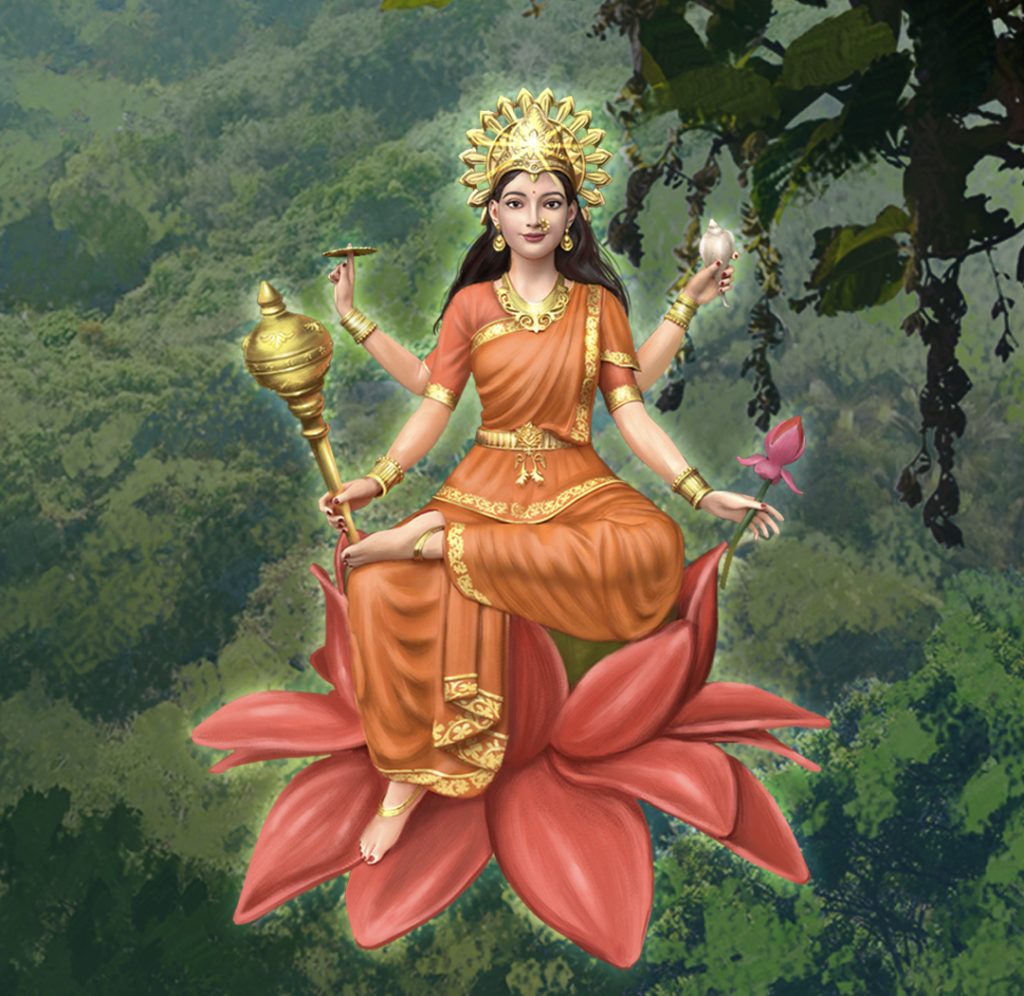
Traditional depictions show her seated on a lotus or riding a lion. She carries sacred objects such as a discus, conch, mace and lotus. These symbols represent divine authority, protection, spiritual understanding and the fulfilment of righteous aspirations. Some traditions associate her with Lord Shiva’s Ardhanarishvara form, which unites masculine and feminine energies. Devotees pray to Siddhidatri for wisdom, inner balance, confidence and spiritual advancement. Her manifestation encourages people to pursue achievements without abandoning humility, understanding or compassion. Through her worship, devotees complete the Navdurga journey by celebrating spiritual fulfilment and divine harmony.
🪔 The Spiritual Significance of Worshipping the Nine Forms
The nine manifestations of Navdurga offer devotees valuable lessons about personal growth, spiritual understanding and responsible living. Each Goddess represents qualities that help individuals face different challenges throughout their lives. Maa Shailputri inspires stability, while Maa Brahmacharini teaches discipline and unwavering devotion. Maa Chandraghanta encourages courage, and Maa Kushmanda celebrates creativity and universal energy. Maa Skandamata highlights compassion, while Maa Katyayani inspires justice and determination.
Maa Kalaratri teaches fearlessness, and Maa Mahagauri represents purity, forgiveness and peace. Maa Siddhidatri completes this spiritual journey through wisdom, accomplishment and inner balance. Together, these manifestations demonstrate that strength requires compassion and that kindness can express courage. Devotees reflect on these qualities while performing prayers, observing fasts and visiting temples. Families also share traditions, devotional songs and cultural celebrations throughout the festival. Although customs differ across communities, Navratri continues to unite people through faith and shared values. The worship of Navdurga ultimately celebrates Shakti and encourages individuals to build more compassionate lives.
✨ Conclusion: Nine Forms, One Divine Power
Navdurga represents the many dimensions of Goddess Durga and the enduring power of Shakti. Each manifestation expresses a distinct quality, yet all nine forms share a common spiritual purpose. They encourage devotees to practise courage, strengthen faith, protect others and overcome harmful influences. Their stories also highlight the importance of compassion, discipline, wisdom, purity and personal responsibility. During Navratri, devotees honour these qualities through prayers, fasting, temple visits and family celebrations. The festival provides an opportunity to reflect on personal values and pursue positive changes. Learning about the nine Goddesses helps readers understand Navratri’s cultural importance and spiritual traditions.
Their individual stories also demonstrate how divine feminine energy supports protection, creation and universal balance. Devotees can draw inspiration from these manifestations while navigating personal challenges and social responsibilities. Ultimately, Navdurga reminds everyone that goodness requires determination, while genuine strength must always accompany compassion. The nine Goddesses therefore continue inspiring faith, hope and spiritual growth across generations.
Also Read: World Mental Health Day 2026: Theme, Significance and Why Mental Well-Being Matters