








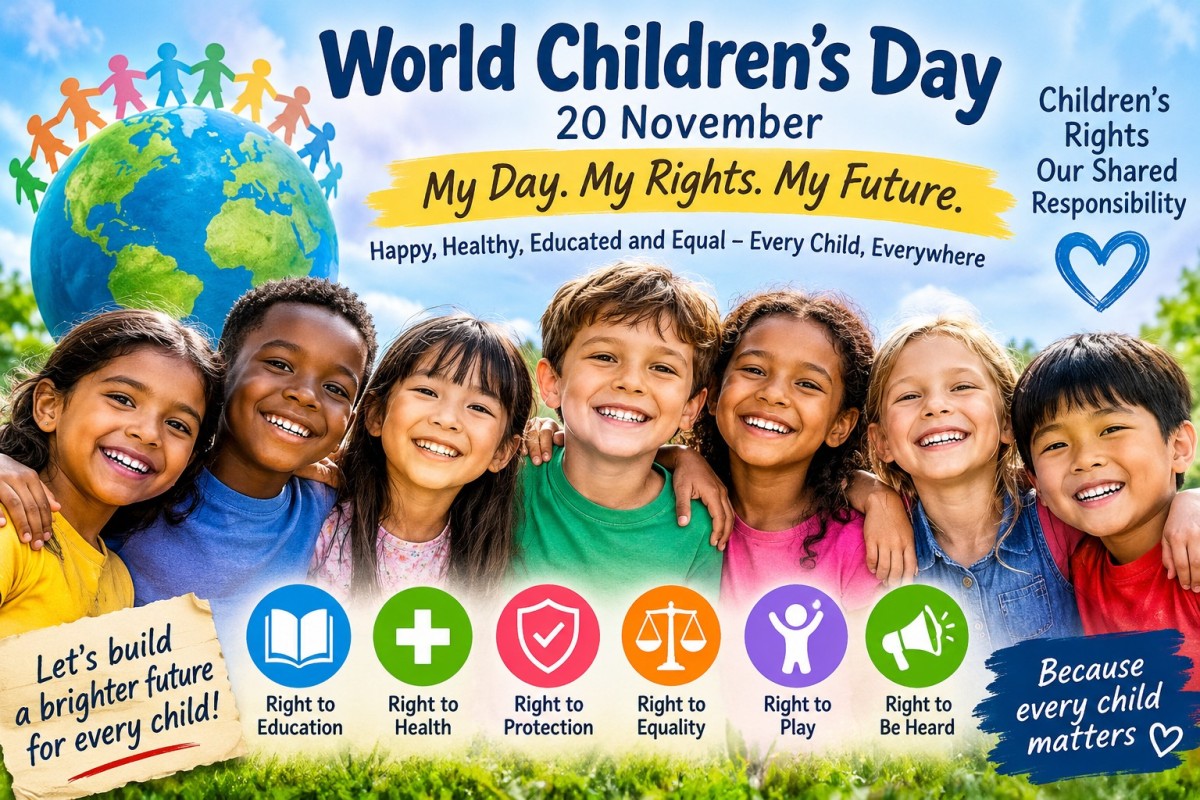
World Children’s Day 2026 will be celebrated on Friday, 20 November 2026, across the world to recognise children’s rights, promote their well-being and raise awareness about the challenges affecting children. Observed annually, this important global occasion reminds governments, communities, parents and organisations that every child deserves a safe, healthy, happy and meaningful childhood.
Children are the foundation of tomorrow’s society. However, millions of children worldwide continue to face challenges such as poverty, lack of education, malnutrition, child labour, discrimination and violence. World Children’s Day provides an opportunity to address these issues and encourage collective action to protect every child’s future.
The 2026 theme, “My Day. My Rights. My Future.”, highlights the importance of listening to children, respecting their rights and giving them opportunities to participate in decisions that affect their lives.
📅 When Is World Children’s Day 2026?
World Children’s Day is observed every year on 20 November. In 2026, the celebration falls on Friday.
The day is an international opportunity to promote children’s rights, encourage equal opportunities and remind the world that every child deserves access to education, healthcare, protection and a supportive environment.
UNICEF leads global awareness and advocacy initiatives to ensure that children’s voices are heard and their rights are respected.
🎯 What Is the Theme of World Children’s Day 2026?
The official theme for World Children’s Day 2026 is:
💙 “My Day. My Rights. My Future.”
The theme focuses on three important aspects of childhood:
1. My Day: Every child deserves a happy childhood filled with learning, playing, exploring, creativity and meaningful experiences.
2. My Rights: Every child has fundamental rights, including education, healthcare, protection, equality and the freedom to express their opinions.
3. My Future: Children should have opportunities to share their dreams, participate in decisions and shape a better future for themselves and their communities.
The theme encourages adults, policymakers, educators and communities to listen to children and take their opinions seriously. It also highlights the responsibility of society to create a world where every child can grow up with dignity, safety and equal opportunities.
📖 History of World Children’s Day
The history of World Children’s Day dates back to 1954, when the United Nations General Assembly recommended establishing a Universal Children’s Day.
The main objective was to promote international friendship and understanding among children while encouraging governments and communities to improve children’s welfare.
Two important historical milestones make 20 November particularly significant:
- 20 November 1959: The United Nations General Assembly adopted the Declaration of the Rights of the Child, establishing important principles for children’s protection and well-being.
- 20 November 1989: The United Nations adopted the Convention on the Rights of the Child (UNCRC), an international treaty recognising the civil, political, economic, social and cultural rights of children.
Since then, 20 November has become an important date for global campaigns, educational programmes and initiatives promoting children’s rights.
🌟 Why Is World Children’s Day Important?
World Children’s Day is more than a celebration. It is a reminder that every child deserves protection, respect, equality and opportunities to succeed.
Here are some important reasons why this day matters:
🎓 1. Promotes the Right to Education
Education is one of the most important foundations of a child’s future. Every child should have access to quality education regardless of their economic background, gender, nationality or social circumstances.
This day encourages governments and communities to improve educational opportunities and reduce barriers that prevent children from attending school.
🛡️ 2. Raises Awareness About Child Protection
Millions of children experience abuse, exploitation, neglect and unsafe living conditions.
World Children’s Day highlights the need for stronger child protection systems, safer communities and effective laws to protect children from violence and exploitation.
⚖️ 3. Encourages Equality and Inclusion
Every child deserves equal opportunities, regardless of disability, gender, religion, economic background or nationality.
The occasion promotes an inclusive society where children are respected, supported and given opportunities to reach their full potential.
🩺 4. Supports Children’s Health and Well-being
Good health is essential for children’s physical, emotional and mental development.
Access to nutritious food, clean drinking water, healthcare, vaccination and mental health support should be available to every child.
🗣️ 5. Gives Children a Voice
Children have the right to express their opinions and participate in decisions that affect their lives.
World Children’s Day encourages parents, teachers, governments and communities to listen to children’s concerns, ideas and aspirations.
⚖️ Understanding the Fundamental Rights of Children
The United Nations Convention on the Rights of the Child recognises that children have fundamental rights that must be respected and protected.
Some of the most important children’s rights include:
- Right to Education: Every child has the right to access education and learning opportunities.
- Right to Life and Development: Every child deserves opportunities to survive, grow and develop.
- Right to Health: Children should have access to healthcare, nutritious food and clean water.
- Right to Protection: Every child must be protected from abuse, neglect, exploitation and violence.
- Right to Equality: No child should face discrimination based on their background or circumstances.
- Right to Identity: Children have the right to a name, nationality and identity.
- Right to Participation: Children have the right to express their views and have them considered.
- Right to Play: Every child deserves time and opportunities for recreation, sports and cultural activities.
These rights apply to every child, without discrimination.
🌍 Major Challenges Faced by Children Around the World
Despite international efforts to protect children’s rights, many children continue to experience serious challenges.
Some major global concerns include:
Child Poverty: Economic hardship affects children’s access to education, healthcare, nutritious food and safe housing.
Child Labour: Children in different parts of the world are forced into work that can affect their education, health and development.
Lack of Education: Many children face barriers to schooling because of poverty, conflict, discrimination and limited educational infrastructure.
Malnutrition: Poor nutrition can affect children’s physical growth, learning abilities and overall health.
Child Abuse and Exploitation: Violence, neglect, trafficking and exploitation continue to threaten children’s safety.
Digital Safety: Children increasingly face online risks, including cyberbullying, privacy violations, harmful content and online exploitation.
Climate Change: Environmental challenges, natural disasters and extreme weather can disrupt children’s education, health and access to essential services.
Addressing these problems requires cooperation between governments, international organisations, schools, families and communities.
🎉 How Is World Children’s Day Celebrated Around the World?
World Children’s Day is celebrated through educational, cultural and awareness activities in different countries.
Some popular ways of observing the occasion include:
- Organising special programmes and activities in schools.
- Conducting awareness campaigns about children’s rights.
- Arranging art competitions, storytelling sessions and cultural performances.
- Hosting discussions, workshops and educational programmes.
- Encouraging children to express their ideas and opinions.
- Organising community activities that support underprivileged children.
- Illuminating famous landmarks and buildings in blue to show support for children’s rights.
UNICEF also encourages children to take leadership roles in public activities and share their ideas through campaigns and discussions.
🇮🇳 World Children’s Day 2026 in India
In India, World Children’s Day provides an opportunity to highlight the importance of child education, nutrition, healthcare, equality and protection.
Although India celebrates National Children’s Day on 14 November to mark the birth anniversary of Jawaharlal Nehru, World Children’s Day is observed internationally on 20 November.
Schools, educational institutions, child welfare organisations and communities can use this occasion to organise awareness programmes, cultural activities and discussions about children’s rights.
The day also draws attention to important issues such as child labour, school dropouts, malnutrition, gender inequality and child protection.
Creating a safe and supportive environment for every child remains a shared responsibility.
💡 How Can We Support Children’s Rights?
Protecting children’s rights requires continuous action rather than a single day’s celebration.
Here are some meaningful ways everyone can contribute:
- Support access to quality education for every child.
- Speak up against child labour, abuse and exploitation.
- Encourage children to express their opinions freely.
- Promote gender equality and inclusive learning.
- Support organisations working for child welfare.
- Create safe environments at home, school and in communities.
- Teach children about their rights and responsibilities.
- Promote responsible digital habits and online safety.
- Encourage sports, creativity and extracurricular activities.
- Listen to children’s dreams, concerns and ideas.
Even small actions can contribute to a safer and brighter future for children.
❤️ Conclusion: Every Child Deserves a Better Future
World Children’s Day 2026 reminds us that children are not only the future of the world but also important members of society today.
The theme “My Day. My Rights. My Future.” encourages everyone to recognise children’s voices, respect their fundamental rights and create opportunities for them to achieve their dreams.
Every child deserves education, healthcare, protection, equality and the freedom to grow without fear or discrimination.
Protecting childhood is a shared responsibility. Governments, parents, teachers, organisations and communities must work together to build a world where every child is heard, valued, protected and empowered.
This World Children’s Day, let us listen to children, stand up for their rights and work towards a brighter future for every child.