









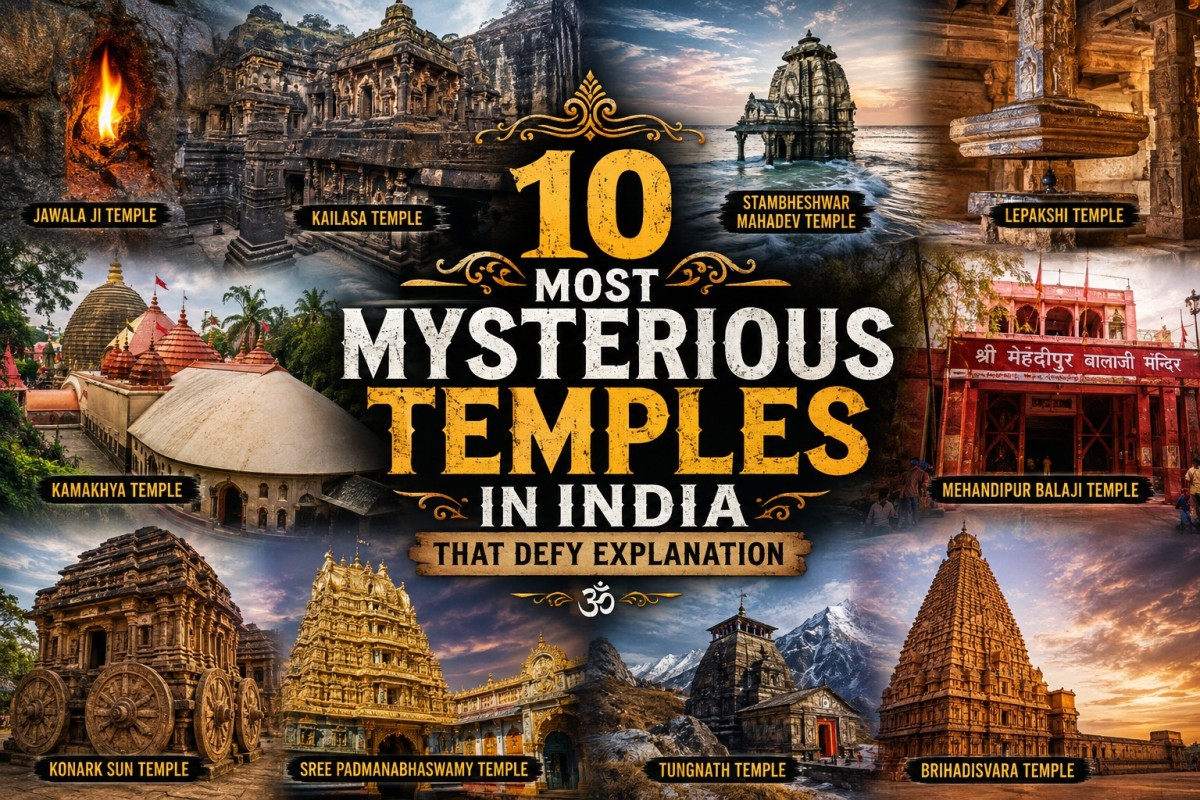
India is a land of ancient civilizations, spiritual traditions, and extraordinary architecture. Across the country, some temples are surrounded by fascinating legends, unusual natural phenomena, and architectural features that continue to amaze visitors.
While many of these mysteries have scientific or historical explanations, others remain subjects of debate and folklore. From eternal-looking flames to pillars that appear to float, these temples offer a fascinating glimpse into India’s mysterious past.
Let’s explore 10 of the most mysterious temples in India.
🔥 1. Jwala Ji Temple — Himachal Pradesh
Nestled in the Kangra region of Himachal Pradesh, the Jwala Ji Temple is famous for its naturally occurring flames.
Instead of a conventional idol, the temple is associated with several flames emerging from cracks in the rock. Devotees consider these flames manifestations of the goddess.
The fascinating question is: Why do the flames continue to burn?
Geologists attribute such flames to naturally occurring combustible gases, but their presence within this ancient sacred site has contributed to centuries of mystery and devotion.
🛕 2. Kailasa Temple — Ellora, Maharashtra
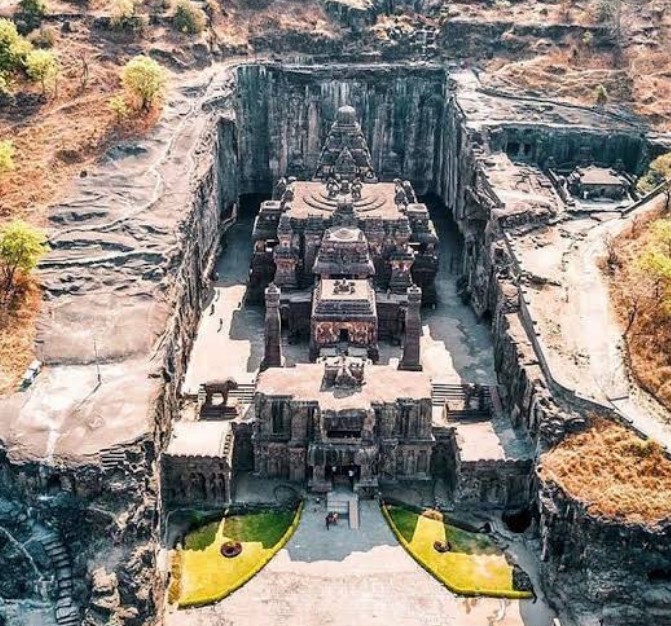
The Kailasa Temple at Ellora is one of India’s greatest architectural achievements.
What makes it extraordinary is that the temple was carved directly out of a massive section of rock. Rather than assembling the structure stone by stone, ancient craftsmen removed enormous quantities of rock to reveal the temple.
Its scale, symmetry, sculptures, and engineering are astonishing.
Even today, visitors wonder how craftsmen working more than a thousand years ago planned and executed such a monumental rock-cut structure with comparatively simple tools.
🌊 3. Stambheshwar Mahadev Temple — Gujarat
Imagine visiting a temple that disappears beneath the sea.
That is the extraordinary experience associated with Stambheshwar Mahadev Temple in Gujarat. Located near the Arabian Sea, the temple is periodically surrounded and submerged by seawater during high tide.
When the tide recedes, the temple becomes accessible again.
The phenomenon has a natural explanation based on the temple’s location and tidal cycles, but watching a sacred shrine seemingly vanish into the sea remains a remarkable sight.
🏛️ 4. Lepakshi Temple — Andhra Pradesh
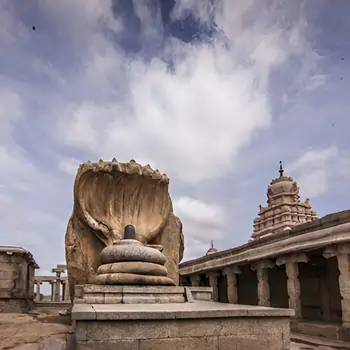
The Veerabhadra Temple at Lepakshi is famous for its magnificent Vijayanagara architecture and an unusual feature known as the Hanging Pillar.
The pillar appears to have a gap between its base and the floor, creating the impression that it is suspended in the air.
Visitors sometimes demonstrate the gap by sliding a thin piece of cloth or paper underneath it.
The pillar is part of a larger architectural structure, and its unusual position has inspired numerous theories and legends. Whatever the engineering explanation, it remains one of the temple’s most fascinating attractions.
🌺 5. Kamakhya Temple — Assam
Perched on Nilachal Hill in Guwahati, the Kamakhya Temple is one of India’s most important Shakti pilgrimage sites.
Unlike temples centered around a conventional image of a deity, the main shrine is associated with a naturally occurring rock formation representing the goddess.
The temple is particularly famous for the annual Ambubachi Mela, during which the shrine is connected with the symbolic menstruation of the goddess.
The combination of ancient mythology, unusual ritual traditions, and the temple’s unique form of worship makes Kamakhya one of India’s most intriguing sacred sites.
🕉️ 6. Mehandipur Balaji Temple — Rajasthan
Located in Rajasthan, Mehandipur Balaji Temple has developed a reputation for unusual and intense religious rituals.
The temple is dedicated to Hanuman, worshipped here as Balaji. Many visitors come seeking relief from what they believe to be supernatural problems or negative influences.
Stories surrounding the temple include accounts of spiritual cleansing and exorcism.
These claims belong to the realm of religious belief and folklore rather than established science, but they have made Mehandipur Balaji one of India’s most mysterious pilgrimage destinations.
🌞 7. Konark Sun Temple — Odisha
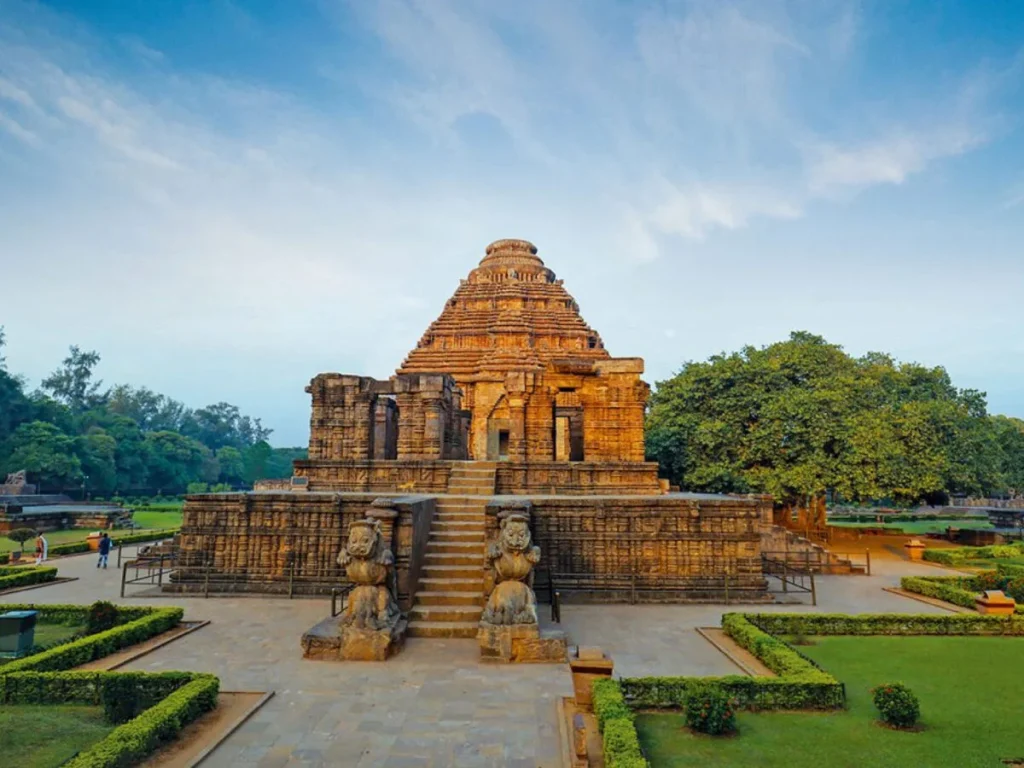
The magnificent Konark Sun Temple was built in the 13th century and is designed in the form of a gigantic stone chariot dedicated to the Sun God.
Its famous wheels are richly carved, while the temple’s architecture demonstrates remarkable knowledge of geometry, astronomy, and sculpture.
Over the centuries, numerous legends have developed around the temple, including stories about its construction and lost architectural elements.
Although many popular claims about Konark are difficult to verify, the surviving monument itself is extraordinary enough to inspire wonder.
🐍 8. Sree Padmanabhaswamy Temple — Kerala
The Sree Padmanabhaswamy Temple in Thiruvananthapuram became internationally famous after enormous treasures were discovered in its underground vaults.
Several temple vaults have been the subject of intense public fascination. One particular vault, often referred to as Vault B, has generated countless stories and legends.
Some popular accounts describe supernatural dangers associated with opening it. However, many sensational claims surrounding the vault are matters of tradition and speculation rather than established fact.
The temple’s extraordinary history, architecture, wealth, and secrecy nevertheless make it one of India’s most fascinating religious sites.
🏔️ 9. Tungnath Temple — Uttarakhand
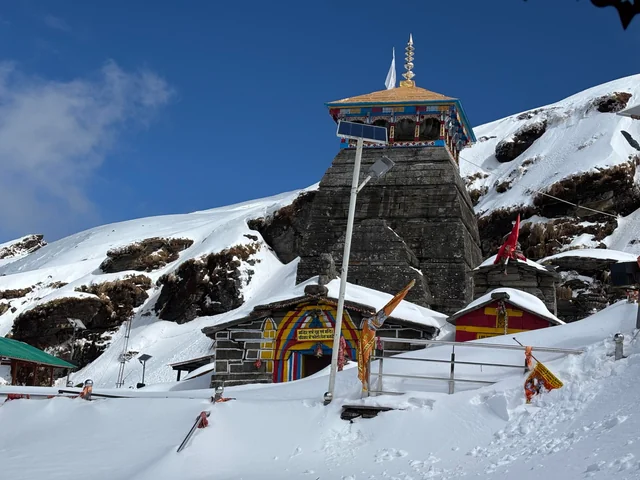
High in the Himalayas stands Tungnath, widely regarded as one of the highest Shiva temples in the world.
Reaching the temple requires a challenging mountain trek, and the surrounding landscape can appear almost otherworldly.
According to Hindu tradition, Tungnath is connected with the Pandavas and the story of their search for Lord Shiva.
The combination of extreme altitude, ancient traditions, harsh Himalayan weather, and breathtaking isolation gives Tungnath an atmosphere unlike almost any other temple in India.
🗿 10. Brihadisvara Temple — Tamil Nadu
Built during the Chola period, the Brihadisvara Temple in Thanjavur is a masterpiece of South Indian architecture.
Its enormous vimana rises dramatically above the temple complex, while its stone construction and detailed carvings demonstrate the extraordinary capabilities of medieval Indian builders.
The sheer scale of the monument has inspired many popular theories about how its massive stones were transported and positioned.
Rather than needing supernatural explanations, the temple is a remarkable example of sophisticated ancient engineering. Exactly how every construction challenge was overcome remains a fascinating subject for historians and architects.
🤔 Why Are These Temples Called “Mysterious”?
The mystery surrounding India’s temples comes from several different sources:
- 🔥 Natural phenomena — such as flames, tides, and unusual geological features.
- 🏗️ Ancient engineering — enormous structures created without modern machinery.
- 🕉️ Religious traditions — stories and rituals passed down for centuries.
- 🗿 Unusual architecture — features such as hanging pillars and massive rock-cut structures.
- 📜 Legends and folklore — stories whose origins go back generations.
- 🔬 Unanswered questions — historical details that researchers continue to investigate.
It’s important to distinguish between documented history, scientific explanations, religious beliefs, and legends. A temple can be mysterious and fascinating without requiring a supernatural explanation.
✨ Final Thoughts
India’s temples are more than places of worship. They are living records of ancient art, engineering, mythology, astronomy, culture, and human imagination.
Whether you’re fascinated by the floating-looking pillar at Lepakshi, the natural flames of Jwala Ji, the sea at Stambheshwar, or the monumental architecture of Kailasa and Brihadisvara, each temple tells a unique story.
Perhaps that’s the greatest mystery of all: How did people centuries ago create places that continue to amaze us today?
India’s mysterious temples remind us that the past still has plenty of stories waiting to be explored. 🛕✨