







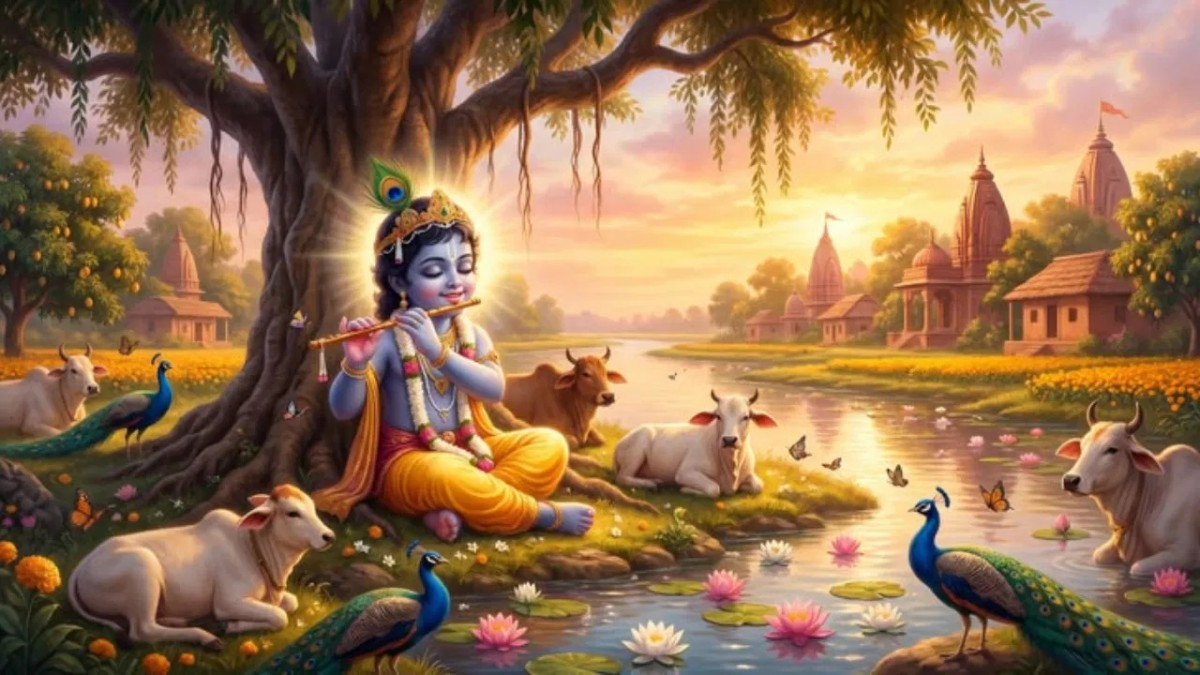
Janmashtami is one of the most widely celebrated Hindu festivals in India. Devotees observe this auspicious occasion to mark the birth of Lord Krishna, the eighth avatar of Lord Vishnu. Temples, homes and streets come alive with devotional songs, prayers, decorations and cultural programmes as devotees celebrate Krishna’s arrival on Earth.
According to Hindu scriptures, Lord Krishna appeared at midnight on the Ashtami Tithi of the Krishna Paksha in the month of Bhadrapada. His birth carries a powerful message about the triumph of good over evil and the protection of righteousness.
Also Read: Brazilian Model Larissa Responds to Allegations of Rahul Gandhi’s Vote Chori Connection
🪔 The Story of Krishna’s Birth
The story of Lord Krishna begins in Mathura, where King Kansa ruled with fear and cruelty. Kansa was the brother of Devaki, who married Vasudeva. During Devaki and Vasudeva’s wedding, a divine prophecy warned Kansa that Devaki’s eighth son would eventually cause his downfall.
Fearing the prophecy, Kansa imprisoned Devaki and Vasudeva. Whenever Devaki gave birth to a child, Kansa killed the newborn. He continued this cruel act because he wanted to prevent the prophecy from coming true.
When Devaki became pregnant for the eighth time, divine forces prepared the way for Krishna’s arrival. At midnight, Lord Krishna was born inside the prison. Devotees believe that divine light filled the prison and that Krishna revealed his divine form to his parents.
Krishna then instructed Vasudeva to take him to Gokul and place him under the care of Nanda and Yashoda. Vasudeva followed the divine instruction to protect the newborn child.
🌊 Vasudeva’s Journey Across the Yamuna
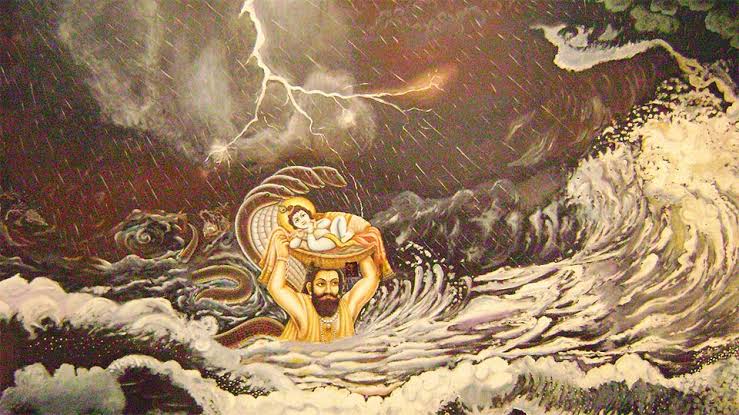
Vasudeva carried baby Krishna in a basket and left the prison during the night. According to the traditional story, the prison guards fell asleep and the doors opened miraculously.
Vasudeva then began his journey towards Gokul. He reached the Yamuna River, which had risen because of heavy rain. Despite the dangerous conditions, Vasudeva stepped into the river while carrying Krishna.
According to the legend, the divine serpent Shesha provided protection by spreading his hood over Krishna and Vasudeva. The Yamuna eventually allowed Vasudeva to cross safely.
Vasudeva finally reached Gokul and entered Nanda and Yashoda’s home. He exchanged Krishna with their newborn daughter and returned to Mathura with the baby girl.
👶 Krishna Grows Up in Gokul
Yashoda and Nanda raised Krishna in Gokul with love and affection. Krishna soon became known for his playful nature and his love for butter and curd.
Stories of his childhood describe him playing with the children of Gokul and performing several miraculous acts. His playful attempts to steal butter became one of the most popular parts of Krishna’s childhood stories.
The people of Gokul gradually recognised that Krishna was not an ordinary child. His courage and divine powers helped protect the villagers from several dangers.
⚔️ Krishna and the Fight Against Kansa
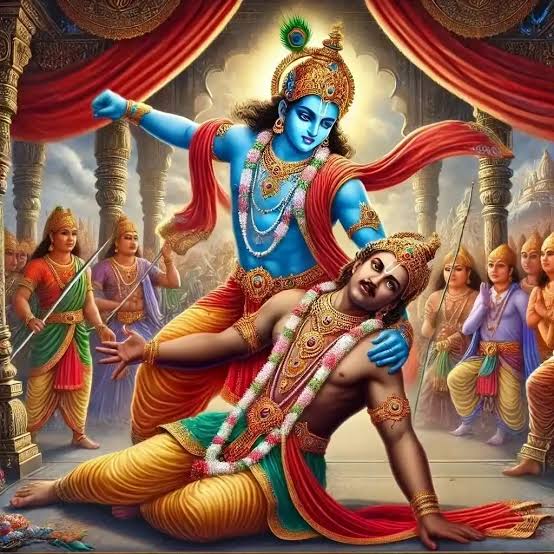
Kansa continued to fear the prophecy and repeatedly tried to eliminate Krishna. He sent several powerful demons to Gokul to kill him, but Krishna defeated them.
As Krishna grew older, he eventually returned to Mathura. He confronted Kansa and defeated him, ending his tyrannical rule.
This part of Krishna’s story represents the victory of righteousness over cruelty and injustice.
🦚 Why Is Janmashtami Celebrated at Midnight?
Devotees traditionally celebrate Krishna’s birth at midnight because Hindu scriptures describe this as the time when Lord Krishna appeared.
Temples conduct special midnight prayers and ceremonies. Devotees bathe and decorate Krishna idols, dress them in colourful clothes and ornaments, and place them in beautifully decorated cradles.
At midnight, devotees celebrate the birth by singing bhajans, ringing bells and offering sweets and flowers.
🥣 Dahi Handi and Krishna’s Childhood
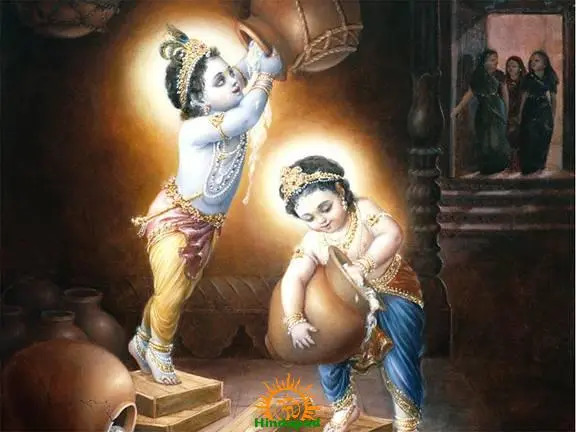
Janmashtami celebrations also include Dahi Handi, particularly in Maharashtra and several other parts of India. The tradition draws inspiration from stories about Krishna and his friends stealing butter and curd from homes.
Participants form human pyramids to reach and break a pot filled with curd. Large crowds gather to watch these energetic celebrations, which combine devotion, teamwork and entertainment.
🙏 Fasting and Religious Traditions
Many devotees observe a fast on Janmashtami and break it after the midnight birth ceremony. Some people consume only fruits, milk and other permitted foods during the day, while others observe a stricter fast according to their traditions.
Devotees also visit temples, read stories about Krishna, chant devotional prayers and participate in bhajan and kirtan programmes.
🌸 The Message of Janmashtami
Janmashtami carries a deeper spiritual message beyond the celebration of Krishna’s birth. Krishna’s life and teachings encourage people to follow dharma, perform their duties sincerely and stand against injustice.
His teachings in the Bhagavad Gita continue to influence people across generations. The festival reminds devotees that righteousness can ultimately overcome darkness, fear and injustice.
✨ Conclusion
Janmashtami celebrates the divine birth of Lord Krishna and the beginning of a journey that would eventually challenge injustice and restore righteousness. From his miraculous birth in Mathura to Vasudeva’s journey across the Yamuna and Krishna’s childhood in Gokul, the story remains an important part of Indian religious and cultural traditions.
As devotees gather to celebrate Krishna’s birth with prayers, fasting, music and festive decorations, Janmashtami continues to spread the message of faith, courage, devotion and the victory of good over evil.
Also Read; Ganesh Chaturthi 2026: Trending Ganpati Decoration Ideas to Make Your Celebration Special