











Introduction
The ocean contains millions of fascinating creatures, but few are as unique and important as the Bluestreak Cleaner Wrasse. This small tropical fish performs a job that helps entire marine ecosystems survive. Scientists and marine experts often call it the “doctor of the sea” because it cleans parasites, bacteria, dead skin, and worms from larger fish.
Although the Bluestreak Cleaner Wrasse measures only a few inches in length, it plays a major role in maintaining the health of coral reefs and marine biodiversity. Sharks, turtles, rays, and many reef fish depend on this tiny species for survival. The fish has developed a rare relationship with predators and sea animals that trust it completely.
Its cleaning behavior not only protects marine life from disease but also helps maintain ecological balance in oceans around the world. The Bluestreak Cleaner Wrasse demonstrates how even the smallest species can make a massive impact on nature.
Also Read: Brazilian Model Larissa Responds to Allegations of Rahul Gandhi’s Vote Chori Connection
🐟 What Is the Bluestreak Cleaner Wrasse?
The Bluestreak Cleaner Wrasse is a small marine fish found mainly in coral reefs across the Indian Ocean and Pacific Ocean. Scientists know it by the scientific name Labroides dimidiatus. The fish belongs to the wrasse family and usually displays a long black stripe with bright blue coloring along its body.
The species prefers warm tropical waters where coral reefs support rich marine biodiversity. It lives among reef structures and establishes “cleaning stations” where larger fish gather for cleaning services.
Unlike aggressive predators, the Bluestreak Cleaner Wrasse survives through cooperation. Instead of hunting other fish, it feeds on parasites and dead tissue collected from marine animals.
🌊 Why Is It Called the “Cleaner Fish”?
The Bluestreak Cleaner Wrasse earned the title “Cleaner Fish” because it literally cleans other sea animals. The fish removes harmful parasites, tiny worms, infected tissue, and dead skin from larger marine species.
Large fish visit cleaning stations and wait while the cleaner wrasse carefully swims over their bodies. Sometimes the cleaner fish even enters the mouths and gills of predators like sharks and groupers to remove parasites hidden inside.
This cleaning process benefits both animals:
- The larger fish become healthier and free from infections.
- The cleaner wrasse receives food by eating parasites and dead tissue.
This relationship represents one of nature’s best examples of mutual cooperation.
The Unique Relationship Between Cleaner Wrasse and Predators
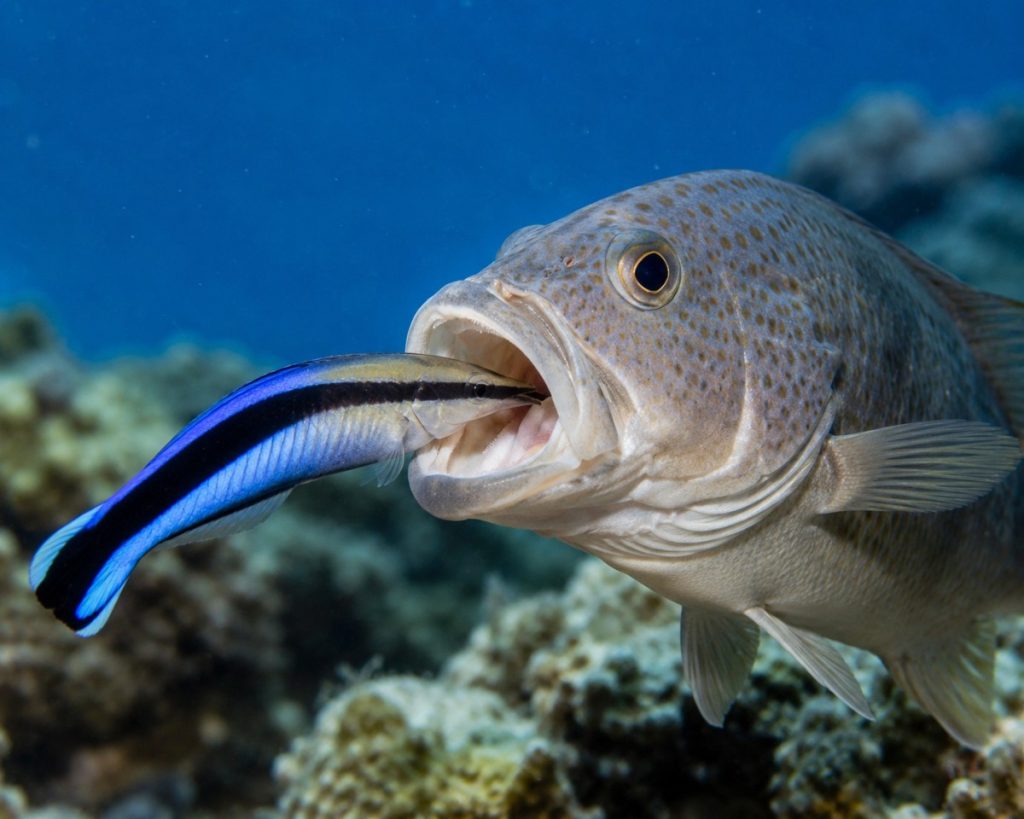
One of the most fascinating facts about the Bluestreak Cleaner Wrasse is that dangerous predators rarely attack it. Sharks, moray eels, groupers, and large reef fish recognize the cleaner wrasse as a helper.
Scientists have observed predators opening their mouths wide and remaining still while the cleaner wrasse removes parasites from their teeth and gills. In normal situations, these predators would instantly eat smaller fish. However, the cleaner wrasse enjoys special protection because of the health benefits it provides.
Marine experts consider this relationship a remarkable example of trust and biological cooperation in the animal kingdom.
Importance of Bluestreak Cleaner Wrasse in Marine Ecosystems
✔ Maintains Fish Health
The cleaner wrasse protects fish from harmful parasites and infections. Without regular cleaning, parasites can weaken fish, spread disease, and reduce survival rates.
✔ Supports Coral Reef Stability
Healthy fish populations help coral reefs survive. Many reef fish protect corals from algae growth and environmental stress. By keeping reef fish healthy, the cleaner wrasse indirectly supports coral ecosystems.
✔ Prevents Disease Spread
Parasites and bacteria spread quickly in crowded reef environments. Cleaner wrasse reduce parasite populations naturally and help control marine diseases.
✔ Maintains Ecological Balance
Every marine species plays a role in the food chain. Cleaner wrasse help maintain balance by supporting the health of many larger species.
✔ Increases Biodiversity
Coral reefs contain thousands of species living together. Cleaner wrasse help multiple species survive in shared habitats, which increases biodiversity.
⚡ Benefits of the Bluestreak Cleaner Wrasse
Benefit to Ocean Life
The fish improves the survival rate of marine species by keeping them clean and healthy. Larger fish often live longer because parasite levels remain under control.
Natural Parasite Control
The cleaner wrasse acts as a natural pest remover in the ocean. It reduces harmful organisms without damaging the environment.
Protection of Coral Reefs
Cleaner wrasse indirectly help coral reefs grow stronger by protecting reef fish populations.
Scientific Importance
Scientists study cleaner wrasse to understand animal behavior, cooperation, communication, and symbiosis in nature.
🌱 Environmental Importance
The fish contributes to sustainable marine ecosystems by naturally balancing marine health.
Symbiosis: The Science Behind Cleaner Fish
The relationship between the Bluestreak Cleaner Wrasse and larger fish is called “symbiosis.” Specifically, scientists classify it as “mutualism” because both species benefit.
- The cleaner wrasse receives food.
- The larger fish receive protection from parasites and disease.
This mutual partnership shows how cooperation can improve survival in nature.
🐠 Cleaning Stations in Coral Reefs
Cleaner wrasse create special locations called cleaning stations. Fish from different species visit these stations regularly. Some fish even wait in line for cleaning services.
Marine researchers have observed that fish behave calmly around cleaner wrasse. Predators stop hunting temporarily while receiving cleaning treatment. This unusual behavior demonstrates the importance of the cleaner wrasse in reef communities.
⚠ Threats Facing the Bluestreak Cleaner Wrasse
Although the species plays a vital role in oceans, several dangers threaten its survival.
Climate Change
Rising ocean temperatures damage coral reefs and reduce suitable habitats.
Coral Reef Destruction
Pollution, tourism damage, and coastal development destroy reef ecosystems.
🎣 Overfishing
Human fishing activities sometimes remove cleaner wrasse from reefs, affecting marine health.
Ocean Pollution
Plastic waste and chemical pollution harm marine species and coral habitats.
Why Protecting Cleaner Wrasse Matters
Protecting the Bluestreak Cleaner Wrasse also protects coral reefs and marine biodiversity. Healthy oceans depend on balanced ecosystems where every species performs its role.
If cleaner wrasse populations decline, parasite infections among fish may increase rapidly. Weak fish populations can eventually damage reef ecosystems and reduce ocean biodiversity. Conservation efforts therefore remain essential for protecting this valuable species.
📚 Interesting Facts About the Bluestreak Cleaner Wrasse
- It can safely enter the mouths of sharks and moray eels.
- Many fish recognize cleaner wrasse through body color and movement.
- Some reef fish visit cleaning stations daily.
- Cleaner wrasse communicate with fish using special swimming movements.
- Scientists consider it one of the smartest reef fish species.
✅ Conclusion
The Bluestreak Cleaner Wrasse may appear small, but it performs one of the most important jobs in the ocean. By removing parasites, bacteria, and dead tissue from larger marine animals, it keeps reef ecosystems healthy and balanced.
Its role as a cleaner fish supports biodiversity, protects coral reefs, and improves marine survival rates. The unique relationship between cleaner wrasse and predators also demonstrates the incredible cooperation that exists in nature.
The Bluestreak Cleaner Wrasse reminds humanity that even the tiniest creatures can make a huge difference in maintaining the health of the planet’s oceans.
Also Read : Welcome To The Jungle Movie Review: Hit or Flop? Fans Share Verdict