










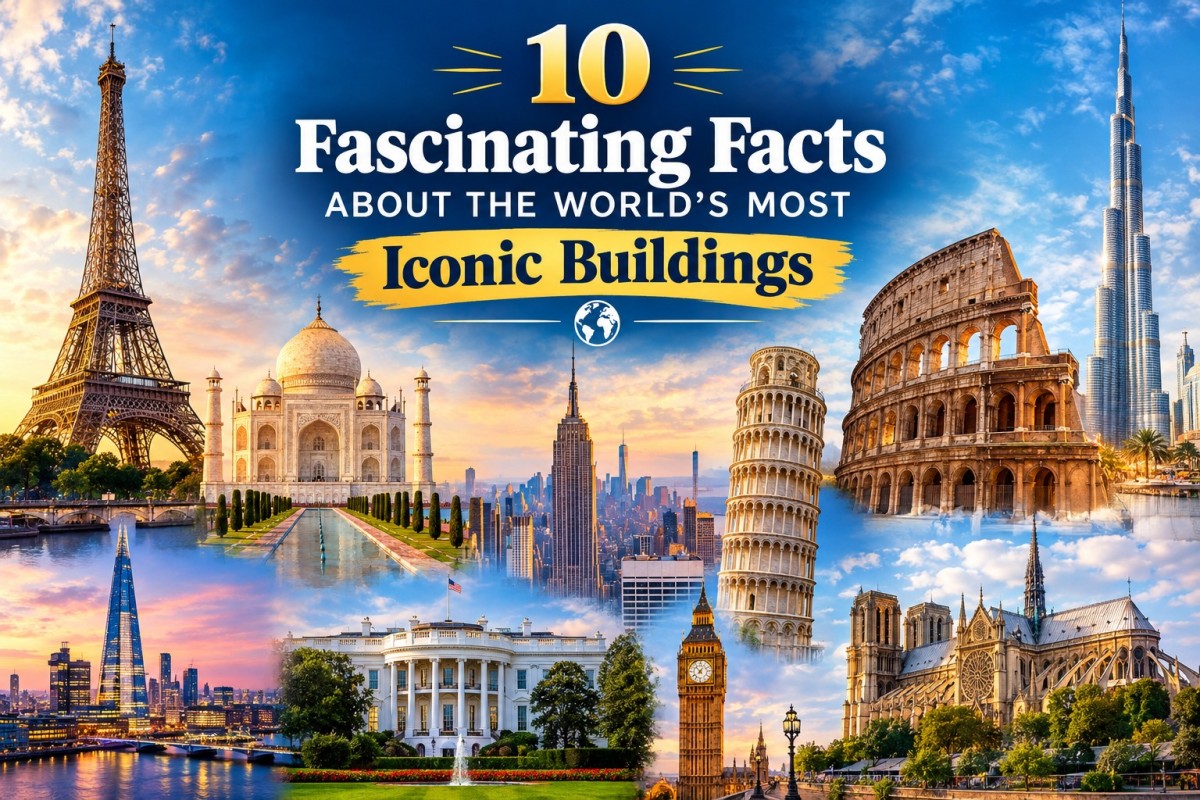
Some buildings become much more than places made of stone, steel, and concrete. They become symbols of history, culture, and human creativity.
Iconic landmarks also hide many surprising stories. Some faced serious engineering problems. Others introduced ideas that still amaze experts today.
From the Taj Mahal to the Burj Khalifa, each building offers something unusual. Here are 10 fascinating facts about the world’s most iconic buildings.
🗼 1. The Eiffel Tower’s Designer Had a Private Apartment
Gustave Eiffel, the tower’s famous designer, had a private apartment near the top. The space included comfortable furniture, wooden cabinets, and a grand piano.
Eiffel used the apartment to relax and meet selected guests. Many people wanted to visit the private space.
Some visitors even offered him large amounts of money to rent it. Eiffel refused those offers.
Today, tourists can look inside the apartment through a window near the top of the tower. The display gives visitors a glimpse into Eiffel’s private world.
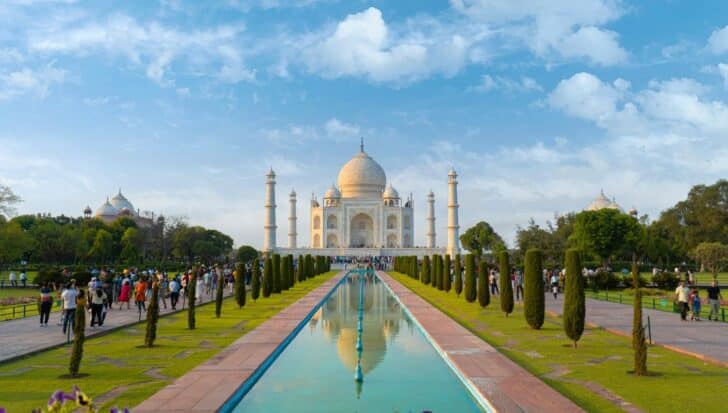
🐘 2. More Than 1,000 Elephants Helped Build the Taj Mahal
The Taj Mahal ranks among India’s most famous monuments. It also represents one of the world’s greatest architectural achievements.
Mughal emperor Shah Jahan ordered its construction in memory of his wife, Mumtaz Mahal. Thousands of workers spent about 22 years building the monument.
Historical accounts also mention the use of more than 1,000 elephants. Workers used the animals to move heavy marble and other construction materials.
Builders brought materials from India, Central Asia, and the Middle East. Today, the Taj Mahal attracts millions of visitors and holds UNESCO World Heritage status.
🏙️ 3. The Empire State Building Became a Photography Icon
The Empire State Building remains one of New York City’s most recognizable landmarks. Its distinctive Art Deco design makes it easy to identify.
Photographers have captured the skyscraper countless times. Movies, television shows, and advertisements have also featured the building.
The tower contains 102 floors and once held the title of the world’s tallest building. Even today, it remains a powerful symbol of New York.
Visitors also enjoy views of the city from its observation decks. The building continues to attract tourists from around the world.
🗼 4. The Leaning Tower of Pisa Was Never Meant to Lean
The Leaning Tower of Pisa became famous because of its unusual angle. However, its builders never planned the famous tilt.
Construction started in 1173. The tower began leaning only a few years later.
Soft ground and shallow foundations caused the problem. Engineers later tried several methods to protect the structure.
Some early efforts made the situation worse. A major project in 2001 reduced the tower’s dangerous lean.
Engineers now consider the monument much safer. Careful monitoring will help protect the tower for future generations.
🏛️ 5. The Colosseum Holds a Secret About Roman Concrete
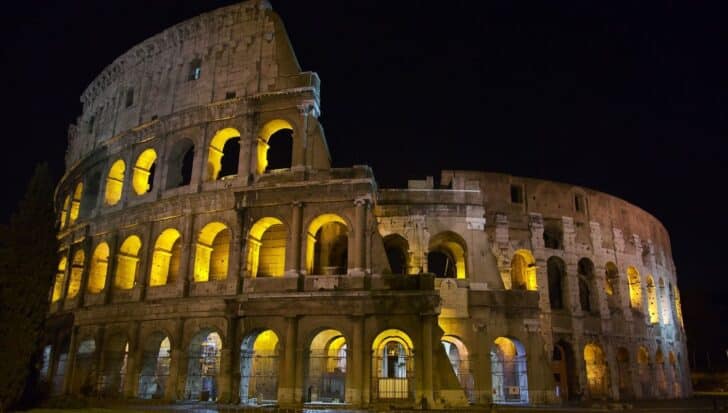
Ancient Roman builders developed impressive construction techniques. Modern scientists continue to study their methods.
Researchers found that Roman concrete could help repair small cracks. Lime played an important role in this process.
When cracks formed, chemical reactions could help seal them. This unusual property has attracted interest from modern engineers.
Scientists now study ancient Roman concrete for possible modern applications. The Colosseum therefore offers lessons that extend far beyond ancient history.
🧽 6. Cleaning the Burj Khalifa Takes Months
The Burj Khalifa stands as the world’s tallest building. Its enormous size creates a major maintenance challenge.
The skyscraper has more than 24,000 windows. Workers must clean the glass regularly to remove dust and dirt.
Special equipment helps workers reach the building’s highest sections. Some cleaning work takes place hundreds of meters above the ground.
The cleaning operation takes several months. Teams repeat the process throughout the year to keep the building’s glass exterior clear.
♻️ 7. The Shard Used Recycled Construction Materials
The Shard gives London’s skyline its distinctive appearance. However, its design offers more than visual appeal.
Builders used a large amount of recycled material during construction. Recycled steel formed an important part of the building’s structure.
The designers also focused on energy efficiency. The building uses less energy than many comparable structures.
These choices helped The Shard combine modern architecture with environmental goals. It now stands as one of London’s best-known sustainable landmarks.
🔥 8. The White House Survived Two Major Fires
The White House has experienced two major fires throughout its history. The first occurred during the War of 1812.
British forces set fire to the building in 1814. The flames caused extensive damage to the structure.
Another fire broke out in the West Wing in 1929. The incident happened during President Herbert Hoover’s administration.
Later, President Harry Truman ordered major renovations. Workers rebuilt much of the interior while preserving important exterior features.
The White House still serves as one of America’s most recognizable buildings. Its history reflects many important moments in the country’s past.

💡 9. Elizabeth Tower Has a Special Parliamentary Light
Many people call London’s Elizabeth Tower “Big Ben.” However, Big Ben actually refers to the famous bell inside the tower.
The tower also features the Ayrton Light near its top. The light signals that Parliament continues its work after dark.
The light has a long connection with the British monarchy. Historical accounts link its installation to Queen Victoria.
The feature gave the monarch a simple way to see whether Parliament remained in session. Today, it adds another fascinating detail to the famous London landmark.
🎹 10. Notre-Dame Has an Extraordinary Grand Organ
Notre-Dame Cathedral contains one of the world’s most impressive historic pipe organs. The Grand Organ has around 8,000 pipes.
It also features five keyboards and 109 stops. These features make the instrument an important part of the cathedral’s musical history.
A devastating fire struck Notre-Dame in April 2019. The organ survived the flames, but lead contamination affected the instrument.
Experts then carried out extensive restoration work. The Grand Organ returned to service when Notre-Dame reopened in December 2024.
🌍 These Buildings Tell Remarkable Stories
The world’s famous buildings offer more than beautiful views. Each landmark carries a unique story about people, history, and innovation.
The Taj Mahal shows the enormous effort behind historic architecture. The Eiffel Tower reveals an unexpected side of its famous designer.
Meanwhile, the Leaning Tower of Pisa shows how engineering problems can create global icons. The Colosseum demonstrates how ancient ideas can still inspire modern science.
Modern landmarks tell their own stories. The Burj Khalifa shows the possibilities of modern engineering. The Shard highlights the growing role of sustainable construction.
These buildings continue to attract millions of visitors. They also remind us how architecture can preserve history and inspire future generations.