








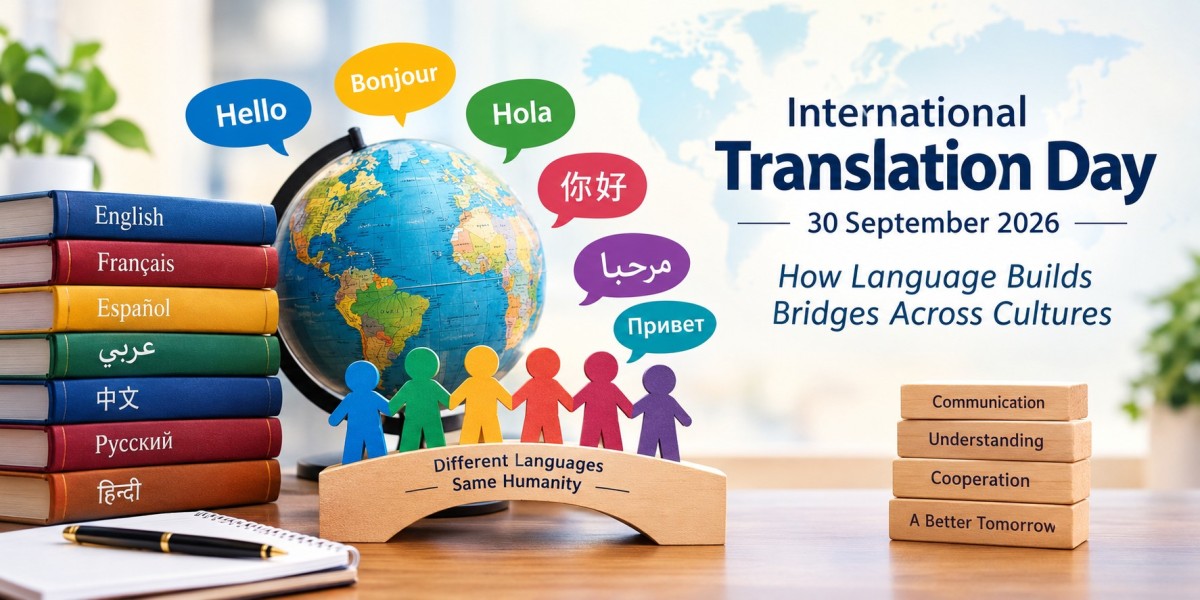
International Translation Day is observed every year on 30 September to recognise the important role of translators, interpreters and other language professionals in connecting people across linguistic and cultural boundaries. The day highlights how effective communication can support cooperation, understanding and the exchange of knowledge between communities.
In an increasingly connected world, people regularly communicate across different languages for education, business, science, diplomacy, travel and digital services. Translation helps make this communication possible by allowing ideas and information to reach wider audiences while respecting the meaning and context of the original language.
Also Read: Brazilian Model Larissa Responds to Allegations of Rahul Gandhi’s Vote Chori Connection
🌍 A Celebration of Language and Cultural Understanding
Language carries more than words. It reflects history, traditions, values and the experiences of communities. Translators therefore play an important role in transferring information while taking cultural context into account.
A well-translated text can help readers understand ideas that originate in a completely different linguistic environment. Books, research papers, government information, educational resources and digital content can reach new audiences when language professionals make them accessible in other languages.
International Translation Day also draws attention to the contribution of interpreters. In conferences, meetings, healthcare settings, courts and international organisations, interpreters help people communicate when they do not share the same language.
🌐 Translation in a Connected Digital World
Technology has transformed the way people translate and communicate. Online translation platforms, artificial intelligence and computer-assisted translation tools can process large amounts of text quickly and support professionals in their work.
However, human expertise remains important, particularly when translation requires cultural awareness, specialised knowledge, tone and context. A word can have different meanings depending on how and where it is used, making careful interpretation essential.
The growth of digital communication has also increased demand for multilingual content. Websites, mobile applications, educational platforms and international businesses increasingly provide information in multiple languages to reach diverse audiences.
🤝 Building Bridges Between Communities
Translation can help communities share their literature, knowledge and cultural traditions with people around the world. It allows stories written in one language to reach readers who speak another and gives researchers access to knowledge produced in different parts of the world.
In international cooperation, accurate translation can also help governments, institutions and organisations exchange information. Clear communication becomes particularly important when discussions involve science, education, trade, humanitarian work or international agreements.
By connecting languages, translation creates opportunities for people to learn from one another without requiring everyone to speak the same language.
📚 Supporting Education and Knowledge Sharing
Education is another area where translation has a significant role. Students and teachers can access learning materials from different countries when educational content is translated accurately.
Scientific and technical translation also supports the circulation of research. Important findings can reach researchers and professionals in other countries, encouraging collaboration and wider knowledge sharing.
As online education continues to expand, multilingual resources can make learning more accessible to people from different linguistic backgrounds.
💡 The Changing Role of Language Professionals
The work of translators is evolving alongside technology. Modern language professionals may use translation software, terminology databases, artificial intelligence tools and digital resources to improve efficiency.
At the same time, they continue to review language carefully, check context and maintain accuracy. Their role increasingly involves combining linguistic expertise with technological skills.
This changing environment shows that technology and human knowledge can work together. Automated tools can assist with repetitive tasks, while experienced professionals can handle cultural references, specialised terminology and complex communication requirements.
🕊️ Language as a Bridge to the Future
International Translation Day reminds the world that communication depends not only on technology but also on mutual understanding. Different languages represent different cultural perspectives, and translation can help those perspectives reach wider audiences.
As global communication continues to expand, language professionals will remain important in education, science, business, diplomacy, media and many other fields. Their work helps information move across borders while preserving meaning and context.
Conclusion
International Translation Day 2026 provides an opportunity to recognise the people and technologies that make multilingual communication possible. Translation connects languages, supports knowledge sharing and helps communities understand ideas and cultures beyond their own linguistic boundaries.
In a world where communication increasingly crosses national and cultural borders, language can serve as a bridge rather than a barrier. By supporting accurate and culturally sensitive communication, translation continues to contribute to greater understanding and cooperation among communities worldwide.
Also Read:World Heart Day 2026: Don’t Miss a Beat, Know the Importance of Heart Health