









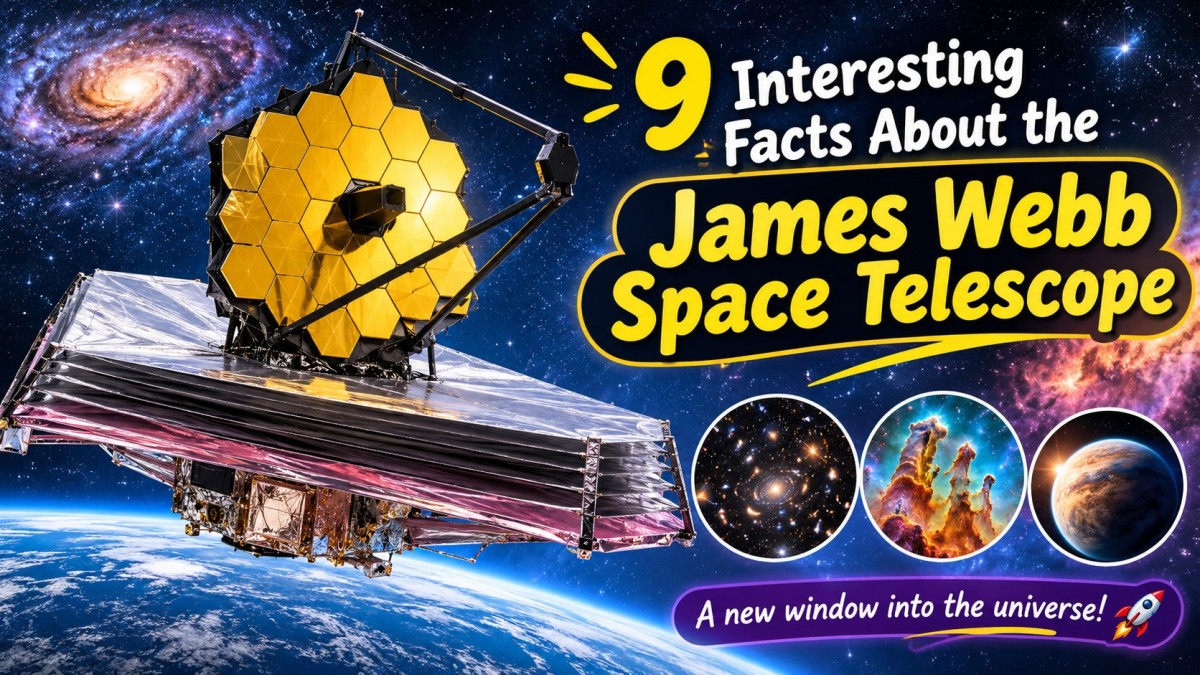
The universe is full of mysteries, and scientists are constantly discovering new things about space. One incredible invention that is helping them explore these mysteries is the James Webb Space Telescope (JWST). It is one of the most powerful and advanced space telescopes ever built by humans.
The telescope allows scientists to observe distant galaxies, study planets outside our solar system, and learn more about how stars and galaxies are formed. It captures amazing images of the universe that were impossible to see clearly before.
Let’s explore 9 interesting and amazing facts about this extraordinary telescope! 🌌
1. 🪞 It Has a Giant Golden Mirror
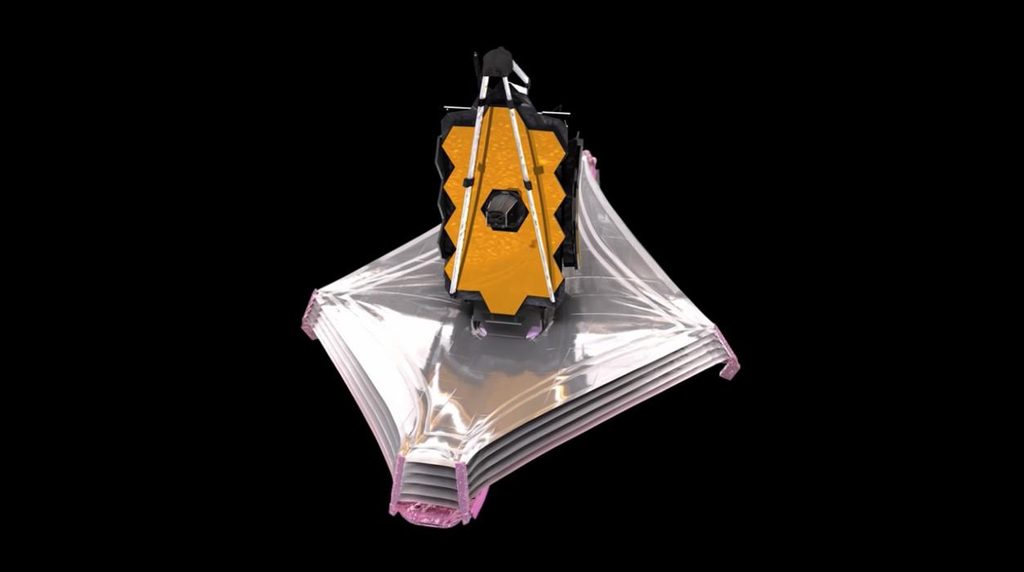
The James Webb Space Telescope has a huge primary mirror measuring approximately 6.5 metres (21.3 feet) across. It is made up of 18 hexagonal mirror segments that fit together to form one large mirror. These segments are coated with a thin layer of gold, which helps them reflect infrared light.
The giant mirror collects very faint light from distant stars and galaxies, allowing scientists to observe objects that are extremely far away.
Amazing fact: Its mirror has a much larger light-collecting area than the Hubble Space Telescope’s mirror! ✨
2. 🌞 It Has a Sunshield the Size of a Tennis Court
One of the most interesting features of Webb is its enormous five-layer sunshield. It is approximately the size of a tennis court and protects the telescope from the heat and light of the Sun, Earth and Moon.
The sunshield is very important because Webb’s scientific instruments need to remain extremely cold to detect faint infrared signals from space. Without this special protection, the heat could affect its observations.
3. ⏳ It Can Look Back in Time
Did you know that the James Webb Space Telescope can help us look into the past? This is possible because light takes time to travel through space.
When Webb observes a galaxy billions of light-years away, it sees the light that left that galaxy billions of years ago. This means we are seeing the galaxy as it looked in the distant past!
Scientists use this special ability to study some of the earliest galaxies that formed after the Big Bang and understand how our universe developed over time.
It’s almost like having a real-life time machine! 🚀
4. 🌈 It Can See Invisible Infrared Light
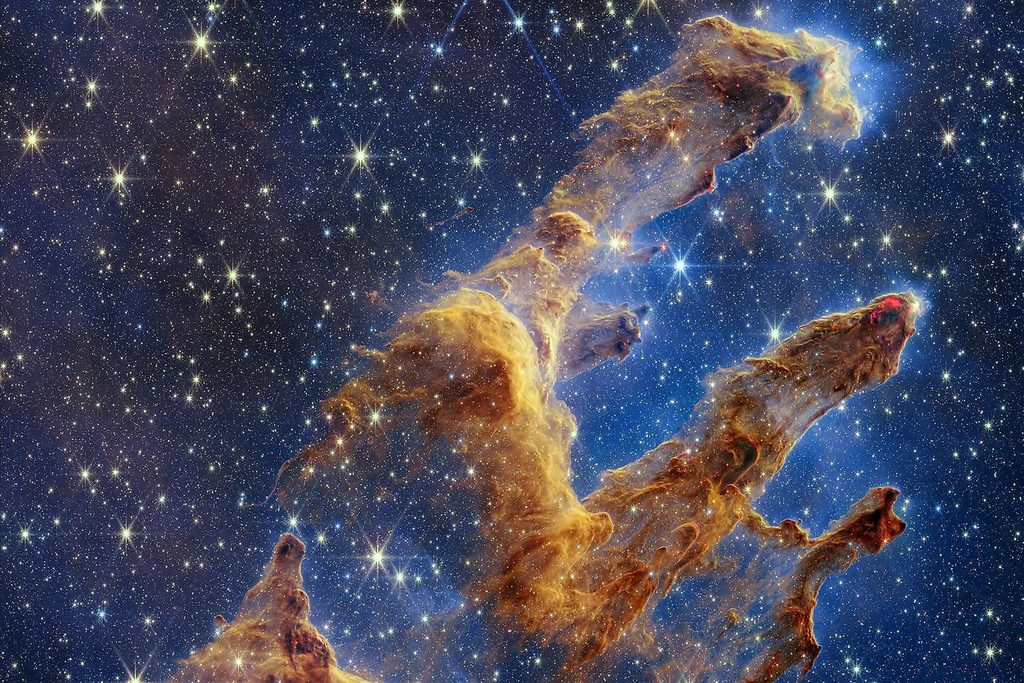
Human eyes can see only visible light, but the James Webb Space Telescope can observe infrared light, which is invisible to us.
This special ability helps Webb discover objects hidden behind thick clouds of cosmic dust. It can also detect light from extremely distant galaxies that has stretched into infrared wavelengths as the universe expands.
With the help of infrared technology, scientists can study newborn stars, distant galaxies and other fascinating objects in space.
5. 🧩 It Travelled into Space Folded Like Origami
The James Webb Space Telescope is so enormous that it could not fit inside its rocket in its fully unfolded form. To solve this problem, engineers designed it to fold up like a giant piece of origami!
After being launched into space, the telescope slowly unfolded its mirrors, sunshield and other important parts through a carefully planned sequence of movements.
This process was extremely challenging because it had to happen automatically, without astronauts repairing anything if something went wrong.
It was one of the most complicated space telescope deployments ever attempted! 😮
6. 🌍 It Is About 1.5 Million Kilometres Away from Earth
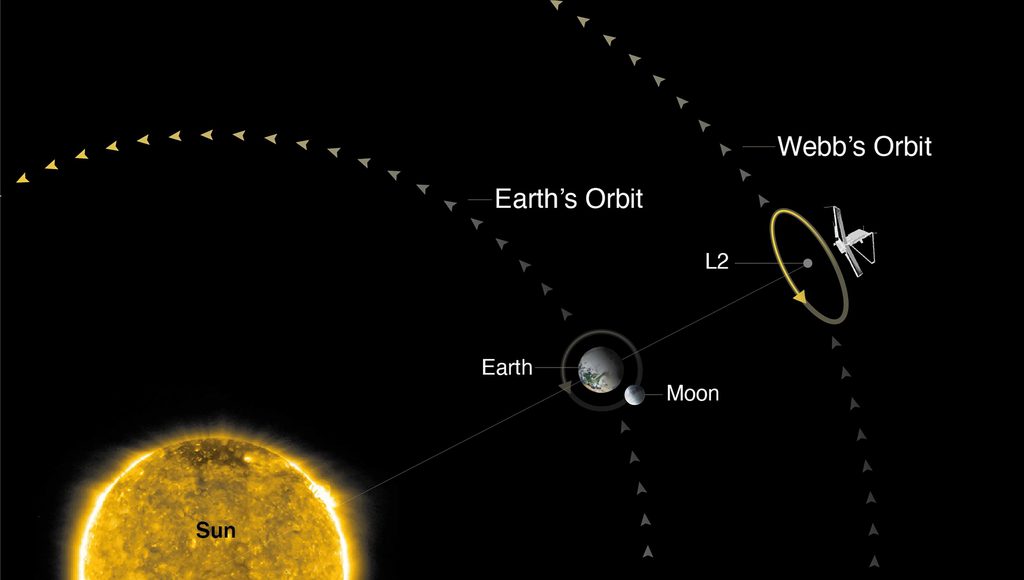
Unlike the Hubble Space Telescope, which orbits Earth, the James Webb Space Telescope operates near a special location called the second Sun-Earth Lagrange point (L2).
This location is approximately 1.5 million kilometres (1 million miles) away from Earth. At this position, Webb can travel around the Sun while maintaining a relatively stable position with respect to Earth.
This special location helps the telescope keep the Sun, Earth and Moon on the same side of its sunshield, making it easier to stay cold and observe the universe.
7. 🪐 It Can Study Planets Outside Our Solar System
The James Webb Space Telescope is not only interested in stars and galaxies; it can also study planets beyond our solar system. These distant planets are known as exoplanets.
Webb can examine the light passing through an exoplanet’s atmosphere when it moves in front of its star. By studying this light, scientists can identify different gases, including water vapour, carbon dioxide and methane.
These discoveries help researchers understand the conditions on distant planets and investigate whether some of them might have environments suitable for life.
Who knows? Perhaps one day scientists will discover something extraordinary about a planet far beyond our solar system! 👽
8. 🌎 It Is an International Teamwork Achievement
The James Webb Space Telescope is a wonderful example of how countries can work together to achieve something extraordinary in science and technology.
It was developed through an international partnership between three major space agencies:
- 🇺🇸 NASA: The United States space agency led the mission and provided the telescope.
- 🇪🇺 ESA: The European Space Agency contributed important equipment and the launch vehicle.
- 🇨🇦 CSA: The Canadian Space Agency provided important scientific instruments.
Thousands of scientists, engineers and other experts from different countries worked together to make this ambitious project successful.
Their teamwork has helped humanity explore the universe in greater detail than ever before.
9. 🎄 It Was Launched on Christmas Day!
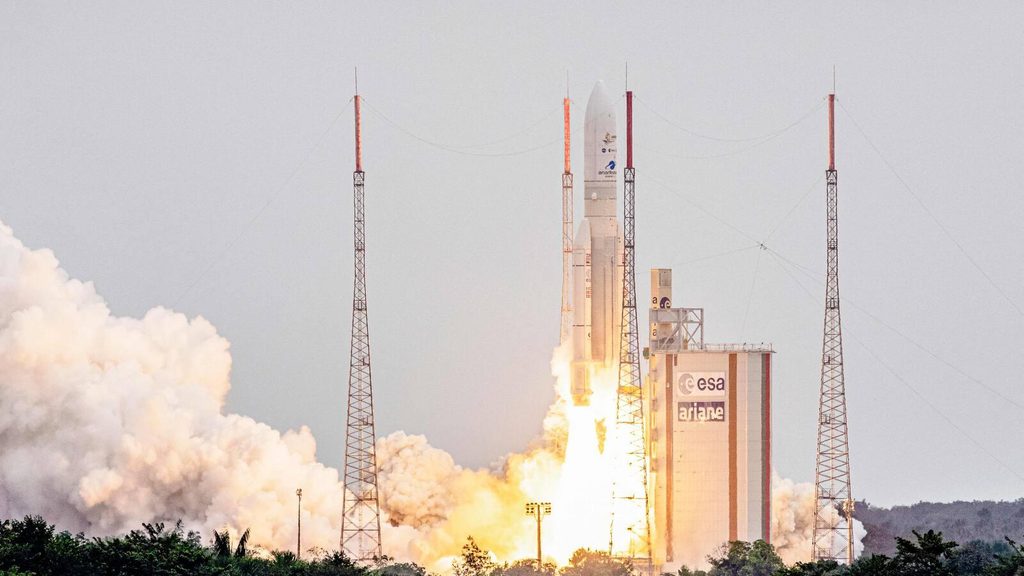
The James Webb Space Telescope was launched on 25 December 2021, which was Christmas Day!
It travelled into space aboard an Ariane 5 rocket from Europe’s Spaceport in French Guiana, South America.
After its successful launch, Webb began its journey towards its special position near the L2 point. It then spent several weeks unfolding, cooling down and preparing its scientific instruments.
In July 2022, NASA released its first full-colour scientific images, revealing breathtaking views of distant galaxies, nebulae and other cosmic objects.
What an amazing Christmas present for science and humanity! 🎁
💡 Conclusion: A New Window into the Universe 🌌
The James Webb Space Telescope is one of the greatest achievements in the history of space exploration. Its powerful golden mirror, enormous sunshield and advanced infrared technology allow scientists to explore parts of the universe that were once hidden from our view.
From observing ancient galaxies to studying distant planets, Webb is helping us answer some of the biggest questions about space and our existence.
Although scientists have already made many exciting discoveries, there is still so much left to explore. Every new image and observation brings us one step closer to understanding the mysteries of the universe.
The universe is incredibly vast, and the James Webb Space Telescope is helping us discover just how wonderful it really is! 🚀✨