








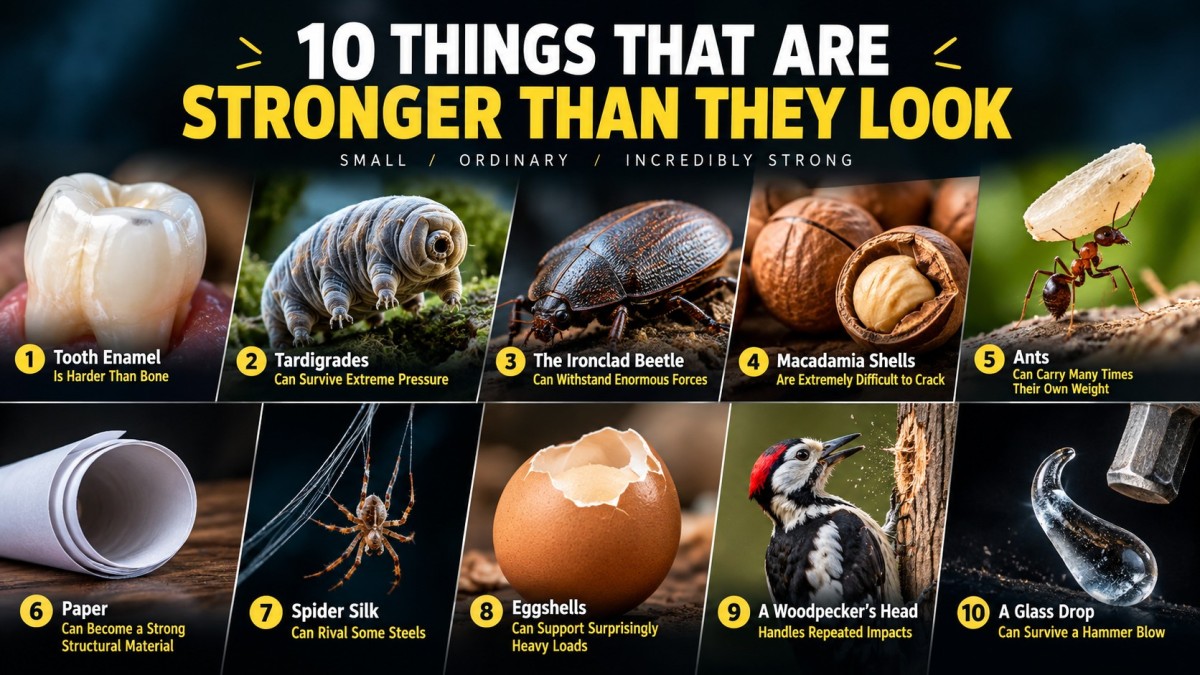
Strength is not always obvious or visible. Some things may look delicate, tiny, or completely ordinary, yet their remarkably strong materials, unique structures, and incredible biology allow them to withstand powerful forces and extreme pressure.
From microscopic animals that survive extreme pressure to glass that can endure a hammer blow, these examples reveal an important lesson: strength often depends as much on structure and design as it does on the material itself.
🦷 1. Tooth Enamel Is Harder Than Bone
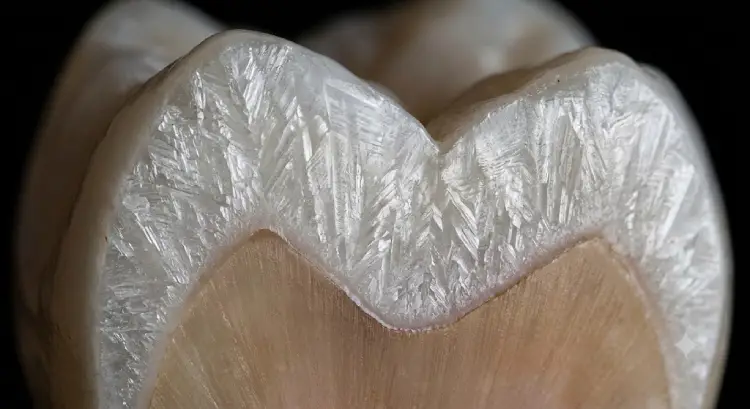
When people think about the hardest substance in the human body, bone might be the first thing that comes to mind. In reality, tooth enamel is considerably harder.
Enamel is the protective outer layer of the teeth and is composed of approximately 96% mineral by weight. Its tightly organized mineral crystals give it the hardness needed to withstand years of biting and chewing.
However, being extremely hard does not make enamel indestructible. Acids, tooth decay, and mechanical stress can gradually damage it. Unlike many other tissues, lost enamel cannot naturally regenerate.
🐻❄️ 2. Tardigrades Can Survive Extreme Pressure
Tardigrades are microscopic animals famous for their extraordinary ability to survive harsh environments.
When dehydrated, these tiny creatures can enter a dormant state that dramatically increases their resistance to environmental stress. Laboratory experiments have shown that dehydrated tardigrades can survive pressures reaching hundreds of megapascals.
Their remarkable survival abilities have also been tested in other extreme conditions, including exposure to the vacuum of space in experiments. Despite their microscopic size, tardigrades demonstrate an extraordinary level of biological resilience.
🪲 3. The Ironclad Beetle Can Withstand Enormous Forces
The diabolical ironclad beetle may look like an ordinary insect, but its exoskeleton is exceptionally tough.
Researchers have found that the beetle can withstand crushing forces equivalent to tens of thousands of times its own body weight. Its remarkable strength comes partly from the structure of its hardened wing covers, known as elytra.
These structures contain interlocking layers that help distribute stress and prevent catastrophic failure. Scientists have even studied the beetle’s body design for inspiration when developing stronger and lighter engineering structures.
🌰 4. Macadamia Shells Are Extremely Difficult to Crack
Macadamia nuts are notorious for having exceptionally hard shells. Laboratory experiments have shown that breaking their seed coats can require thousands of newtons of force.
Their strength isn’t simply a result of being made from a hard material. The internal architecture of the shell also plays an important role. Multiple structural layers help distribute mechanical stress and slow the development of cracks.
This combination of material and structure allows the shell to protect the nut inside remarkably well.
🐜 5. Ants Can Carry Many Times Their Own Weight
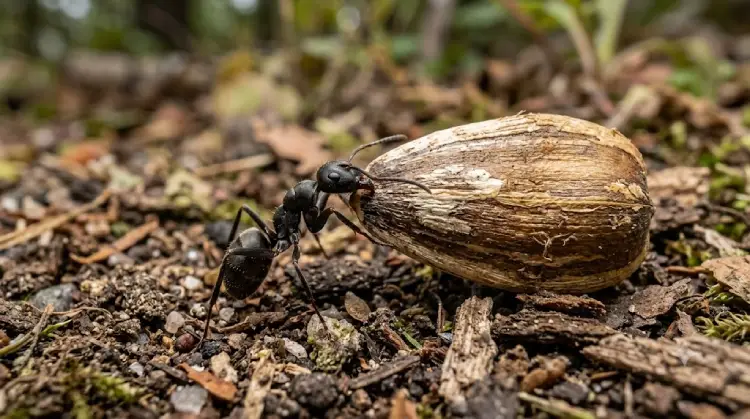
An ant appears almost weightless when walking across a surface, but relative to its size, it can be incredibly strong.
Some ants can lift and carry more than 50 times their own body weight. Their impressive strength-to-weight ratio is partly explained by the physics of small animals.
As animals become smaller, their body mass decreases more quickly relative to the cross-sectional area of their muscles. As a result, tiny creatures can perform feats of strength that would be impossible for much larger animals when measured relative to body weight.
📄 6. Paper Can Become a Strong Structural Material
A flat sheet of paper is easy to tear or bend. Change its shape, however, and it can become surprisingly strong.
Rolling paper into a tube allows forces to travel along the length of the structure much more effectively. Researchers have investigated paper tubes as potential lightweight structural components and have found that they can withstand substantial compression and bending forces.
The important factor isn’t that rolling chemically strengthens paper. Instead, changing the geometry changes how the load is distributed. This principle is widely used in engineering, where hollow structures can provide significant strength without adding unnecessary weight.
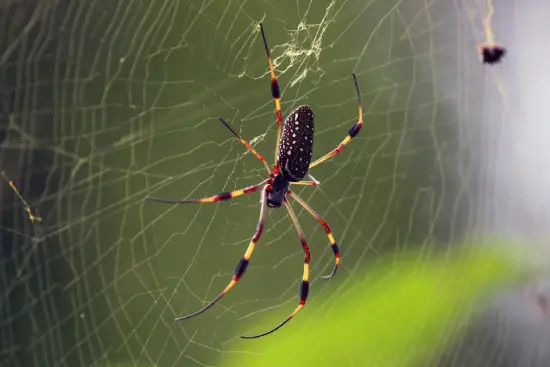
🕷️ 7. Spider Silk Can Rival Some Steels
Spider silk is one of nature’s most fascinating structural materials. Different types of silk serve different purposes, but dragline silk is particularly notable for its combination of strength and toughness.
Some forms of dragline silk can withstand stresses approaching 1 gigapascal, putting them in the range of certain high-strength steels.
What makes spider silk particularly impressive is that it isn’t simply strong. It can also stretch and absorb considerable amounts of energy before breaking. This combination of properties is difficult to reproduce in conventional materials.
🥚 8. Eggshells Can Support Surprisingly Heavy Loads
An eggshell looks fragile and can be shattered easily by a sharp impact. Yet its curved shape gives it impressive strength when pressure is applied in the right way.
Studies have shown that eggshells can withstand substantial compressive loads, with some large bird eggs surviving forces of several thousand newtons.
The shell essentially behaves like a thin curved structure, allowing forces to spread across its surface. This explains why an egg can resist considerable pressure when squeezed evenly but break easily when struck at a small, concentrated point.
🐦 9. A Woodpecker’s Head Handles Repeated Impacts

Woodpeckers repeatedly strike their beaks against hard tree trunks while searching for food or creating nesting cavities. Their heads therefore have to withstand extremely rapid and repeated impacts.
During a strike, a woodpecker’s head can experience very high deceleration. Research has shown that the bird’s skull is not simply acting as a soft shock absorber. Instead, its relatively rigid structure helps transfer impact energy efficiently through the beak and head.
This unusual combination of anatomy and mechanics allows woodpeckers to perform thousands of powerful strikes without suffering the type of damage that such impacts might cause in many other animals.
🔮 10. A Glass Drop Can Survive a Hammer Blow
Glass is normally associated with fragility, but a Prince Rupert’s drop demonstrates just how strong glass can become under the right conditions.
The drop is created by allowing molten glass to fall into cold water. The outside cools and solidifies quickly while the interior cools more slowly. This process creates strong compressive stresses near the surface.
Those stresses can prevent cracks from spreading through the thick part of the drop. As a result, the bulbous section can survive surprisingly powerful impacts, including hammer blows.
However, the drop has a dramatic weakness: its thin tail. If the tail is damaged, a crack can rapidly travel through the stressed glass, causing the entire drop to shatter explosively.
🌎 Conclusion
These examples show that strength is not always visible from the outside. A microscopic tardigrade, a tiny beetle, a fragile-looking eggshell, and even ordinary paper can possess remarkable resistance when their biology, material properties, and structures are considered.
The biggest lesson is that strength is often about design rather than size. Nature and engineering repeatedly demonstrate that the right structure can turn seemingly delicate materials into surprisingly resilient ones.