









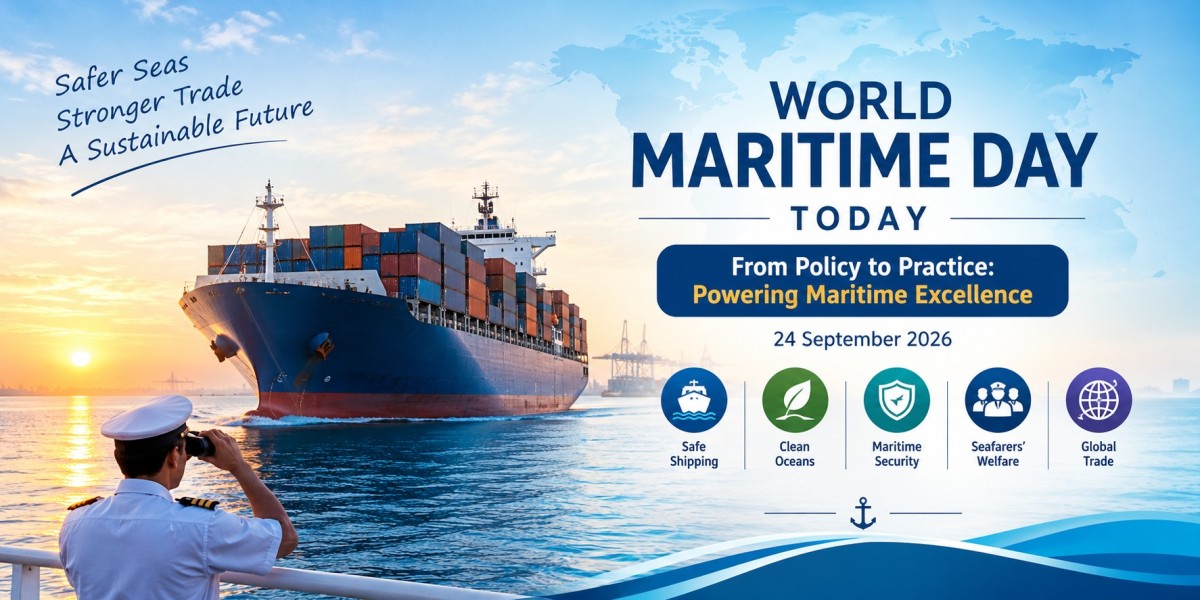
Every year, World Maritime Day draws attention to the importance of shipping, maritime safety, marine environmental protection and the people who keep global sea routes operating. In 2026, the observance falls on Thursday, September 24, and the International Maritime Organization (IMO) has chosen the theme “From Policy to Practice: Powering Maritime Excellence.” The theme focuses on turning international maritime rules and policies into practical action that improves safety, resilience, environmental protection and working conditions at sea.
Also Read: Brazilian Model Larissa Responds to Allegations of Rahul Gandhi’s Vote Chori Connection
⚓ What Is World Maritime Day?
World Maritime Day is a United Nations international observance held on the last Thursday of September every year. The IMO uses the occasion to highlight the contribution of shipping to the global economy and draw attention to important maritime issues.
Shipping connects countries across oceans and helps transport essential goods, raw materials, fuel, food, medicines and manufactured products. Because of this role, the maritime sector directly supports international trade and supply chains.
The day also highlights the need for safer ships, stronger maritime security, cleaner oceans and better protection for seafarers.
🌊 History of World Maritime Day
The IMO established World Maritime Day to focus international attention on shipping and its contribution to global development. The first World Maritime Day was observed in 1978, marking the 20th anniversary of the IMO Convention’s entry into force.
Since then, the observance has become an important platform for discussing issues such as maritime safety, pollution prevention, shipping security, technological development and the welfare of seafarers. The IMO selects a specific theme each year to address an important challenge or priority facing the maritime sector.
🧭 2026 Theme: From Policy to Practice
The 2026–2027 theme, “From Policy to Practice: Powering Maritime Excellence,” focuses on implementation.
The IMO emphasizes that international regulations can improve shipping only when countries and maritime stakeholders put them into practice. The organization is therefore highlighting stronger enforcement, national legislation, training and technical capacity.
The theme covers several areas, including maritime safety, new technologies, decarbonization, digitalization, cybersecurity, maritime security and marine environmental protection.
🚢 Why Shipping Matters to the World
Ships move enormous quantities of goods between continents. Ports, shipping companies, logistics networks and maritime workers together form an important part of international commerce.
A disruption in major shipping routes can affect supply chains far beyond the sea. Businesses may face delays in receiving raw materials, while consumers can experience changes in the availability or cost of products.
World Maritime Day therefore reminds people that the maritime sector plays a role in everyday life, even when its work remains largely out of sight.
🛟 Maritime Safety and Security
Safety remains one of the central concerns of the maritime industry. Ships operate across challenging environments and can face severe weather, technical failures, accidents and security threats.
International maritime rules establish standards for ship construction, equipment, navigation, emergency procedures and crew training. Effective implementation of these standards helps reduce risks and protects people, vessels and cargo.
The IMO’s 2026 focus also includes maritime security and cybersecurity as shipping becomes increasingly dependent on digital systems.
🌱 Protecting Oceans and the Marine Environment
The maritime sector also has a responsibility to protect the oceans. Ships can contribute to pollution through oil spills, waste, sewage, emissions and other activities if operators do not follow environmental standards.
International rules address several forms of marine pollution and encourage the shipping industry to adopt cleaner practices. The IMO has also been working on measures related to greenhouse-gas emissions, marine plastic pollution and other environmental challenges.
World Maritime Day provides an opportunity to connect shipping growth with environmental responsibility and long-term ocean protection.
👨✈️ Recognising the Role of Seafarers
Behind every voyage, crews perform essential tasks that keep ships operating safely. Seafarers navigate vessels, maintain machinery, handle cargo and respond to emergencies.
Their work can keep them away from their families for long periods, while some routes expose them to difficult weather conditions and security risks.
The IMO has emphasized that maritime policies should deliver practical benefits for the people working at sea. Its 2026 World Maritime Day message places seafarers at the centre of effective implementation.
💡 Technology and the Future of Shipping
Technology continues to transform maritime operations. Digital systems, automation, artificial intelligence, improved navigation tools and new energy technologies can change how ships operate.
However, new technology also creates new responsibilities. Maritime authorities and companies must ensure that workers receive appropriate training and that new systems meet safety and security requirements.
The 2026 theme encourages the maritime sector to connect policy with practical implementation as it prepares for technological and environmental changes.
🇮🇳 India’s Maritime Importance
India has a long coastline and maintains an extensive network of ports and maritime services. The country’s maritime sector supports international trade, logistics, coastal transportation and employment.
Indian ports handle large volumes of imports and exports, connecting domestic businesses with international markets. The country’s maritime development also links with broader goals involving infrastructure, logistics efficiency, shipbuilding and coastal economic activity.
World Maritime Day offers an opportunity to recognize the contribution of India’s seafarers, port workers, maritime professionals and shipping organizations.
🔵 How World Maritime Day Is Observed
Maritime organizations, governments, educational institutions and industry stakeholders can mark the day through conferences, seminars, awareness programmes, exhibitions and discussions.
For World Maritime Day 2026, the IMO headquarters in London is being illuminated in blue as a symbol of the global commitment to turning maritime policy into practical action. The IMO has also encouraged organizations and institutions to participate in the campaign by sharing stories and examples of maritime policies being implemented in practice.
🌍 Conclusion
World Maritime Day 2026 highlights how closely shipping connects global trade, economic activity, technology, environmental protection and human welfare. The theme “From Policy to Practice: Powering Maritime Excellence” puts the focus on effective implementation rather than policies remaining only on paper.
As international shipping continues to evolve, countries and maritime organizations must strengthen safety standards, protect seafarers, improve environmental performance and prepare the sector for technological change. World Maritime Day serves as an annual reminder that safer and more sustainable seas require cooperation, responsible action and effective implementation across the maritime community.
Also Read: Technology & Climate: Can InnovationPower a Sustainable Future?