








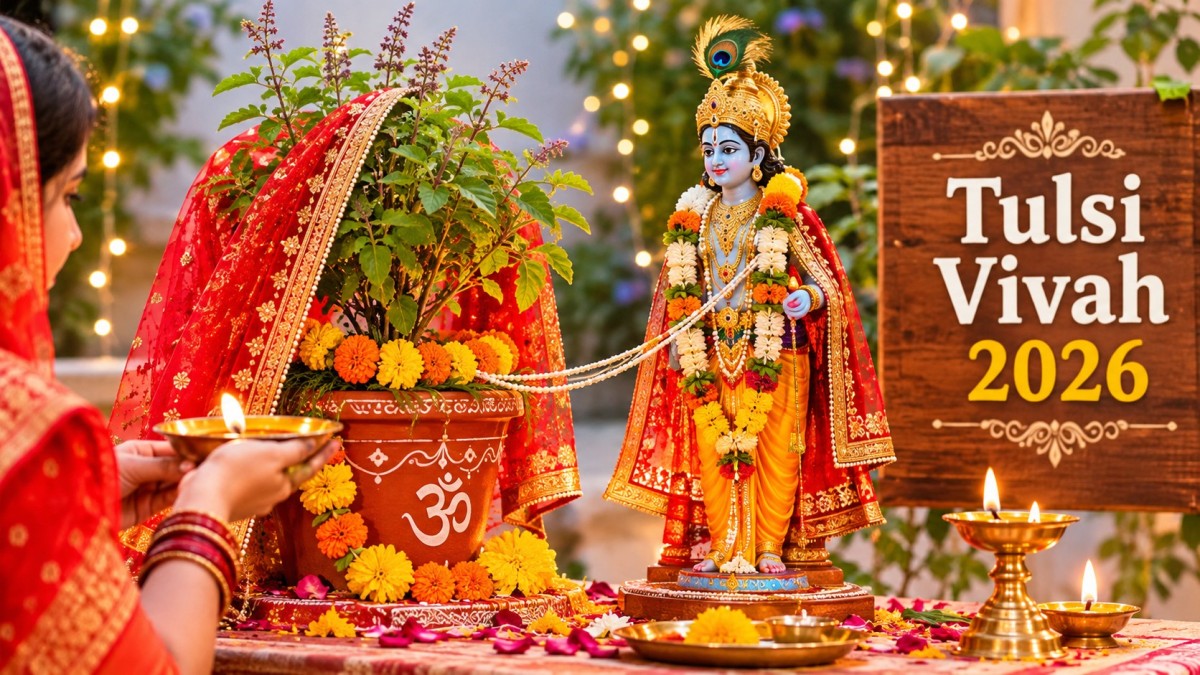
Tulsi Vivah is one of the most sacred festivals in Hinduism, celebrated with devotion across India. The festival commemorates the divine marriage of Goddess Tulsi and Lord Vishnu, worshipped in his Shaligram form. On this auspicious occasion, devotees decorate Tulsi plants, perform traditional wedding rituals and offer prayers for happiness, prosperity and peace. Families also seek divine blessings for harmony, good fortune and well-being.
In 2026, Tulsi Vivah falls on Saturday, November 21, according to the Kartik Shukla Dwadashi tradition. The festival marks the end of Chaturmas and ushers in the traditional Hindu wedding season. Some communities also celebrate the ceremony on Dev Uthani Ekadashi, which falls on November 20.
Also Read: Brazilian Model Larissa Responds to Allegations of Rahul Gandhi’s Vote Chori Connection
When Is Tulsi Vivah 2026? Date and Significance
Hindus traditionally celebrate Tulsi Vivah on the Dwadashi Tithi of Shukla Paksha during Kartik month. The occasion symbolises the divine wedding of Goddess Tulsi and Lord Vishnu and holds great religious significance for devotees.
According to the New Delhi Panchang, Dwadashi Tithi begins at 6:31 AM on November 21 and ends at 4:56 AM on November 22. However, devotees should check their local Panchang for accurate timings, as the auspicious period may vary by location.
Families generally perform Tulsi Vivah during the evening, particularly around Godhuli Vela, the twilight period that many Hindu traditions consider auspicious for wedding ceremonies.
Why Is Tulsi Vivah Celebrated?
Tulsi Vivah honours the sacred Tulsi plant, which Hindus worship as Goddess Tulsi. Religious traditions associate the plant with Lord Vishnu and Goddess Lakshmi, making it an important symbol of purity, devotion and spiritual prosperity.
Devotees believe that worshipping Tulsi brings peace, happiness and prosperity to their homes. The festival also marks the end of Chaturmas, a period when many Hindu communities avoid weddings and other auspicious ceremonies.
According to Hindu beliefs, Lord Vishnu awakens from his cosmic sleep on Dev Uthani Ekadashi. His awakening signals the return of auspicious occasions, including marriages and religious celebrations.
The Story Behind Tulsi Vivah: The Legend of Goddess Vrinda
Hindu mythology connects Tulsi Vivah with the story of Goddess Vrinda and her husband, Jalandhar.
Vrinda devoted herself wholeheartedly to her husband Jalandhar. Her spiritual strength and unwavering devotion protected him and contributed to his immense power. As Jalandhar grew stronger, the gods struggled to defeat him and restore balance to the universe.
Lord Vishnu eventually intervened through a divine plan that led to the end of Vrinda’s marital vow. This allowed the gods to defeat Jalandhar. When Vrinda discovered what had happened, she felt deeply betrayed and cursed Lord Vishnu.
According to the legend, Vrinda later transformed into the sacred Tulsi plant. Lord Vishnu blessed her and promised to honour her forever. He also accepted her as his divine consort. Devotees commemorate this sacred promise every year through Tulsi Vivah, symbolically marrying Tulsi to Lord Vishnu in his Shaligram form.
Tulsi Vivah 2026: Traditional Rituals and Puja Vidhi
Families celebrate Tulsi Vivah with wedding rituals that resemble a traditional Hindu marriage. They clean their homes, decorate the Tulsi plant and prepare a sacred space for the ceremony.
1. Decorating the Tulsi Plant
Devotees decorate the Tulsi Vrindavan with flowers, rangoli, lights and colourful ornaments. They dress the Tulsi plant like a bride using a red or yellow saree, chunari and jewellery.
2. Preparing the Wedding Mandap
Families create a small wedding mandap around the Tulsi plant using sugarcane stalks, flowers and mango leaves. These decorations create a traditional wedding atmosphere and symbolise auspiciousness.
3. Worshipping Lord Vishnu
Devotees place a Shaligram stone or an idol of Lord Vishnu or Lord Krishna near the Tulsi plant to represent the groom. They offer flowers, sandalwood, fruits, sweets and prayers to seek divine blessings.
4. Performing the Wedding Ceremony
A priest or family members conduct the symbolic marriage using traditional Hindu wedding rituals. In Maharashtra, families often hold an Antarpat, a white cloth between Tulsi and Lord Vishnu, while reciting Mangalashtak verses.
Once the verses conclude, devotees remove the Antarpat and shower Akshata, rice mixed with turmeric or vermilion, to celebrate the divine union.
5. Performing Aarti and Offering Prasad
Families conclude the ceremony with aarti and devotional prayers. They distribute prasad, which often includes fruits, sugarcane, coconut sweets and groundnuts, among relatives and guests.
Religious and Spiritual Significance of Tulsi Vivah
Tulsi Vivah represents devotion, purity, faith and the sacred bond of marriage in Hindu culture. The festival also encourages devotees to strengthen their spiritual connection through prayer and religious observance.
Many families believe that performing Tulsi Vivah invites happiness and prosperity into their homes. Married couples pray for a harmonious relationship, while unmarried devotees seek blessings for a suitable life partner.
Beyond its religious meaning, the festival highlights the cultural importance of nature. Hindus respect the Tulsi plant for its spiritual symbolism, traditional value and significance in everyday household life.
How Is Tulsi Vivah Celebrated Across India?
Different regions celebrate Tulsi Vivah with their own traditions, rituals and devotional customs.
In Maharashtra, families decorate the Tulsi Vrindavan and conduct wedding ceremonies featuring Mangalashtak, Antarpat and Akshata. These customs closely resemble traditional Maharashtrian weddings.
Uttar Pradesh and other northern states host devotional ceremonies, bhajans and special prayers dedicated to Lord Vishnu and Goddess Tulsi. Temples and households often bring families together to celebrate the occasion.
Gujarat celebrates Tulsi Vivah with traditional wedding rituals, devotional songs and community gatherings. Meanwhile, Andhra Pradesh and Telangana observe the festival as Tulasi Kalyanam, incorporating regional customs and traditional offerings.
Although the rituals differ from state to state, devotees share one central belief: celebrating the sacred union of Goddess Tulsi and Lord Vishnu.
Tulsi Vivah 2026: Wishes and Messages
Devotees exchange greetings and prayers with family members, friends and loved ones to mark this auspicious occasion.
- May Goddess Tulsi and Lord Vishnu bless your family with happiness, prosperity and peace. Happy Tulsi Vivah 2026!
- May this sacred occasion bring positivity, good health and success into your life. Wishing you a blessed Tulsi Vivah!
- May the divine blessings of Goddess Tulsi fill your home with love, devotion and prosperity. Happy Tulsi Vivah!
- On this holy occasion, may your life shine with happiness, harmony and countless blessings. Happy Tulsi Vivah 2026!
Conclusion
Tulsi Vivah represents more than a religious celebration. It reflects the deep connection between faith, devotion, nature and family traditions in Hindu culture. The divine marriage of Goddess Tulsi and Lord Vishnu reminds devotees to embrace spiritual values, commitment and harmony in their lives.
On November 21, 2026, families will celebrate the festival with prayers, traditional rituals and joyful gatherings. Tulsi Vivah also signals the beginning of the auspicious Hindu wedding season and preserves an important part of India’s cultural and religious heritage for generations to come.
Also Read: National Integration Day 2026: Why India Celebrates Unity in Diversity on November 19