








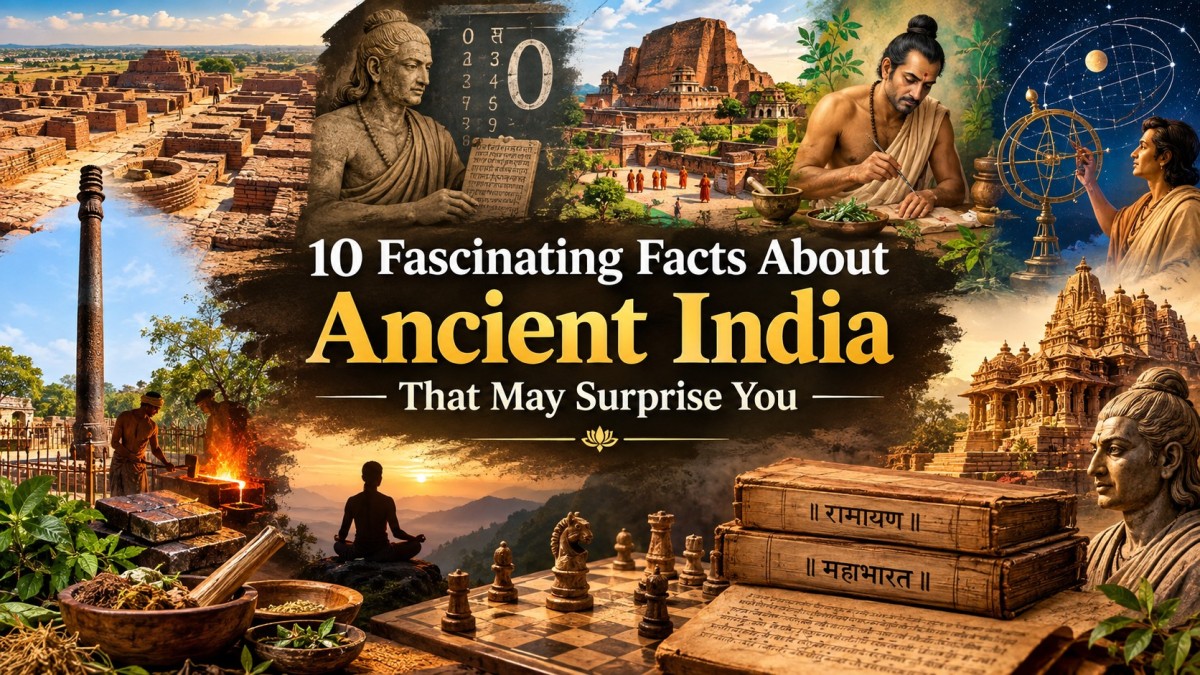
Ancient India developed remarkable ideas in mathematics, medicine, astronomy, architecture, education, literature, and philosophy. Different civilizations and scholars contributed to this rich history over thousands of years. From the planned cities of the Indus Valley to the mathematical work of Aryabhata, ancient India produced many fascinating achievements.
1. 🔢 India Played a Major Role in the Development of Zero
Indian mathematicians made important contributions to the development of zero as a mathematical concept. The 7th-century mathematician Brahmagupta explained rules for calculating with zero in his work Brahmasphutasiddhanta.
His work helped develop mathematical ideas that later influenced scholars beyond India. Today, zero remains essential to mathematics, science, engineering, and computing.
2. 🏙️ The Indus Valley Civilization Planned Its Cities Carefully
The Indus Valley Civilization created well-organized cities more than 4,000 years ago. Major settlements such as Harappa and Mohenjo-daro featured straight streets, wells, houses, public structures, and drainage systems.
Residents used carefully designed drainage networks to manage wastewater. Archaeologists continue to study these cities to understand the organization and technology of early urban societies.
3. 📚 Nalanda Became a Major Centre of Learning
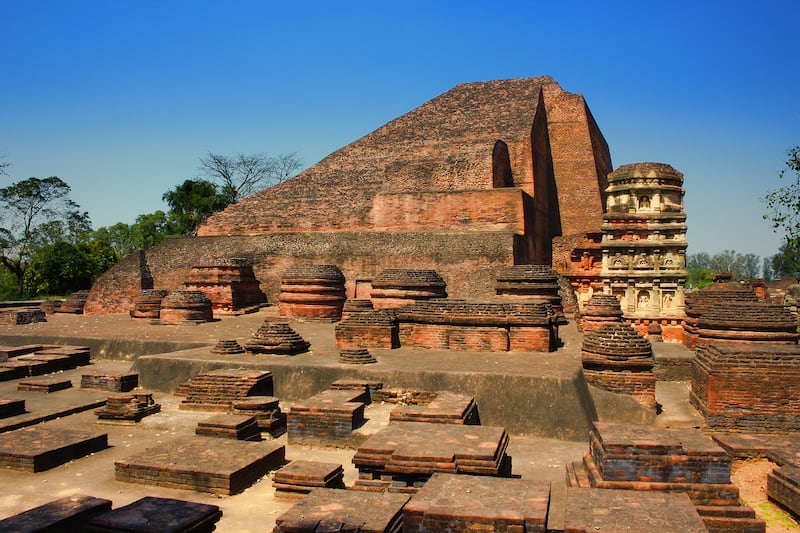
Nalanda Mahavihara in present-day Bihar grew into an important centre of education in ancient and early medieval India. Students and scholars travelled from different parts of India and Asia to study there.
Teachers covered subjects such as philosophy, grammar, medicine, mathematics, and astronomy. The large residential complex included classrooms, monasteries, libraries, and spaces for students and teachers.
4. 🩺 Sushruta Advanced Early Surgical Knowledge
The physician Sushruta holds an important place in the history of Indian medicine. The Sushruta Samhita, traditionally associated with him, discusses surgery, anatomy, medical instruments, wounds, and various treatments.
The text also describes techniques related to reconstructive surgery. Although ancient medical practices differed greatly from modern medicine, the text shows the detailed medical knowledge that developed in India.
5. 🌿 Ayurveda Has Deep Historical Roots
Ayurveda developed over many centuries as part of India’s traditional medical knowledge. Ancient practitioners studied diet, medicinal plants, hygiene, diagnosis, and different approaches to maintaining health.
Texts such as the Charaka Samhita and Sushruta Samhita preserve important information about this medical tradition. Ayurveda continues to hold a significant place in India’s cultural and medical history.
6. 🌌 Aryabhata Made Important Contributions to Astronomy
The mathematician and astronomer Aryabhata made significant contributions to mathematics and astronomy during the 5th century CE. His famous work, the Aryabhatiya, discusses arithmetic, algebra, geometry, and astronomical calculations.
Aryabhata developed methods for calculating astronomical quantities and offered explanations for several celestial phenomena. Later Indian scholars built upon many of his ideas.
7. ⚒️ Ancient Indian Craftsmen Developed Advanced Metallurgy
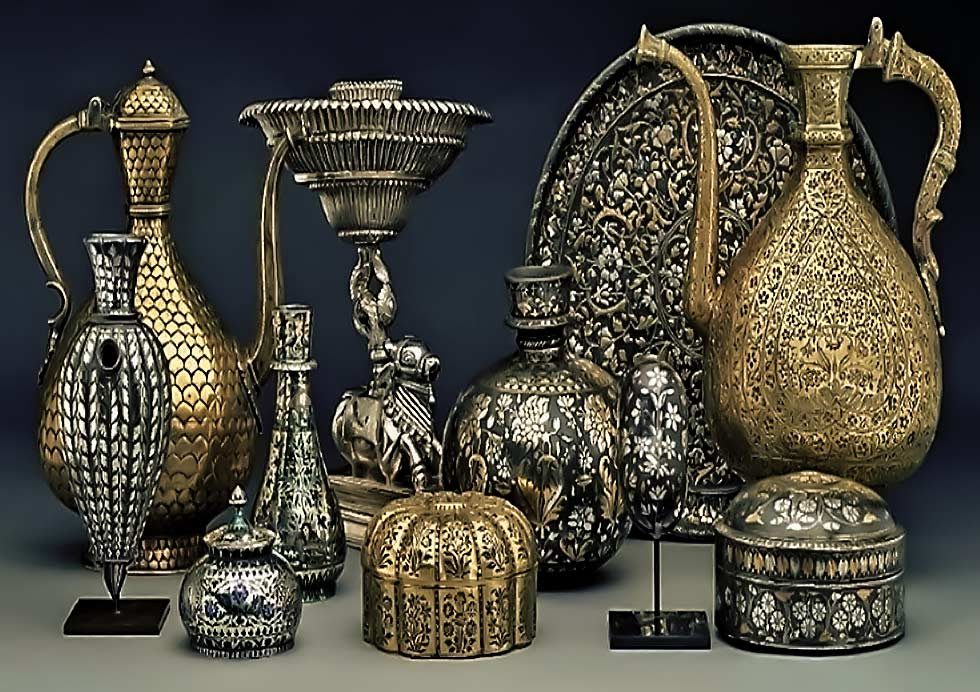
Ancient Indian craftsmen developed considerable expertise in working with metals such as iron, copper, and steel. The Iron Pillar of Delhi provides a famous example of this metallurgical knowledge.
The pillar has attracted scientific interest because it has resisted corrosion for centuries. India also developed historical steel-making traditions, including wootz steel, which gained recognition beyond the subcontinent.
8. 🧘 Yoga Developed in Ancient Indian Traditions
Yoga developed through India’s ancient philosophical and spiritual traditions. Over time, different schools introduced practices involving meditation, breathing, concentration, physical exercises, and ethical disciplines.
The Yoga Sutras of Patanjali became an influential text in the development of classical yoga philosophy. Today, people practice different forms of yoga across the world.
9. ♟️ Chess Has Links to Ancient India
Historians commonly connect the development of chess with the ancient Indian game chaturanga. The game represented different divisions of an army and used a board for strategic play.
Chaturanga later spread to Persia and other regions. Over many centuries, different cultures changed the rules and pieces, eventually contributing to the development of modern chess.
10. 📜 Ancient India Created a Rich Literary Tradition
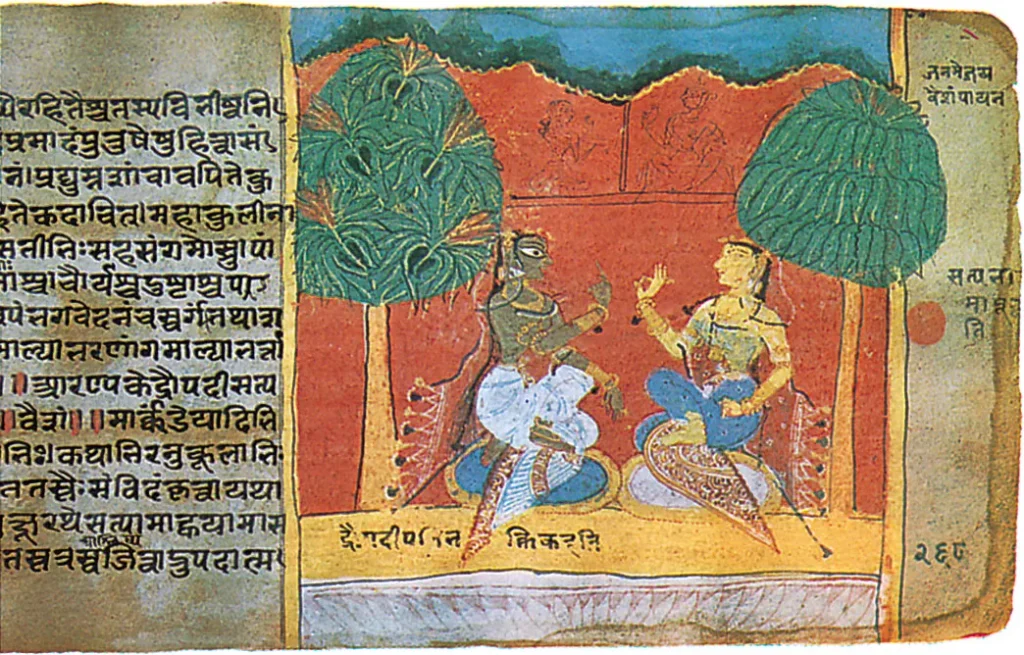
Ancient India produced an extensive body of literature in Sanskrit, Pali, Prakrit, Tamil, and other languages. Writers and scholars explored subjects such as philosophy, poetry, grammar, politics, religion, and science.
The Ramayana and Mahabharata became two of India’s most influential Sanskrit epics. Tamil Sangam literature also preserves an important early literary tradition.
The grammarian Panini created the Ashtadhyayi, a highly systematic work on Sanskrit grammar. His approach demonstrates the sophisticated linguistic scholarship that developed in ancient India.
🏛️ Conclusion
Ancient India developed diverse civilizations and intellectual traditions across thousands of years. Scholars, craftsmen, physicians, mathematicians, astronomers, writers, and philosophers all contributed to this history.
From carefully planned cities and mathematical discoveries to medicine, metallurgy, literature, and yoga, ancient India’s heritage continues to attract interest around the world. These achievements provide valuable insights into the development of knowledge and culture across the Indian subcontinent.