










🇮🇳 Introduction
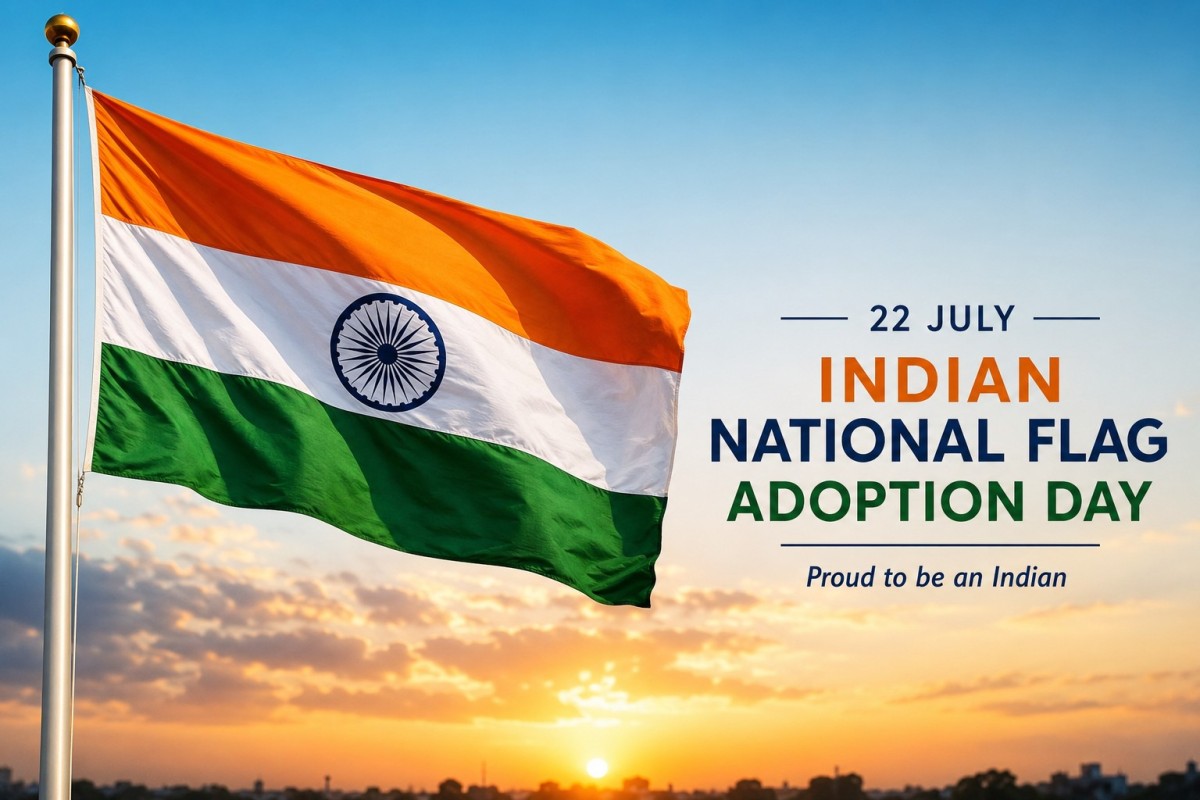
Every year, July 22 marks an important milestone in India’s journey to independence. On this day in 1947, the Constituent Assembly of India officially adopted the Tiranga (Tricolour) as the National Flag of independent India. The decision came just weeks before India achieved independence from British rule on August 15, 1947.
Although July 22 is not a public holiday, it holds immense historical and patriotic significance. Indian National Flag Adoption Day reminds citizens of the sacrifices made by freedom fighters and the values of unity, peace, courage, and progress represented by the Tricolour. In 2026, the nation observes this historic occasion on Wednesday, July 22.
Also Read: Brazilian Model Larissa Responds to Allegations of Rahul Gandhi’s Vote Chori Connection
📜 History of Indian National Flag Adoption Day
India’s national flag has undergone several changes before taking its present form. During the freedom movement, many versions of the flag inspired people to unite against colonial rule.
The final design was adopted by the Constituent Assembly on July 22, 1947, during a historic session held in New Delhi. The Assembly approved the Tricolour as the official National Flag of independent India. The adopted flag closely resembled the flag used by the Indian National Congress, but it replaced the spinning wheel (Charkha) with the Ashoka Chakra, symbolizing justice, righteousness, and continuous progress.
The flag officially became the National Flag of India on August 15, 1947, when the country gained independence.
👤 Who Designed the Indian National Flag?
The credit for designing the Indian National Flag goes to Pingali Venkayya, a freedom fighter, agriculturist, and educationist from present-day Andhra Pradesh.
Pingali Venkayya dedicated years to studying flags from different countries before presenting several designs to Mahatma Gandhi. His work laid the foundation for the Tricolour that India proudly flies today.
The Constituent Assembly later finalized the design by incorporating the navy-blue Ashoka Chakra with 24 spokes at the center.
🎨 Meaning of the Indian National Flag
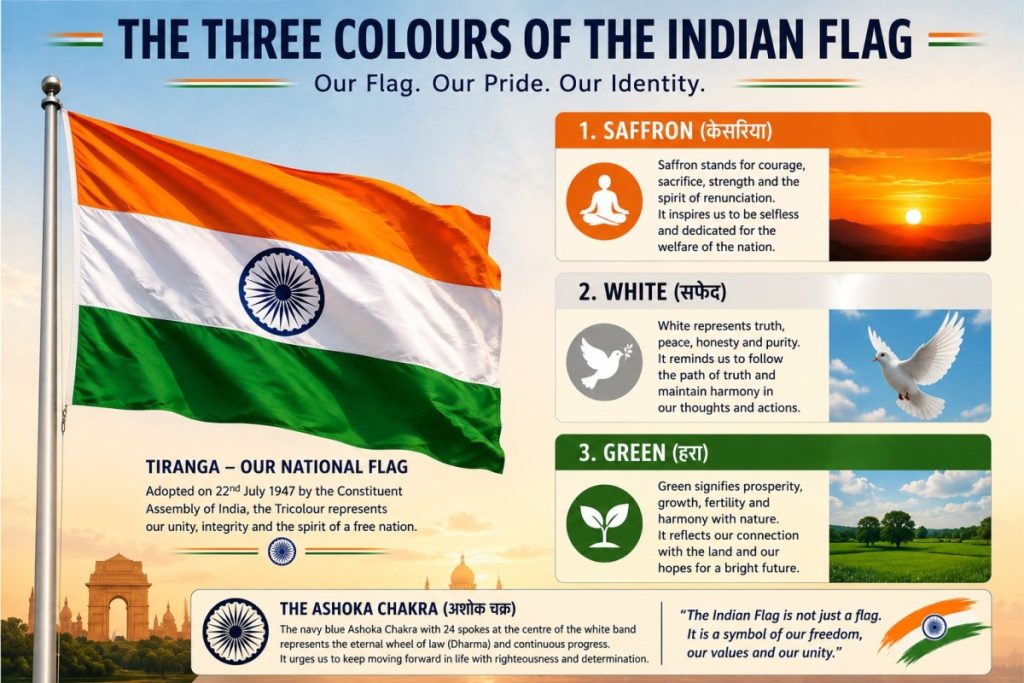
Every colour and symbol in the Tiranga represents the ideals of the nation.
🟧 Saffron
The saffron band at the top symbolizes courage, sacrifice, strength, and selfless service.
⚪ White
The white band represents truth, honesty, peace, and transparency.
🟩 Green
The green band signifies prosperity, agriculture, growth, fertility, and harmony with nature.
🔵 Ashoka Chakra
The navy-blue Ashoka Chakra, taken from the Lion Capital of Ashoka at Sarnath, contains 24 spokes.
The wheel represents:
- Justice
- Dharma (righteousness)
- Continuous movement
- Progress
- Equality
- The importance of always moving forward
⭐ Why Is July 22 Important?
July 22 holds a special place in Indian history because it marks the day when India officially chose a flag that represented every citizen regardless of religion, language, caste, or region.
The Tricolour became a symbol of:
- National unity
- Freedom from colonial rule
- Democracy
- Equality
- Constitutional values
- Patriotism
The adoption of the National Flag also reflected India’s vision of becoming a sovereign and democratic nation.
🏛️ How Is Indian National Flag Adoption Day Observed?
Although the day is not celebrated on the same scale as Independence Day, many institutions organize activities to honor the National Flag.
Common observances include:
- Flag-hoisting ceremonies
- Special assemblies in schools and colleges
- Speeches about India’s freedom struggle
- Essay, quiz, and painting competitions
- Cultural programs highlighting patriotism
- Awareness campaigns on respecting the National Flag
- Educational discussions on the Constitution and national symbols
Many people also share patriotic messages and information about the Tiranga on social media.
🇮🇳 Interesting Facts About the Tiranga
- The National Flag was adopted on July 22, 1947.
- India became independent on August 15, 1947.
- The flag has a length-to-width ratio of 3:2.
- The Ashoka Chakra has 24 equally spaced spokes.
- Pingali Venkayya designed the original Tricolour.
- The Ashoka Chakra replaced the spinning wheel (Charkha) before the final adoption.
- The Flag Code of India governs the proper display and use of the National Flag.
📖 Importance of Respecting the National Flag
The National Flag is much more than a piece of cloth. It represents the dreams, sacrifices, and achievements of millions of Indians.
Every citizen has the responsibility to:
- Treat the flag with dignity.
- Follow the Flag Code of India.
- Never disrespect or damage the Tricolour.
- Promote national unity and harmony.
- Inspire future generations to uphold India’s democratic values.
Respecting the National Flag also means respecting the Constitution, the armed forces, freedom fighters, and every individual who contributed to building the nation.
🌟 Lessons from Indian National Flag Adoption Day
This historic day teaches every Indian to:
- Value freedom and democracy.
- Remain united despite diversity.
- Respect constitutional principles.
- Work for national development.
- Preserve the legacy of the freedom movement.
The Tiranga reminds every citizen that India’s strength lies in unity, courage, and continuous progress.
📅 Indian National Flag Adoption Day 2026 at a Glance
- Date: Wednesday, July 22, 2026
- Occasion: Indian National Flag Adoption Day
- First Observed: July 22, 1947
- National Flag Designer: Pingali Venkayya
- Significance: Adoption of the Tiranga by the Constituent Assembly before India’s Independence
🇮🇳 Conclusion
Indian National Flag Adoption Day is a proud reminder of one of the most significant moments in India’s history. On July 22, 1947, the Constituent Assembly adopted the Tiranga as the symbol of an independent nation, giving every Indian a flag that reflects courage, peace, prosperity, justice, and unity. As the country observes this historic day in 2026, citizens should remember the sacrifices of the freedom fighters, respect the National Flag, and reaffirm their commitment to the values enshrined in the Constitution. The Tiranga continues to inspire millions of Indians to stand together and work towards a stronger, more inclusive, and prosperous nation.
Also Read: Sawan 2026: Dates, History, Religious Significance, Puja Rituals and Fasting Guidelines