










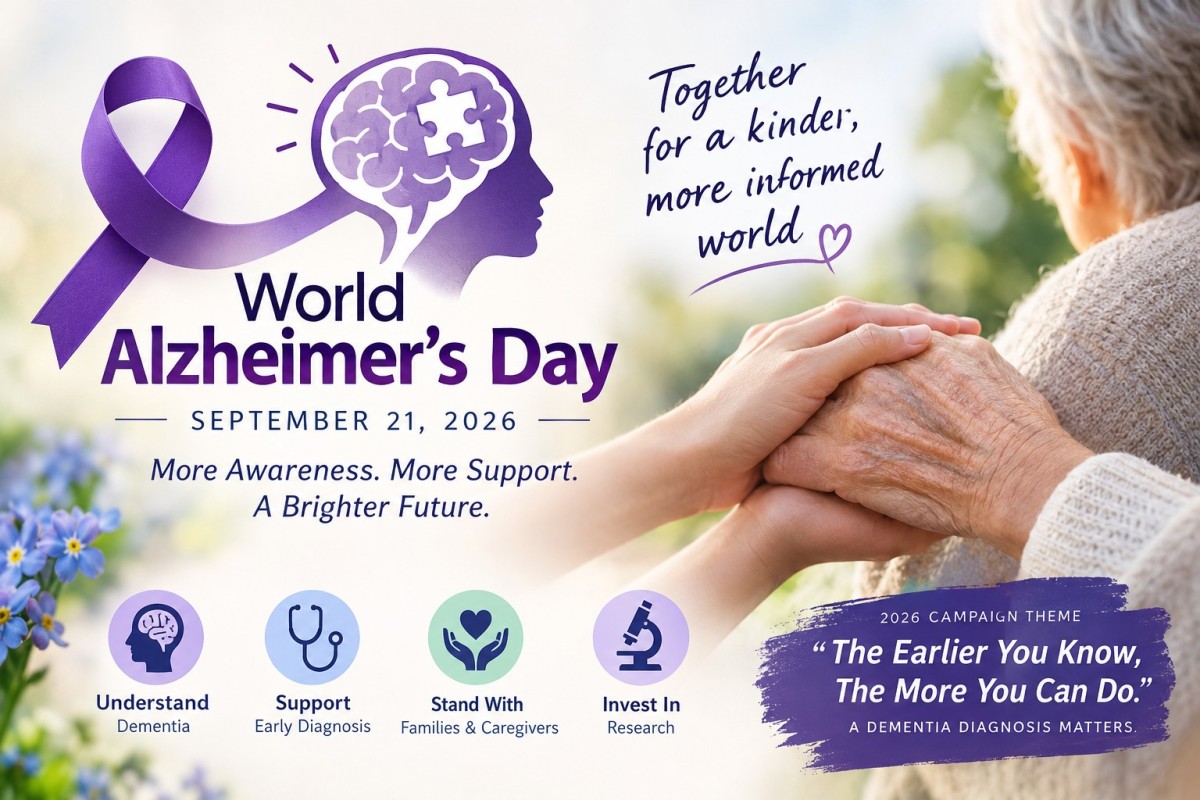
Every year on September 21, people around the world observe World Alzheimer’s Day to raise awareness about Alzheimer’s disease and other forms of dementia. The day encourages communities to understand dementia, challenge stigma and support people living with the condition, along with their families and caregivers. World Alzheimer’s Day forms the focal point of World Alzheimer’s Month, which takes place throughout September.
Also Read: Brazilian Model Larissa Responds to Allegations of Rahul Gandhi’s Vote Chori Connection
🧠 A Day Born From Awareness
Alzheimer’s Disease International (ADI) launched World Alzheimer’s Day on September 21, 1994, during its annual conference in Edinburgh. The organisation selected the date to mark its 10th anniversary and used the occasion to encourage greater awareness of dementia worldwide. ADI has since expanded into a global federation representing more than 100 Alzheimer associations.
September later became World Alzheimer’s Month, extending awareness activities beyond a single day. ADI launched the month-long initiative in 2012 so Alzheimer’s and dementia organisations could conduct wider awareness and advocacy programmes throughout September.
🔎 Understanding Alzheimer’s Disease
Alzheimer’s disease is a progressive condition that affects memory, thinking and other cognitive abilities. It can gradually affect a person’s ability to manage everyday activities and can also place emotional and practical responsibilities on families and caregivers.
Public understanding plays an important role in addressing misconceptions. The World Health Organization has emphasised that dementia should not be treated as an inevitable part of normal ageing. Greater awareness can help reduce stigma and encourage families to seek appropriate information, care and support.
🌱 2026 Focus: Earlier Diagnosis
World Alzheimer’s Month 2026 focuses on the importance of recognising dementia and seeking a diagnosis at the right time. The official campaign theme is “The Earlier You Know, The More You Can Do: A Dementia Diagnosis Matters.”
ADI says that diagnosis can help people access treatment, care and support options while allowing individuals and families to make informed plans. The campaign also aims to challenge the stigma and discrimination that can surround dementia.
🔬 Research Opens New Doors
Research remains an important part of the global response to Alzheimer’s disease and dementia. On World Alzheimer’s Day 2026, ADI is launching its World Alzheimer Report 2026, titled A New Era in Dementia Clinical Trials.
The report examines developments in dementia clinical trials, including opportunities and challenges surrounding participation, research access and future treatments. ADI says the report aims to highlight the human perspective behind clinical research and the need to make trials more inclusive and accessible.
🤝 Families Carry a Vital Role
Families and caregivers often provide day-to-day support to people living with dementia. Their role can involve helping with routines, appointments, communication and other practical needs.
World Alzheimer’s Day provides an opportunity to recognise this contribution and encourage communities to create supportive environments. Awareness campaigns, educational programmes, fundraising activities and community events can help people understand the challenges associated with dementia and reduce social stigma.
🌍 From Awareness to Action
World Alzheimer’s Day goes beyond simply remembering a date on the calendar. It encourages people to learn about dementia, have informed conversations and support those affected by the condition.
Across the world, Alzheimer’s and dementia organisations organise awareness activities, memory walks, fundraising programmes and educational campaigns during September. These initiatives bring together people living with dementia, caregivers, healthcare professionals, researchers and community members.
💙 Conclusion: Every Conversation Matters
World Alzheimer’s Day 2026 reminds us that awareness can lead to meaningful action. Early understanding, timely diagnosis, supportive care and continued research can help individuals and families navigate the challenges associated with dementia.
As the 2026 campaign highlights, knowing earlier can open the door to more choices and support. By encouraging respectful conversations and reducing stigma, communities can build greater understanding around Alzheimer’s disease and dementia.
Also Read: Radha Ashtami 2026: The Divine Story of Radha Rani and the Origins of the Festival