










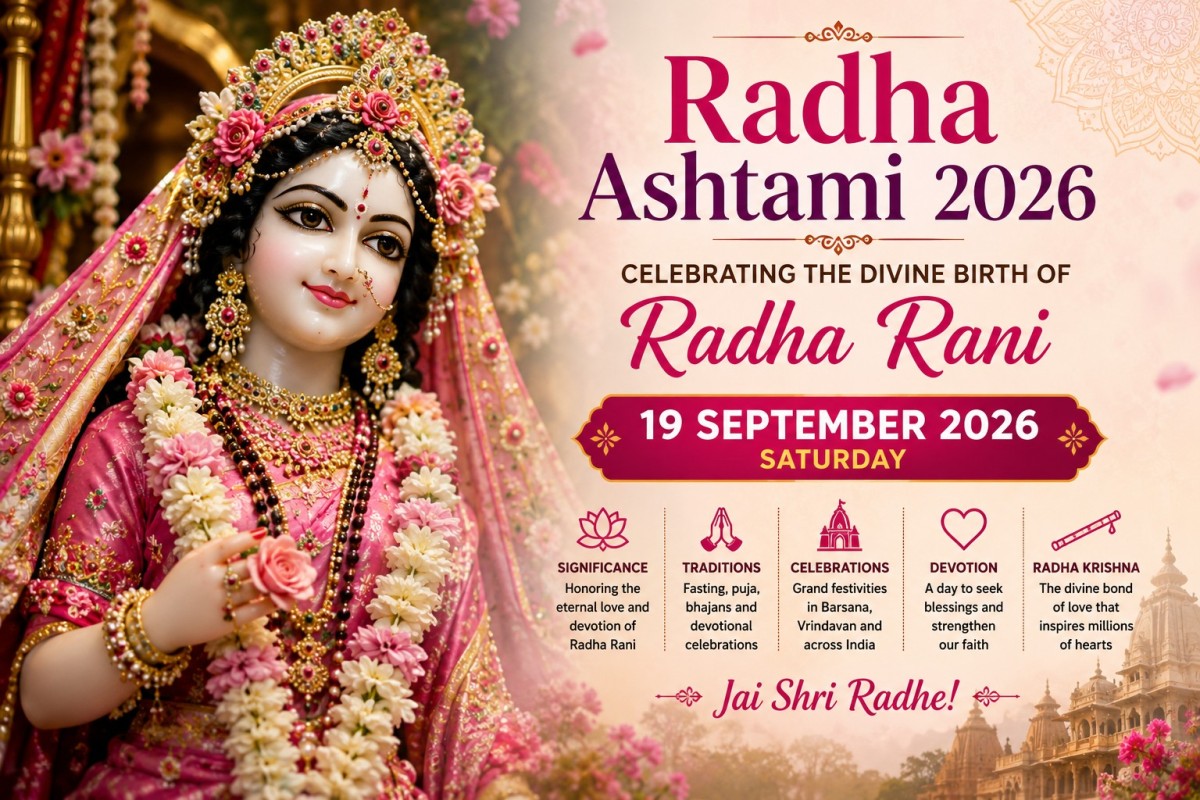
Radha Ashtami is one of the most revered festivals dedicated to Radha Rani, who holds a central place in the devotional traditions of Krishna worship. In 2026, devotees will observe Radha Ashtami on September 19. The festival falls on the Ashtami Tithi of the Shukla Paksha in the month of Bhadrapada and marks the birth anniversary, or appearance day, of Radha Rani according to Hindu tradition.
Across the Braj region, especially in Barsana and Vrindavan, devotees celebrate the occasion with temple rituals, devotional songs, prayers and special worship. The festival carries a deeper message of devotion, love and spiritual surrender.
Also Read: Brazilian Model Larissa Responds to Allegations of Rahul Gandhi’s Vote Chori Connection
🌸 The Sacred Story of Radha Rani’s Birth
Hindu devotional traditions tell several accounts of Radha Rani’s birth and early life. One of the most widely followed traditions connects her with Barsana, while another tradition associates her birthplace with Rawal near Mathura. These different traditions have continued through generations and form an important part of Braj’s religious culture.
According to the popular Braj tradition, Radha appeared as the daughter of Vrishabhanu and Kirtida. Devotees regard her appearance as a divine event rather than an ordinary human birth. Her story later became deeply connected with the life and devotion of Lord Krishna.
Traditional accounts describe Radha as a figure whose devotion represents the highest form of love for the divine. For devotees, her relationship with Krishna does not simply represent an earthly romance. It expresses spiritual devotion, surrender and an intense longing to remain connected with God.
🪷 Radha and Krishna: A Bond Beyond Ordinary Love
Radha and Krishna occupy a unique place in Vaishnava devotional traditions. Devotees often worship them together because Radha represents the loving devotional energy associated with Krishna.
Traditional theology in several Vaishnava schools describes Radha as Krishna’s hladini shakti, or the divine energy associated with spiritual bliss and love. Her presence therefore carries a meaning beyond the story of two divine figures. It represents the devotee’s deep emotional connection with the divine.
This idea helped Radha become one of the most beloved figures in the devotional culture of North India. Poets, saints and devotees expressed their love for Radha and Krishna through songs, poems, paintings, temple traditions and storytelling.
🛕 Why Barsana Becomes the Centre of Celebration
When Radha Ashtami arrives, Barsana takes on a special festive atmosphere. The town holds a particularly important place in Radha worship, and the Shri Radha Rani Temple becomes a major centre of celebration.
Devotees gather for special prayers and rituals, while temples conduct ceremonial worship and abhishekam of Radha Rani. The festival also receives strong devotional participation in Vrindavan and other parts of the Braj region.
The celebrations connect present-day devotees with a long-standing Braj tradition. Families, pilgrims and temple communities use the occasion to sing devotional songs, offer prayers and remember the stories associated with Radha and Krishna.
🕯️ The Meaning Behind Radha Ashtami
Radha Ashtami carries a message that goes beyond celebration. Devotees see Radha as an embodiment of pure devotion and selfless love.
Her story teaches that devotion does not always depend on material rewards. Instead, it can arise from complete faith and surrender. This message explains why Radha remains such an important figure in Bhakti traditions.
The festival also gives devotees an opportunity to reflect on their own spiritual lives. Many people use the day for prayer, fasting, temple visits and devotional activities.
🌺 How Devotees Observe Radha Ashtami
Devotees traditionally begin the day with a bath and clean clothes before preparing for worship. Many observe a fast according to their personal tradition and capacity.
During the Madhyahna period, devotees perform special worship of Radha Rani. Traditional descriptions of the Radha Ashtami vrat include establishing a sacred space, installing an image of Radha, offering various forms of worship and observing a fast.
Different families and Vaishnava traditions follow different rituals, so the exact method can vary. Devotees may also visit temples, sing bhajans, listen to Radha-Krishna stories and offer flowers, fruits and other devotional items.
📜 From Ancient Tradition to Modern Celebration
Radha Ashtami has remained an important festival across several Vaishnava traditions, including the Radha-Vallabha, Gaudiya Vaishnava, Nimbarka and other devotional traditions.
Over generations, devotees preserved Radha’s story through oral traditions, religious literature, temple worship, music and art. This helped the festival remain relevant even as the way people celebrate religious occasions changed.
Today, temples combine traditional rituals with large public celebrations. Devotees also share bhajans, devotional messages and festival greetings through digital platforms, allowing the story of Radha Rani to reach younger generations.
🌼 The Symbolism of Radha Rani
Radha’s image carries several layers of spiritual symbolism. Her devotion represents a heart that seeks the divine without placing material gain at the centre.
For many devotees, Radha also represents compassion, humility and unconditional love. Her story encourages people to look beyond external differences and focus on the strength of faith.
That symbolism explains why Radha Ashtami remains more than a birth celebration. It becomes a day for devotees to remember the values that Radha represents in their spiritual tradition.
🪔 Radha Ashtami 2026: A Day of Devotion
In 2026, Radha Ashtami will be observed on Saturday, September 19. According to the cited Panchang source, the Ashtami Tithi begins on September 18 and ends on September 19, while Radha worship traditionally takes place during the Madhyahna period. Exact ritual timings can vary according to location and Panchang calculations.
For devotees, the date provides another opportunity to remember Radha Rani through prayer, fasting, temple visits, bhajans and acts of devotion.
🌹 Conclusion: A Festival That Keeps Devotion Alive
Radha Ashtami connects mythology, devotion and living tradition. The stories surrounding Radha Rani’s appearance have travelled through generations, while her message of selfless devotion continues to inspire millions of devotees.
As temples fill with flowers, devotional music and prayers on September 19, the festival will once again bring the story of Radha Rani into the centre of spiritual life. Beyond the rituals, Radha Ashtami reminds devotees of a simple idea: faith becomes meaningful when love, humility and devotion guide the heart.
Also Read: Ganesh Chaturthi 2026: Easy Modak Recipe to Make at Home