









Speed is one of the most fascinating abilities found in nature and technology. From the fastest peregrine falcon diving through the sky to the fastest spacecraft travelling around the Sun, some of the fastest things in the world can move at astonishing speeds.
Humans have also spent decades developing faster cars, aircraft, trains, boats and other machines. Some of these speed records are achieved under highly controlled conditions, while animal speeds can vary depending on the method used to measure them.
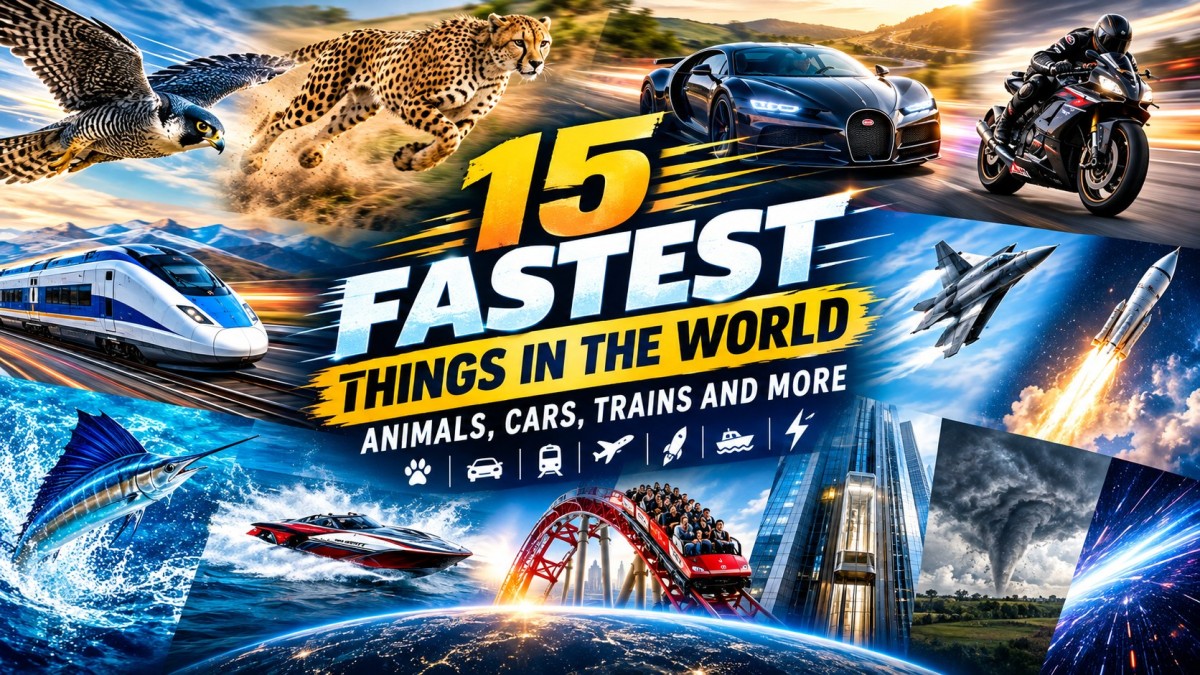
Here are 15 of the fastest things in the world, covering animals, vehicles, aircraft, space technology and natural phenomena.
🦅 1. Peregrine Falcon – Fastest Animal
The peregrine falcon is widely regarded as the fastest animal when measured during a high-speed hunting dive. During its famous “stoop,” the bird can reach speeds of more than 300 km/h.
Unlike a cheetah, which relies on powerful muscles to run at high speed, the peregrine falcon uses gravity, body shape and aerodynamic control to accelerate dramatically while diving toward its prey.
Its incredible speed makes the peregrine one of nature’s most impressive aerial hunters. The exact maximum speed reported can vary between studies and measurement methods, but its diving speed places it far ahead of most other animals.
🐆 2. Cheetah – Fastest Land Animal
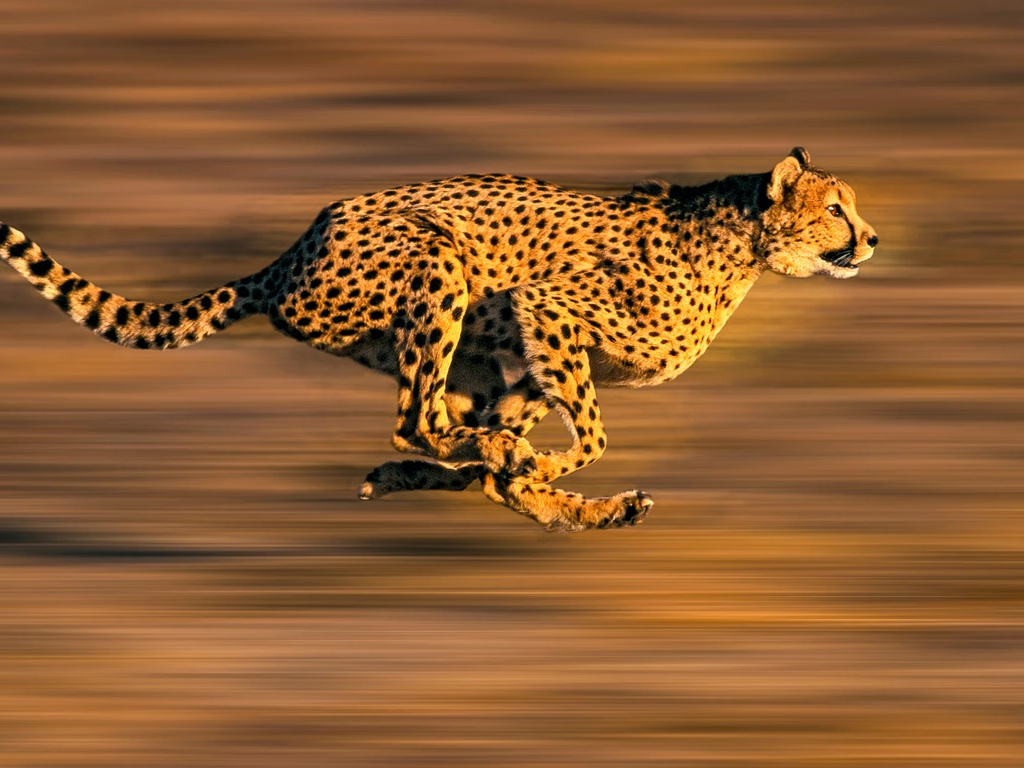
The cheetah is the fastest land animal, reaching roughly 100–120 km/h during short bursts. Its flexible spine, long legs, powerful muscles and large nasal passages allow it to accelerate rapidly while chasing prey.
However, the cheetah cannot maintain its maximum speed for long periods. It generally relies on acceleration and a short high-speed chase rather than endurance.
Guinness World Records cites a measured speed of 103.4 km/h for a cheetah over a 201.2-metre distance, demonstrating just how quickly this animal can move across open ground.
🏎️ 3. Thrust SSC – Fastest Car by Land-Speed Record
When it comes to the official land-speed record, few machines compare with Thrust SSC. Driven by Andy Green in Nevada’s Black Rock Desert in 1997, the jet-powered vehicle reached 1,227.985 km/h.
Thrust SSC became the first car to officially break the sound barrier on land, reaching approximately Mach 1.02. It was powered by two Rolls-Royce Spey jet engines that generated enormous thrust.
This record is different from the top speed of a normal production car because Thrust SSC was specifically designed as a land-speed-record vehicle rather than a road-going automobile.
🏍️ 4. Fastest Motorcycles
Motorcycles have also pushed the limits of land-based speed. Specialized racing motorcycles have been developed specifically to achieve extraordinary speeds on carefully prepared surfaces.
Unlike ordinary road motorcycles, land-speed-record machines can feature aerodynamic bodywork, specially designed engines and long wheelbases to improve stability at extreme speeds.
The Royal Society’s comparison of speed records, for example, lists the Ack Attack motorcycle at about 606 km/h. Such machines demonstrate how motorcycle engineering changes dramatically when the primary goal is maximum speed rather than everyday transportation.
🚄 5. Fastest Trains
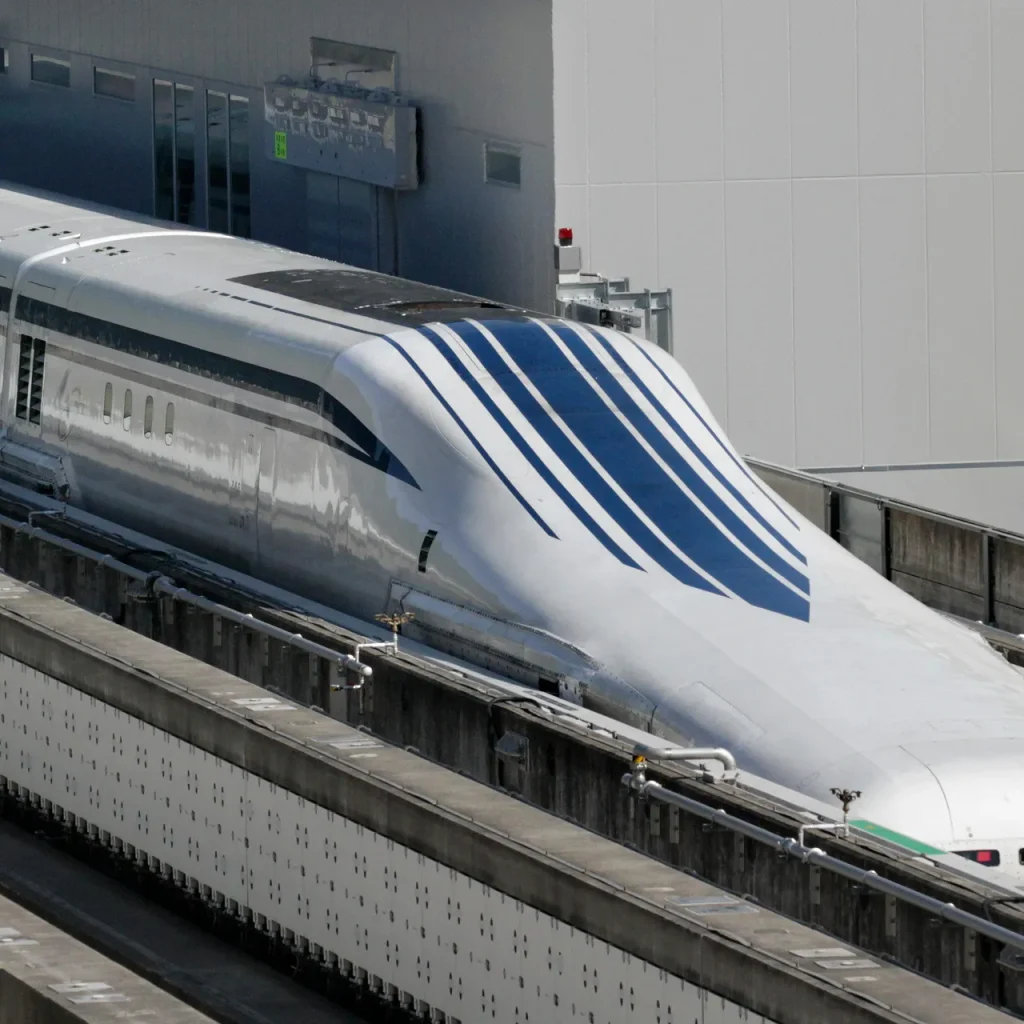
High-speed trains are among the fastest forms of ground transportation. Conventional high-speed rail can travel at several hundred kilometres per hour, while magnetic-levitation trains have achieved even higher speeds during testing.
Maglev technology uses magnetic forces to reduce or eliminate conventional wheel-and-rail contact, allowing trains to operate at very high speeds.
The Royal Society lists a TGV test speed of 575 km/h and a JR-Maglev test speed of 580 km/h. These figures are test records rather than normal everyday operating speeds, showing the difference between experimental performance and regular passenger service.
✈️ 6. X-15 – One of the Fastest Crewed Aircraft
The North American X-15 was an experimental rocket-powered aircraft designed to explore high-speed and high-altitude flight. In 1967, it reached approximately 7,274 km/h, or Mach 6.7, with pilot William “Pete” Knight at the controls.
The X-15 was not an ordinary aircraft. It was carried beneath a B-52 before being released and powered by a rocket engine during its high-speed flight.
Its record demonstrates the enormous engineering challenges involved in travelling at hypersonic speeds through the atmosphere.
🚀 7. Parker Solar Probe – Fastest Spacecraft
The Parker Solar Probe holds the record for the fastest spacecraft. NASA’s probe reached 192.22 km/s, equivalent to about 692,000 km/h, on 24 December 2024 while making a close approach to the Sun.
Its extraordinary speed is largely the result of its highly elliptical orbit and repeated gravitational interactions, including a Venus gravity assist.
Unlike a car or aircraft, the spacecraft does not achieve this speed using a conventional engine pushing it continuously. Orbital mechanics and the Sun’s enormous gravitational field play a crucial role.
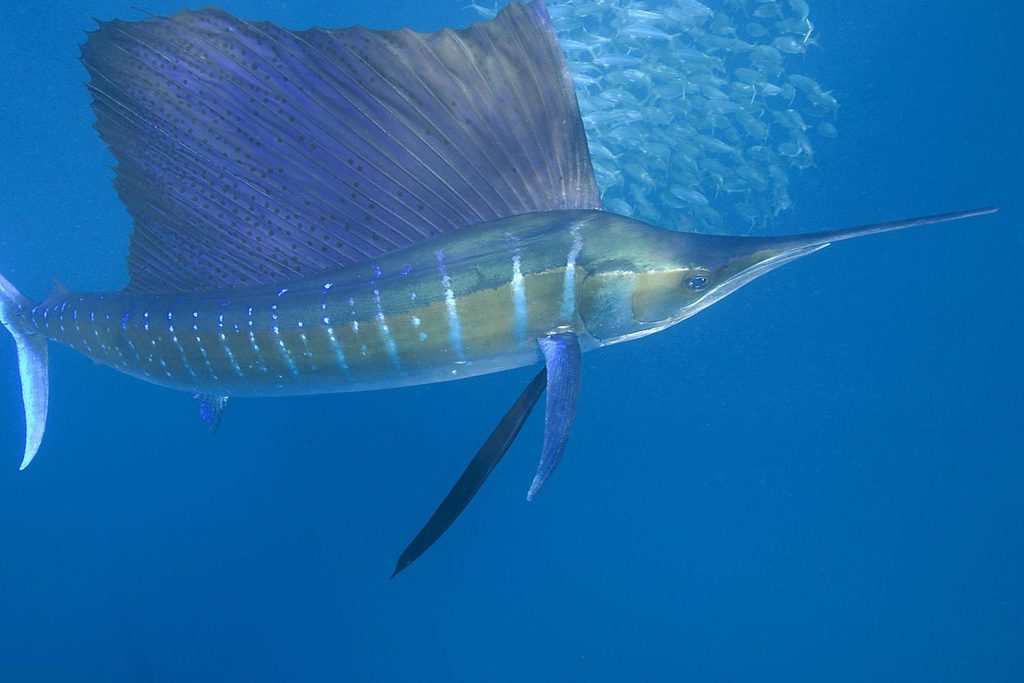
🐟 8. Sailfish – One of the Fastest Fish
The sailfish is frequently described as one of the fastest fish in the ocean. Its streamlined body, powerful tail and large dorsal fin help it move rapidly through the water.
However, exact fish-speed records can be difficult to establish because measuring a wild animal underwater is considerably harder than measuring the speed of a vehicle on a test track.
The sailfish remains famous for its remarkable acceleration and agility, making it one of the ocean’s most impressive predators.
🚤 9. Fastest Boats
Speed records on water require completely different engineering from land vehicles. Boats must overcome water resistance while remaining stable enough to prevent dangerous loss of control.
Record-setting boats have used powerful engines, lightweight construction and carefully designed hulls to reach extraordinary speeds. Hydrofoil technology can also reduce the amount of a vessel that remains directly in contact with the water.
Water-speed records are therefore a fascinating combination of engine power, aerodynamics, hydrodynamics and precise handling.
🛩️ 10. SR-71 Blackbird – Fastest Non-Experimental Jet
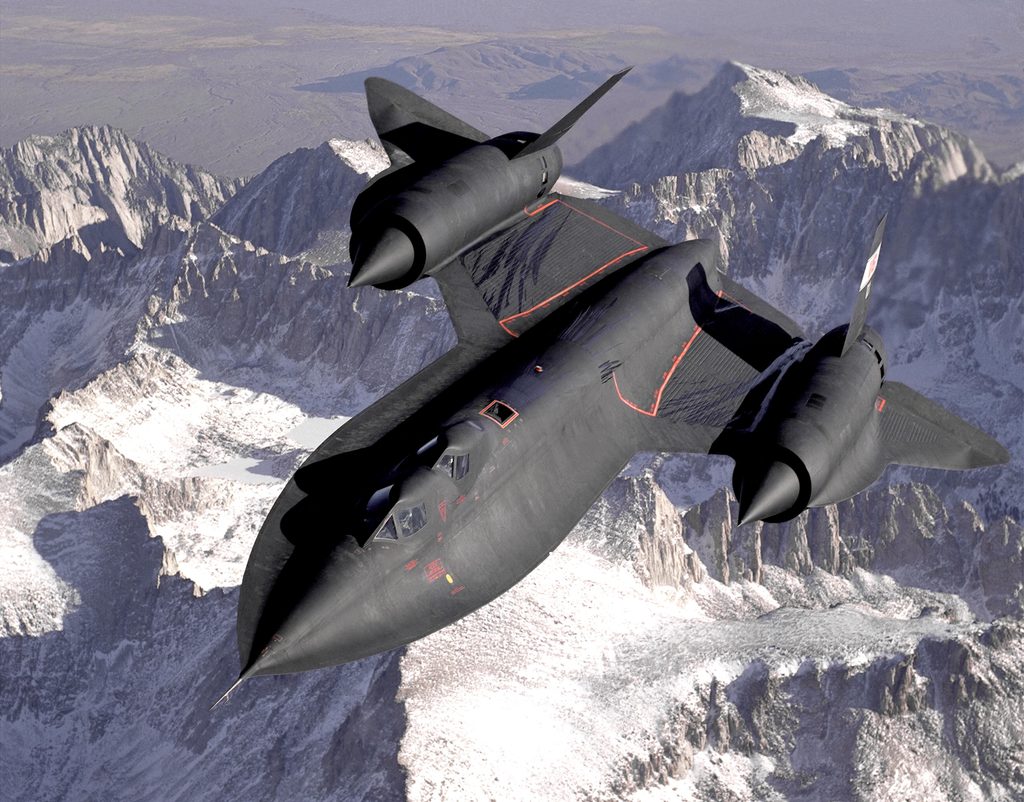
The Lockheed SR-71 Blackbird is famous for its extraordinary speed and altitude capabilities. Guinness lists it as the world’s fastest non-experimental jet aeroplane, with a reported maximum speed above Mach 3.
That translates to more than 3,000 km/h, depending on atmospheric conditions.
The aircraft was designed for reconnaissance rather than conventional combat. Its ability to fly extremely fast and extremely high helped it avoid threats during its operational career.
🎢 11. Formula Rossa – Fastest Roller Coaster
Speed is not limited to transportation. Roller coasters also compete for records, and Formula Rossa at Ferrari World Abu Dhabi has become famous for its extreme acceleration.
The ride can reach approximately 240 km/h, according to Guinness World Records, making it one of the world’s fastest roller coasters.
Instead of maintaining a high speed for a long journey, the attraction is designed to deliver an intense burst of acceleration over a short period. It demonstrates how modern engineering can turn extreme speed into a controlled entertainment experience.
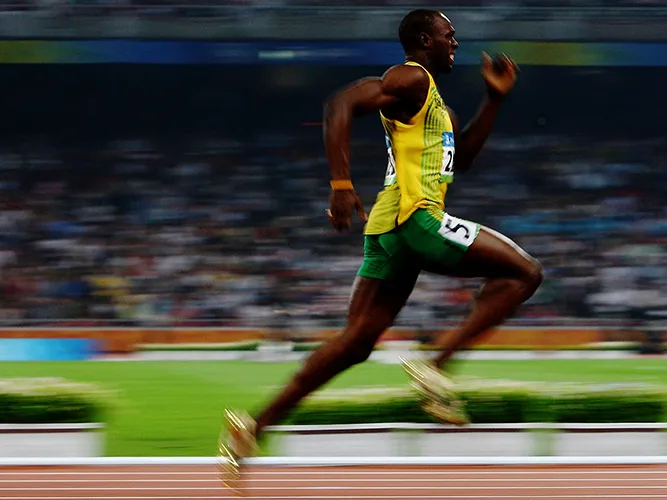
🏃 12. Usain Bolt – Fastest Human Sprinter
Usain Bolt holds the men’s 100-metre world record with a time of 9.58 seconds, set at the 2009 World Championships in Berlin.
During his record-breaking race, Bolt briefly reached a peak running speed of roughly 44–45 km/h according to biomechanical analyses.
Compared with machines and animals, this number may seem modest, but achieving such speed using only human muscle power is extraordinary. Bolt’s combination of stride length, acceleration and technique helped him become one of the most recognizable speed athletes in history.
🌪️ 13. Fastest Winds
Some of the most extreme speeds on Earth occur naturally in severe weather. Powerful tornadoes and other atmospheric systems can generate exceptionally strong winds.
Measuring the maximum wind speed inside a tornado is particularly difficult because these storms are dangerous, short-lived and highly variable.
Historical estimates and measurements have produced extremely high figures, although not every reported wind speed is directly measured. This makes natural wind records different from controlled vehicle records, where instruments and test conditions can be carefully documented.
🛗 14. Fastest Elevators
Modern skyscrapers require elevators that can move people hundreds of metres in a short time. High-speed elevator systems use advanced motors, lightweight components, aerodynamic cabins and sophisticated control systems.
The fastest elevators are generally found in very tall buildings or specialized testing facilities. Their speed is carefully balanced with passenger comfort because rapid changes in acceleration can cause discomfort.
This makes elevator engineering a fascinating example of how speed must be combined with safety, stability and human comfort rather than simply maximizing velocity.
💡 15. Light – The Fastest Known Speed
When discussing the fastest things in the universe, nothing in the list compares with light in a vacuum. Light travels at approximately 299,792 kilometres per second.
At that speed, light could travel around Earth roughly seven times in a single second.
The speed of light is not simply another record like the speed of a car or aircraft. In modern physics, it represents a fundamental limit for how information and matter can travel through space.
That is why light remains the ultimate benchmark whenever scientists compare extreme speeds.
🏁 Which Is the Fastest Thing in the World?
The answer depends on what category is being considered. The peregrine falcon is famous for its incredible diving speed, the cheetah dominates short-distance land running, and Thrust SSC holds the official land-speed record for a car.
For human-made spacecraft, the Parker Solar Probe has reached speeds of about 692,000 km/h. But when discussing the fundamental speed limit of nature, light in a vacuum is far faster than any object or vehicle.
🌍 Why Are These Speed Records So Interesting?
These records show two very different sides of speed. Nature has produced animals with extraordinary adaptations for hunting, escaping predators and surviving in challenging environments. Humans, meanwhile, have developed increasingly sophisticated machines to overcome resistance and travel faster.
From a bird diving through the atmosphere to a spacecraft moving around the Sun, each record represents a different combination of physics, engineering, biology and energy.
⚡ Final Thoughts
The world’s fastest things range from tiny animals to enormous machines and spacecraft. Some achieve their speed through evolution, while others depend on decades of scientific research and engineering.
Whether it is a cheetah racing across the ground, a jet-powered car breaking the sound barrier, or the Parker Solar Probe racing around the Sun, these records demonstrate just how far the limits of speed can be pushed.