










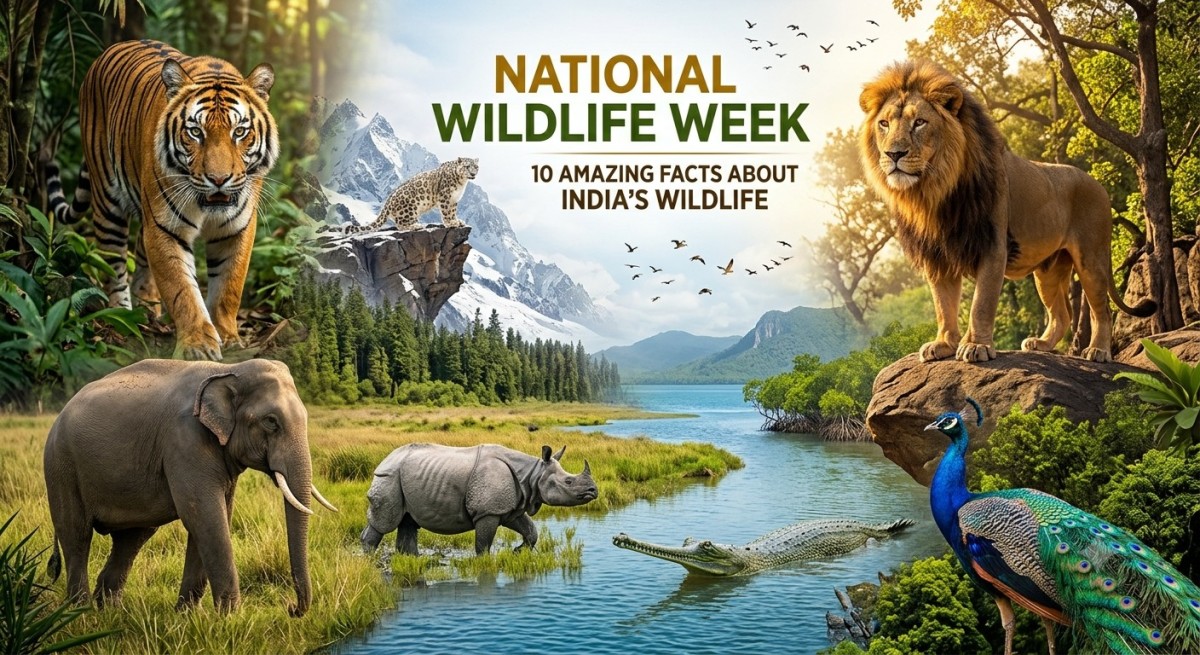
National Wildlife Week is observed every year in India to create awareness about wildlife conservation, biodiversity and the importance of protecting natural habitats. India is one of the world’s most biodiverse countries, with wildlife ranging from the majestic Bengal tiger and Asiatic lion to the elusive snow leopard, one-horned rhinoceros and endangered gharial.
India’s geographical diversity has created suitable habitats for thousands of animal, bird, reptile, amphibian and marine species. The country has tropical forests, Himalayan mountains, grasslands, deserts, wetlands, mangroves and long coastal regions, each supporting its own unique wildlife.
Wildlife Week provides an opportunity to understand these species and the conservation challenges they face. Here are 10 amazing facts about India’s wildlife that highlight the country’s extraordinary natural diversity.
🐯 1. India Is Home to the Bengal Tiger
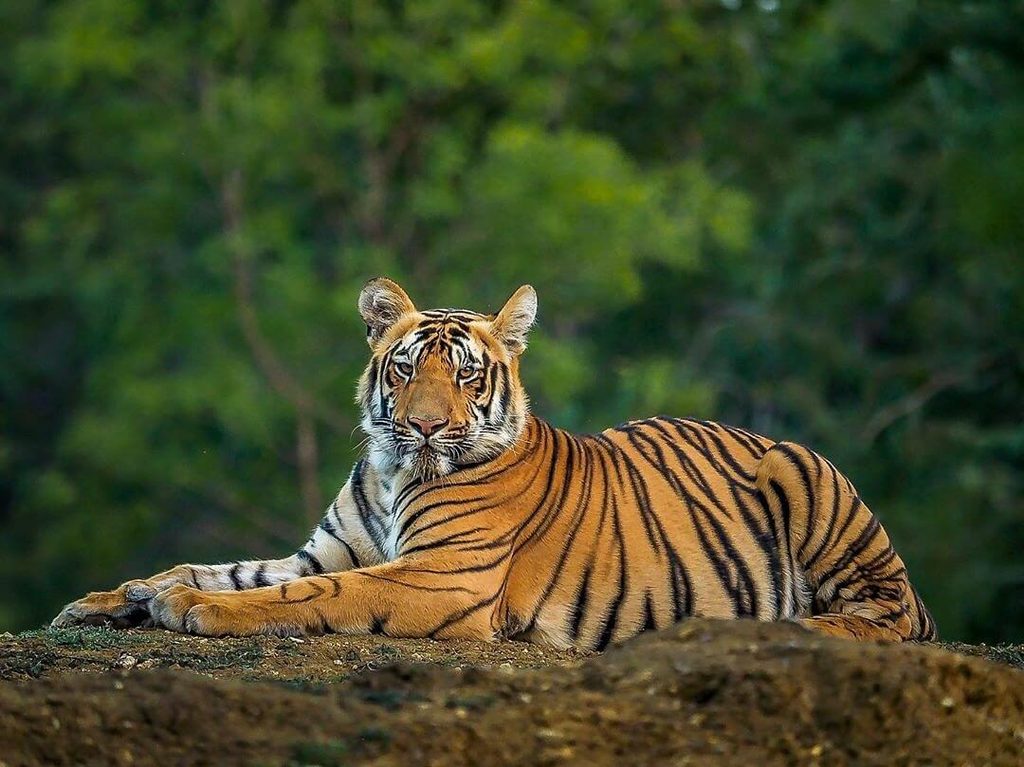
The Bengal tiger is one of India’s most iconic wild animals and an important symbol of wildlife conservation. These powerful predators inhabit different landscapes, including tropical forests, grasslands, wetlands and mangrove ecosystems.
India launched Project Tiger in 1973 to provide focused protection to the species and its habitat. Over the years, tiger conservation has expanded through protected areas, monitoring programmes, anti-poaching measures and habitat management.
The tiger also plays an important ecological role because it is an apex predator. By regulating populations of herbivores and other prey animals, it contributes to maintaining balance within forest ecosystems.
🦁 2. Asiatic Lions Have a Unique Home in Gujarat
The Asiatic lion is among India’s most famous big cats and has a much smaller natural range than the Bengal tiger. Today, wild Asiatic lions are concentrated in Gujarat, particularly across the Gir landscape and surrounding areas.
The Gir ecosystem provides forests, grasslands and water sources that support the lion population along with other wildlife. Conservation efforts in Gujarat have helped protect the species after its population faced serious threats in the past.
The Asiatic lion is also recognisable by its distinctive physical characteristics, including a less-developed mane compared with many African lions.
🐘 3. India Has a Large Population of Wild Asian Elephants
The Asian elephant is one of the largest land animals found in India. Wild elephants inhabit several parts of the country, particularly regions of southern, northeastern, eastern and central India.
Elephants are considered ecosystem engineers because their feeding and movement can influence vegetation, create pathways and help distribute seeds. Their survival therefore benefits many other species sharing the same landscapes.
However, expanding human settlements, roads, railways and agricultural areas can increase encounters between elephants and people. Protecting wildlife corridors is therefore an important part of elephant conservation.
🦏 4. India Is Famous for the One-Horned Rhinoceros
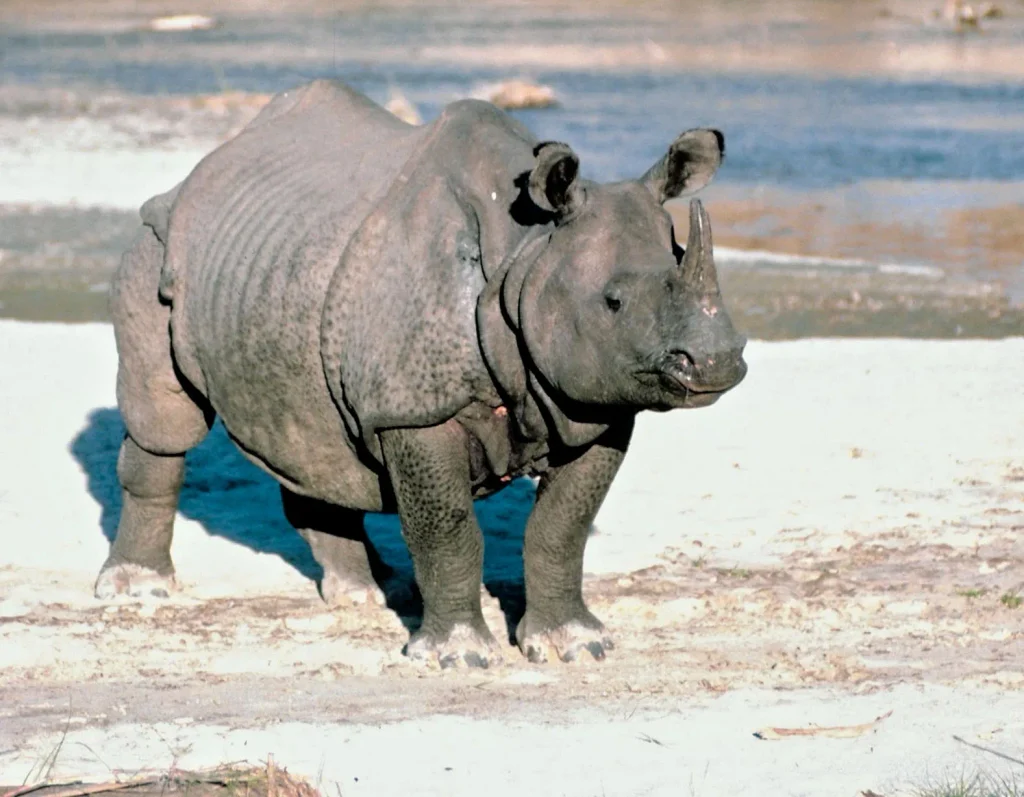
The greater one-horned rhinoceros is one of the most recognisable animals of northeastern India. Assam’s Kaziranga National Park is particularly famous for its rhino population and has become an important centre for conservation.
These large herbivores spend considerable time around grasslands and wetlands. Their habitats also support numerous other animals and birds, making rhino conservation important for the wider ecosystem.
The species has recovered significantly from historical population declines, although habitat pressures and illegal wildlife trade remain important conservation concerns.
🐊 5. The Gharial Has One of the Most Distinctive Snouts
The gharial is a specialised crocodilian that is closely associated with freshwater river systems. Its extremely long and narrow snout distinguishes it from other crocodilians found in India.
Adult gharials mainly feed on fish, while their specialised jaws are adapted to catching aquatic prey. They depend heavily on healthy rivers, suitable nesting sites and adequate fish populations.
River pollution, changes in river flow, sand mining and habitat disturbance can affect gharial populations. Protecting river ecosystems is therefore crucial for the species.
🐆 6. India Is Home to Several Wild Cat Species
India has remarkable diversity among wild cats. Apart from the Bengal tiger and Asiatic lion, the country is home to leopards, snow leopards, clouded leopards, jungle cats, fishing cats and several smaller wild cat species.
Each species has adapted to different environments. Snow leopards survive in high-altitude mountains, fishing cats are associated with wetlands, while clouded leopards inhabit forested landscapes.
This diversity shows why wildlife conservation cannot focus on only one iconic species. Different animals require different habitats and protection strategies.
🏔️ 7. Snow Leopards Survive in Extreme Himalayan Conditions
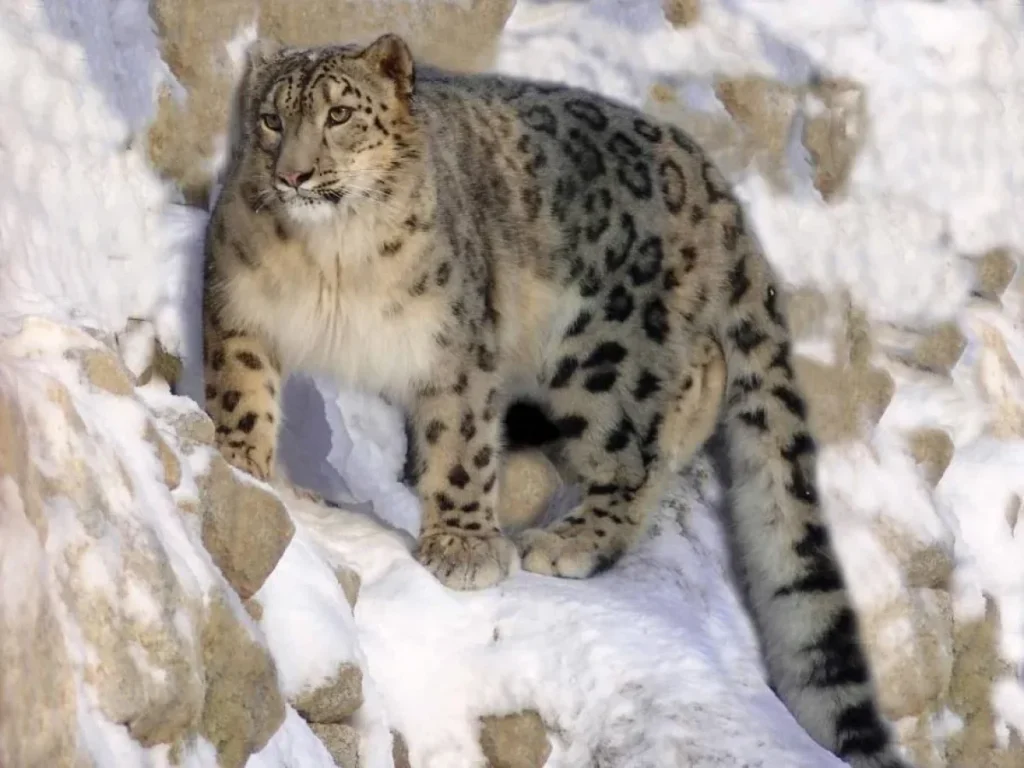
The snow leopard is one of the most elusive animals in the world and lives across high-altitude Himalayan landscapes. Its thick fur, wide paws and long tail help it survive cold temperatures and difficult mountain terrain.
Snow leopards are difficult to observe because they inhabit remote rocky landscapes and have excellent camouflage. Their presence also indicates the ecological importance of high-altitude Himalayan habitats.
Conservation programmes increasingly focus on protecting their habitat while reducing conflicts between local communities and wildlife.
🦚 8. The Peacock Is India’s National Bird
The Indian peafowl, popularly known as the peacock, was declared India’s national bird in 1963. Its colourful feathers, distinctive appearance and spectacular courtship display have made it one of the country’s most recognisable birds.
Although male peafowl are particularly famous for their colourful trains, females have more subdued plumage. During courtship, males spread their feathers into a large fan and perform elaborate displays.
Peafowl can adapt to a variety of environments and are found in forests, agricultural landscapes and areas close to human settlements.
🐢 9. India’s Wildlife Extends From Forests to the Oceans
India’s wildlife is not limited to national parks and forests. The country’s extensive coastline, islands and marine ecosystems support an extraordinary variety of species.
Indian waters are home to sea turtles, dolphins, whales, dugongs, sharks and numerous fish species, while coastal ecosystems include mangroves, coral reefs and seagrass habitats.
The olive ridley turtle is particularly famous for its mass nesting behaviour along parts of India’s eastern coastline. Protecting beaches and coastal habitats is essential for the survival of marine wildlife.
🌳 10. India’s Wildlife Depends on Diverse Habitats
One of the most fascinating facts about Indian wildlife is the sheer variety of habitats found within the country. The Himalayan region supports species adapted to cold and high-altitude conditions, while the Western Ghats contain tropical forests rich in endemic species.
India also has deserts, grasslands, wetlands, mangrove forests, rivers and coastal ecosystems. Each habitat supports different plants and animals, creating interconnected ecological systems.
When a habitat is damaged, the impact can extend far beyond a single species. Protecting forests, rivers, grasslands and wetlands therefore remains central to long-term wildlife conservation.
🐾 Why Is Wildlife Conservation Important?
Wildlife is an important part of healthy ecosystems. Predators help regulate prey populations, insects and birds contribute to pollination, and many animals help spread seeds through forests and grasslands.
Wildlife conservation also benefits human communities. Forests and wetlands help regulate water, protect soil and support livelihoods, while healthy ecosystems can provide important resources and environmental services.
At the same time, wildlife faces several challenges, including habitat loss, illegal hunting, pollution, climate change, infrastructure development and human-wildlife conflict.
Conservation efforts therefore require cooperation between governments, forest departments, scientists, local communities, conservation organisations and citizens.
🌿 India’s Protected Areas Play a Major Role
India has established numerous national parks, wildlife sanctuaries, tiger reserves, elephant reserves and other protected areas to conserve important habitats and species.
Places such as Kaziranga, Gir, Jim Corbett, Ranthambore, Kanha, Bandhavgarh, Sundarbans and Periyar have become widely recognised for their wildlife.
These protected landscapes also contribute to research, ecological monitoring and responsible tourism. When tourism is managed carefully, it can increase public awareness while supporting local economies.
🌏 Wildlife Conservation Is Also About Protecting Habitats
Saving an animal does not simply mean protecting individual members of a species. Wildlife needs sufficient food, water, shelter, breeding grounds and safe movement corridors.
For this reason, conservation programmes increasingly focus on entire ecosystems rather than isolated species. Protecting forests, wetlands, grasslands, rivers and coastal habitats can benefit numerous species simultaneously.
Wildlife corridors are particularly important for animals that move between different habitats. Maintaining these connections can reduce isolation between populations and help animals access food and breeding areas.
📚 Interesting Facts to Remember During Wildlife Week
National Wildlife Week is more than a week dedicated to famous animals. It is an opportunity to understand the relationship between wildlife, ecosystems and human communities.
India’s wildlife includes some of the world’s most recognisable species, but it also includes thousands of lesser-known animals, birds, reptiles, insects and aquatic organisms.
Every species contributes to its ecosystem in some way. Protecting biodiversity therefore means preserving the complex natural relationships that have developed over thousands of years.
🐅 National Wildlife Week: A Celebration of India’s Biodiversity
National Wildlife Week encourages people to learn about India’s extraordinary natural heritage and understand why wildlife conservation matters. From the Bengal tiger roaming through forests to the snow leopard surviving in Himalayan mountains, Indian wildlife has adapted to an extraordinary range of environments.
The country’s rivers, forests, grasslands, wetlands, mountains, deserts and oceans all contribute to its biodiversity. Protecting these ecosystems can help ensure that future generations continue to experience India’s remarkable wildlife.
National Wildlife Week is therefore not only a celebration of animals but also a reminder that protecting nature requires protecting the habitats and ecosystems on which all life depends.