







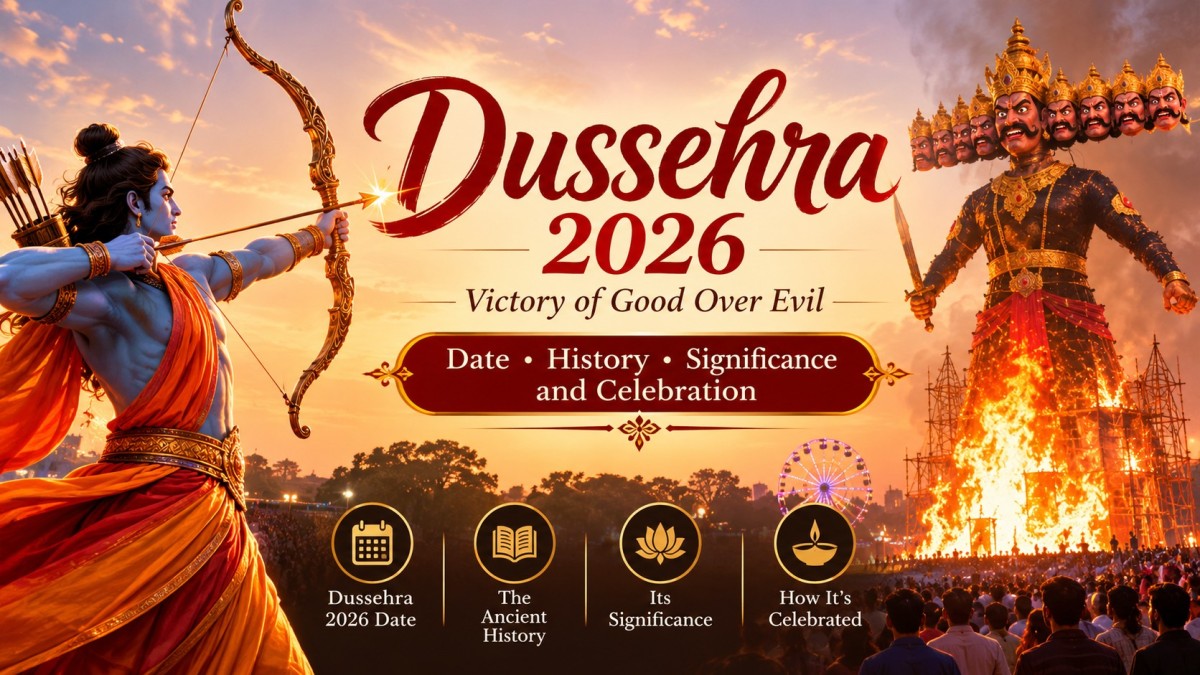
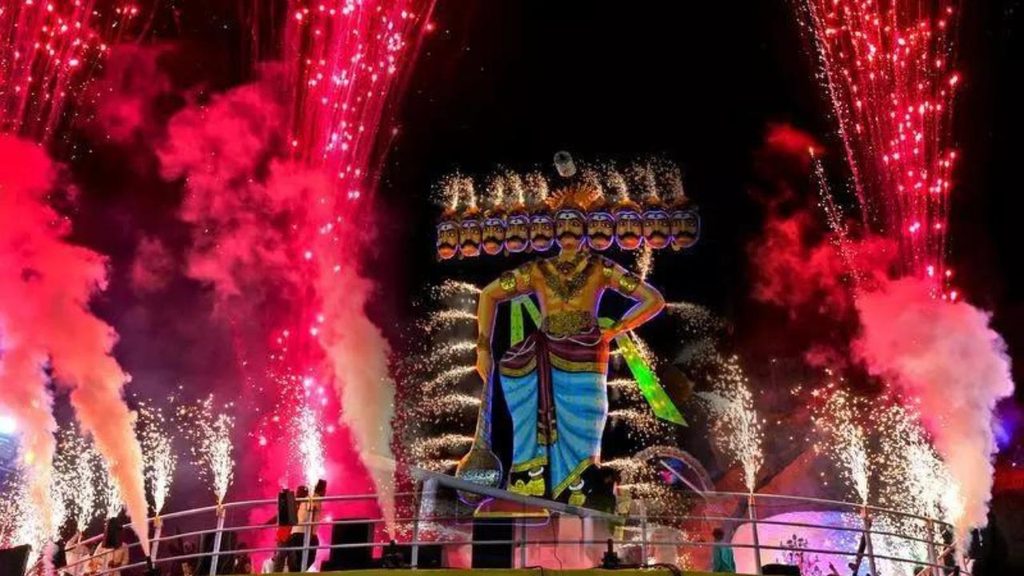
Dussehra, also known as Vijayadashami, is one of India’s most popular Hindu festivals. Every year, millions of people celebrate this special occasion to mark the victory of good over evil. Moreover, the festival teaches valuable lessons about truth, courage, and righteousness. From grand processions to traditional prayers, Dussehra brings families and communities together across the country.
📅 Dussehra 2026 Date
Dussehra 2026 falls on Tuesday, October 20, 2026. Hindus celebrate this festival on the tenth day of the lunar month of Ashwin, which marks Vijayadashami.
Furthermore, Dussehra concludes the nine-day festival of Sharad Navratri. Although different regions follow their own customs, people across India celebrate the occasion with devotion and enthusiasm.
Image suggestion: A festive Dussehra celebration with traditional decorations, diyas, and marigold flowers.
📖 History of Dussehra
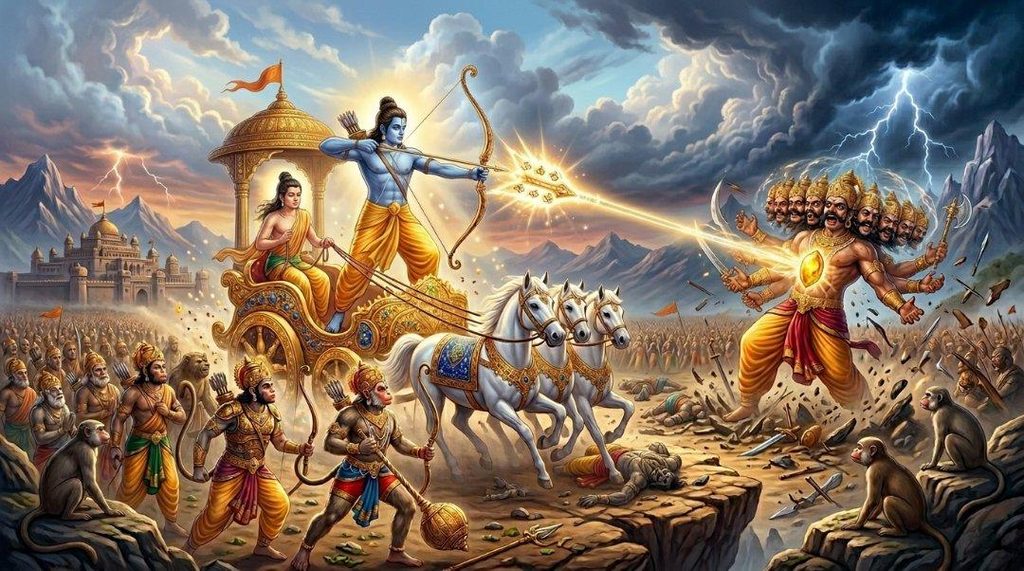
Dussehra has deep roots in Hindu mythology. In particular, two famous legends explain the festival’s religious and cultural significance.
According to the Ramayana, Lord Rama fought the demon king Ravana to rescue his wife, Goddess Sita. After a fierce battle, Rama defeated Ravana and restored righteousness. Therefore, many communities burn Ravana’s effigy during Dussehra to remind people that good ultimately triumphs over evil.
Similarly, another Hindu tradition celebrates Goddess Durga’s victory over Mahishasura. The powerful goddess defeated the demon after a prolonged battle. As a result, devotees honour her courage, strength, and divine power during Vijayadashami.
Image suggestion: Traditional artwork depicting Lord Rama facing Ravana, or Goddess Durga defeating Mahishasura.
🙏 Significance of Dussehra
Dussehra carries an important message for people of all ages. Above all, the festival encourages everyone to choose honesty, kindness, and justice over greed, anger, and dishonesty.
In addition, Dussehra inspires people to:
- Follow the path of truth and righteousness.
- Stand up against injustice and wrongdoing.
- Overcome negative thoughts and harmful habits.
- Practise kindness, patience, and compassion.
- Welcome new beginnings with hope and positivity.
For this reason, many families consider Dussehra an auspicious day to begin new projects, start educational journeys, or make important decisions.
Image suggestion: Devotees offering prayers to Goddess Durga at a beautifully decorated temple.
🎊 How Is Dussehra Celebrated in India?
India celebrates Dussehra in many colourful ways. While some regions focus on Lord Rama’s victory over Ravana, others honour Goddess Durga and her triumph over evil.
Here are some popular Dussehra traditions across the country:
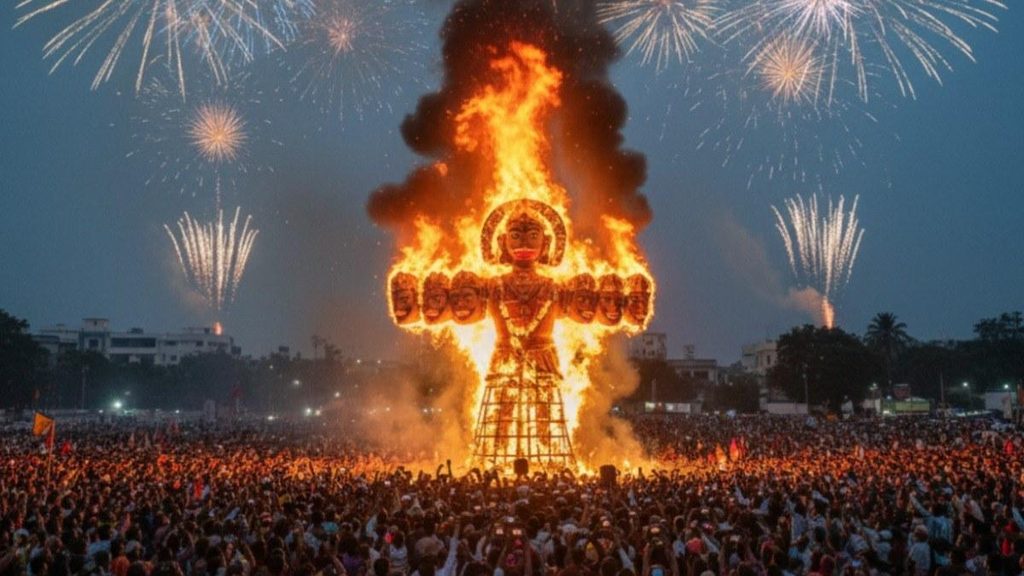
🔥 Ravan Dahan
In many northern Indian cities, people gather in public grounds to watch the burning of giant effigies of Ravana, Meghnad, and Kumbhakarna. This tradition symbolizes the destruction of evil and the victory of righteousness.
🎭 Ramlila Performances
Communities organize Ramlila performances to bring stories from the Ramayana to life. Through these plays, performers portray Lord Rama’s journey, his battle with Ravana, and his eventual victory.
🌺 Durga Puja
In West Bengal and other eastern regions, Vijayadashami marks the conclusion of Durga Puja. Devotees offer prayers to Goddess Durga and take part in farewell rituals before the traditional immersion of her idol.
🐘 Mysuru Dasara
Karnataka celebrates Mysuru Dasara with grand processions, cultural programmes, and the illumination of Mysore Palace. Every year, these festivities attract visitors who want to experience the city’s rich royal heritage.
🌿 Apta Leaves Tradition
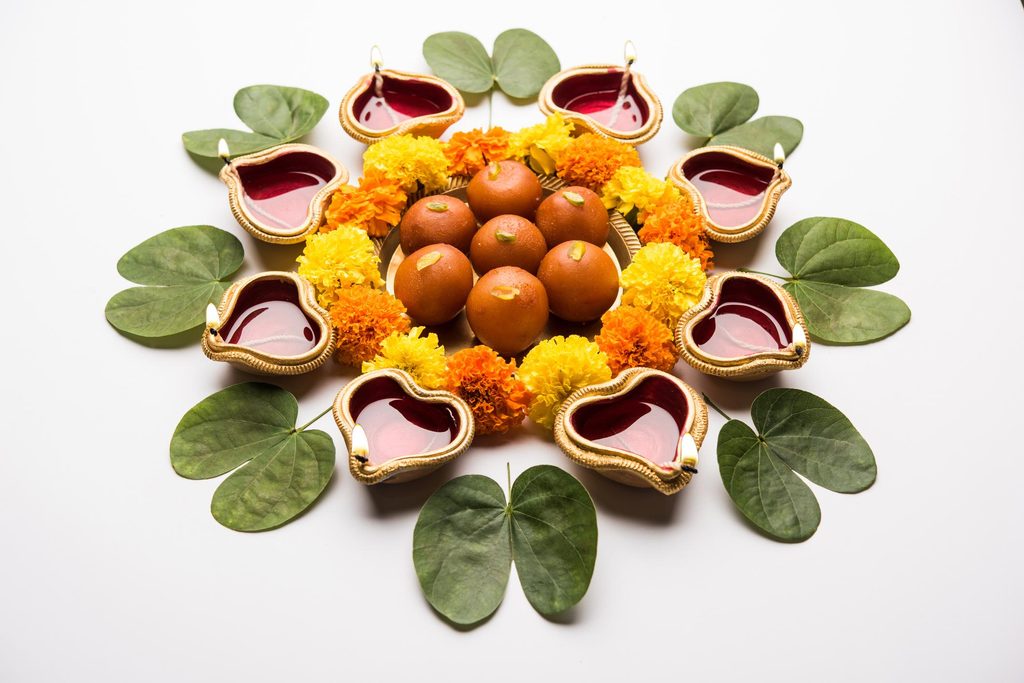
In Maharashtra, people exchange Apta leaves as symbolic gold and share warm wishes with family members and friends. This custom represents prosperity, affection, and goodwill.
Image suggestion: A wide photograph of Mysore Palace illuminated during Dasara or a traditional Ravan Dahan celebration.
🪔 Dussehra Traditions and Rituals
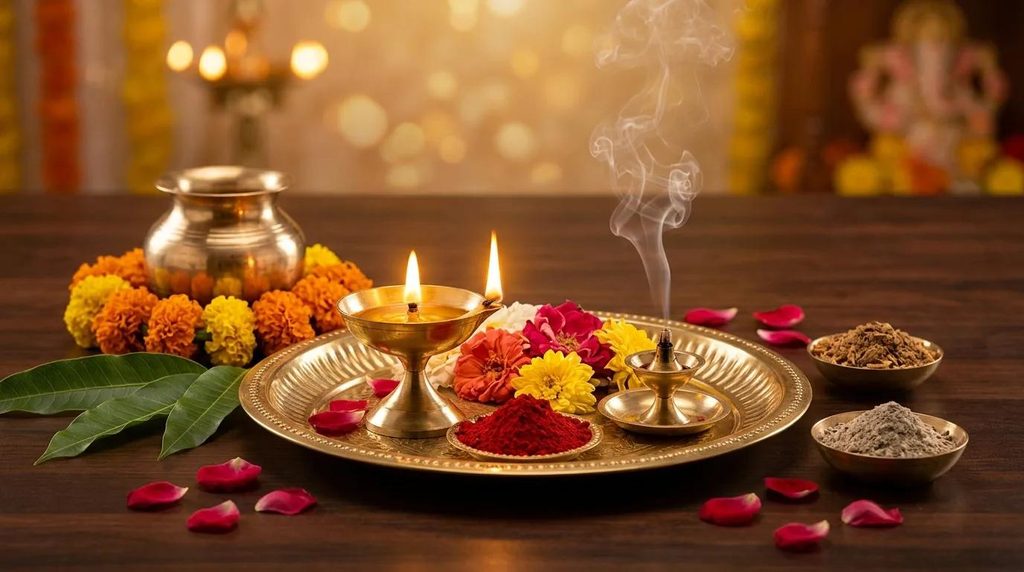
Families follow various rituals during Dussehra, depending on their regional and religious traditions. For example, many devotees visit temples, offer flowers and sweets, and pray for happiness and prosperity.
Additionally, some people worship their tools, vehicles, and work equipment as a sign of gratitude. Others perform special prayers or begin new ventures because they consider Vijayadashami an auspicious occasion.
Meanwhile, families prepare festive meals, visit relatives, and exchange greetings. These traditions strengthen family bonds and preserve India’s cultural heritage.
Image suggestion: A traditional puja thali with a diya, flowers, sweets, and festive decorations.
💡 Interesting Facts About Dussehra
Dussehra has many fascinating traditions and stories. Here are some interesting facts about this popular Indian festival:
- Different names: People also call the festival Vijayadashami and Dasara.
- End of Navratri: Dussehra marks the tenth day of Sharad Navratri.
- Two legendary victories: The festival celebrates Lord Rama’s victory over Ravana and Goddess Durga’s victory over Mahishasura.
- Regional celebrations: Each Indian state adds its own customs, rituals, and cultural performances.
- A universal message: Dussehra reminds people to choose truth, courage, and righteousness over evil.
Consequently, the festival remains an important part of India’s religious and cultural identity.
Image suggestion: A colourful Dussehra fair featuring festive lights and a traditional Ravana effigy.
❤️ Why Is Dussehra Still Important Today?
Even today, Dussehra offers valuable lessons for modern life. The festival encourages people to control anger, reject dishonesty, and treat others with respect. Moreover, it reminds everyone that personal growth begins when we recognize and overcome our own negative habits.
At the same time, Dussehra brings communities together through religious ceremonies, cultural performances, fairs, and family gatherings. These celebrations help younger generations understand traditional stories and appreciate India’s cultural diversity.
Therefore, Dussehra is more than a religious festival. It also serves as a reminder to practise good values in everyday life.
🌟 Conclusion
Dussehra 2026 celebrates the timeless victory of good over evil. Through the stories of Lord Rama and Ravana, as well as Goddess Durga and Mahishasura, the festival teaches powerful lessons about courage, truth, and righteousness.
As people across India celebrate Vijayadashami, they also renew their hopes for happiness, peace, and prosperity. Ultimately, Dussehra reminds us that honesty and goodness can guide us towards a better future.
Happy Dussehra 2026! 🏹🎉