








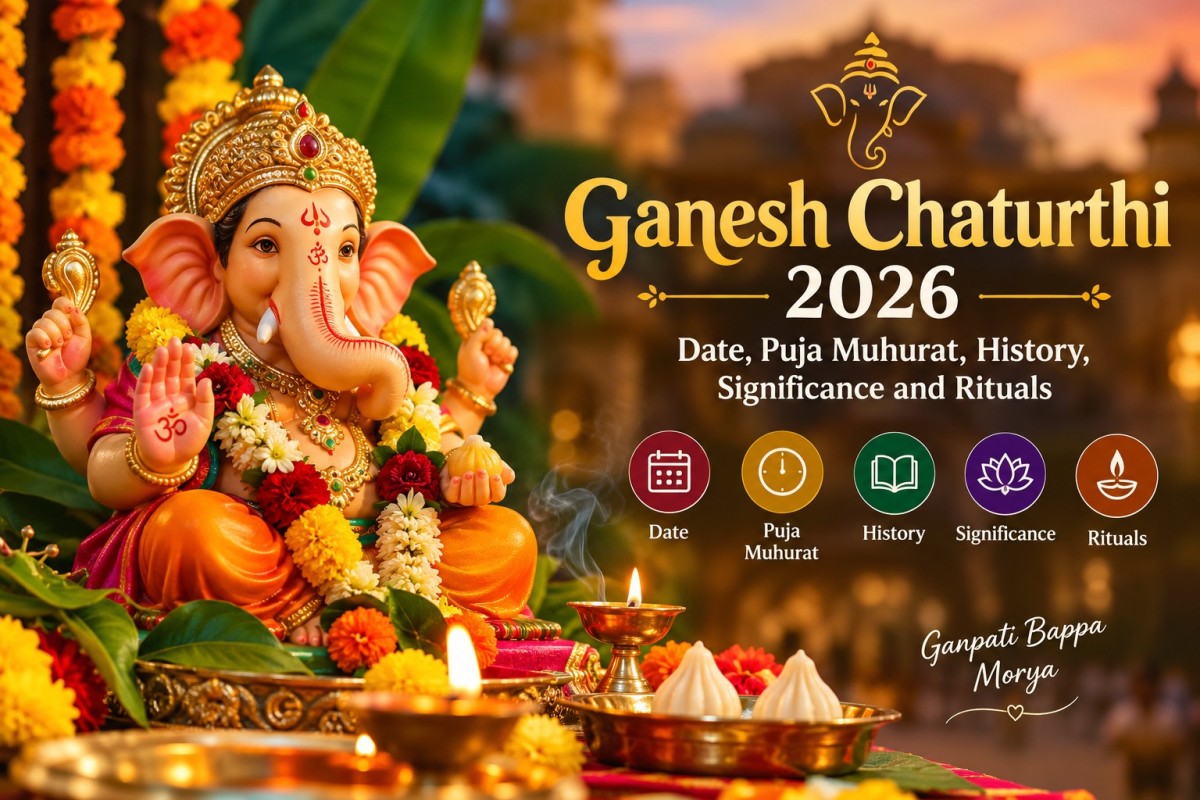
Ganesh Chaturthi is one of the most popular Hindu festivals in India. The festival honours Lord Ganesha, the elephant-headed deity whom devotees associate with wisdom, prosperity, good fortune and the removal of obstacles. Every year, families and communities welcome Lord Ganesha with prayers, decorations, devotional songs and traditional food.
Moreover, Ganesh Chaturthi brings people together through colourful celebrations. Families install Ganesha idols in their homes, while communities create beautifully decorated public pandals. During the festival, devotees perform daily prayers and aarti and offer sweets, fruits and flowers to Lord Ganesha.
In 2026, Ganesh Chaturthi will fall on Monday, September 14. Devotees will observe the festival with traditional puja rituals and celebrations. However, the exact puja timing can vary from city to city because Panchang calculations depend on the local location.
📅 Ganesh Chaturthi 2026 Date
Ganesh Chaturthi 2026 Date: Monday, September 14, 2026
Ganesh Chaturthi falls on the Chaturthi Tithi of Shukla Paksha in the Hindu month of Bhadrapada. Devotees traditionally perform Ganesh Puja during the Madhyahna period.
According to the Panchang, the Chaturthi Tithi will begin at 7:06 AM on September 14 and end at 7:44 AM on September 15, 2026. Therefore, devotees will celebrate the main festival on September 14.
🗓️ Important Dates and Timings
- Ganesh Chaturthi: Monday, September 14, 2026
- Chaturthi Tithi Begins: 7:06 AM, September 14
- Chaturthi Tithi Ends: 7:44 AM, September 15
- Ganesh Visarjan: Friday, September 25, 2026
- Mumbai Puja Muhurat: 11:20 AM to 1:48 PM
- Pune Puja Muhurat: 11:16 AM to 1:44 PM
However, devotees should check their local Panchang before performing the puja because timings can differ depending on the city.
🕉️ What Is Ganesh Chaturthi?
Ganesh Chaturthi is a Hindu festival dedicated to Lord Ganesha. Devotees worship Ganesha as the god of wisdom, intellect, prosperity and auspicious beginnings.
The festival begins when devotees welcome a Ganesha idol into their homes or community pandals. They decorate the puja area with flowers, lights, rangoli and traditional decorations. Then, they perform prayers and offer bhog to Lord Ganesha.
Furthermore, devotees often keep the idol for a specific number of days according to their family or community tradition. At the end of the celebration, they carry the idol in a procession and perform Ganesh Visarjan.
Thus, the festival combines religious devotion with family traditions, cultural activities and community celebrations.
📖 History of Ganesh Chaturthi
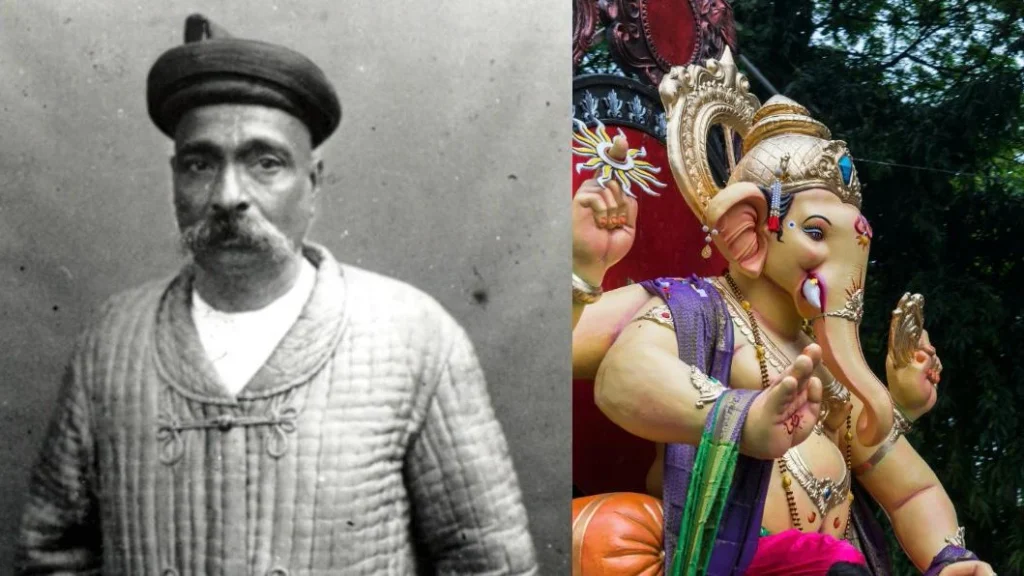
Lord Ganesha has held an important place in Hindu religious traditions for centuries. Devotees have worshipped him as a deity of wisdom and auspicious beginnings across different parts of India.
Over time, Ganesh Chaturthi developed into a major public festival, especially in Maharashtra. Public celebrations gained popularity as communities began organising larger idols, decorated pandals and cultural programmes.
In particular, Lokmanya Bal Gangadhar Tilak played an important role in popularising public Ganesh celebrations in Maharashtra during the late 19th century. Public celebrations encouraged people from different sections of society to gather together.
As a result, Ganeshotsav gradually became more than a household religious celebration. It also became an important part of Maharashtra’s cultural identity.
Today, people celebrate Ganesh Chaturthi in homes, temples, housing societies and public pandals across India. Moreover, Indian communities in different parts of the world also celebrate the festival.
🐘 Why Do Devotees Worship Lord Ganesha First?
Devotees traditionally worship Lord Ganesha before starting many important religious ceremonies and new activities. People consider him the Vighnaharta, or remover of obstacles.
Therefore, many families seek Lord Ganesha’s blessings before beginning a new business, starting a journey, moving into a new home or undertaking an important task.
Lord Ganesha also represents wisdom and intelligence. His large ears remind devotees to listen carefully, while his elephant head symbolises wisdom and understanding.
Consequently, his worship carries both spiritual and symbolic importance.
🌺 Significance of Ganesh Chaturthi
Ganesh Chaturthi carries several important religious and cultural meanings.
🧠 Symbol of Wisdom
Lord Ganesha represents knowledge, intelligence and wisdom. Therefore, students and families often pray to him for better understanding, concentration and success.
🚧 Remover of Obstacles
Devotees call Lord Ganesha Vighnaharta because they believe he helps remove obstacles. As a result, people often seek his blessings before starting something new.
💰 Symbol of Prosperity
Lord Ganesha also represents prosperity and good fortune. Hence, many families perform special prayers for happiness, success and financial well-being.
👨👩👧👦 Brings Families Together
Ganesh Chaturthi gives families an opportunity to spend time together. Children participate in decorations, while elders guide them through traditional rituals.
🤝 Strengthens Community Spirit
Public Ganeshotsav celebrations bring neighbours and communities together. In addition, many organisers conduct cultural programmes, charity activities and social-awareness campaigns.
🏠 Ganesh Sthapana: Welcoming Bappa Home
Ganesh Sthapana marks one of the most important moments of Ganesh Chaturthi. On this occasion, devotees respectfully bring the Ganesha idol home and place it on a decorated platform.
Before the arrival of Bappa, families clean their homes and prepare the puja area. They may decorate the space with flowers, rangoli, lights and traditional torans.
After placing the idol, devotees perform the initial puja and seek Lord Ganesha’s blessings.
Moreover, many families make the arrival of Bappa a special occasion for children. They involve children in decorating the altar and preparing simple offerings.
Therefore, Ganesh Sthapana creates a joyful and devotional atmosphere throughout the home.
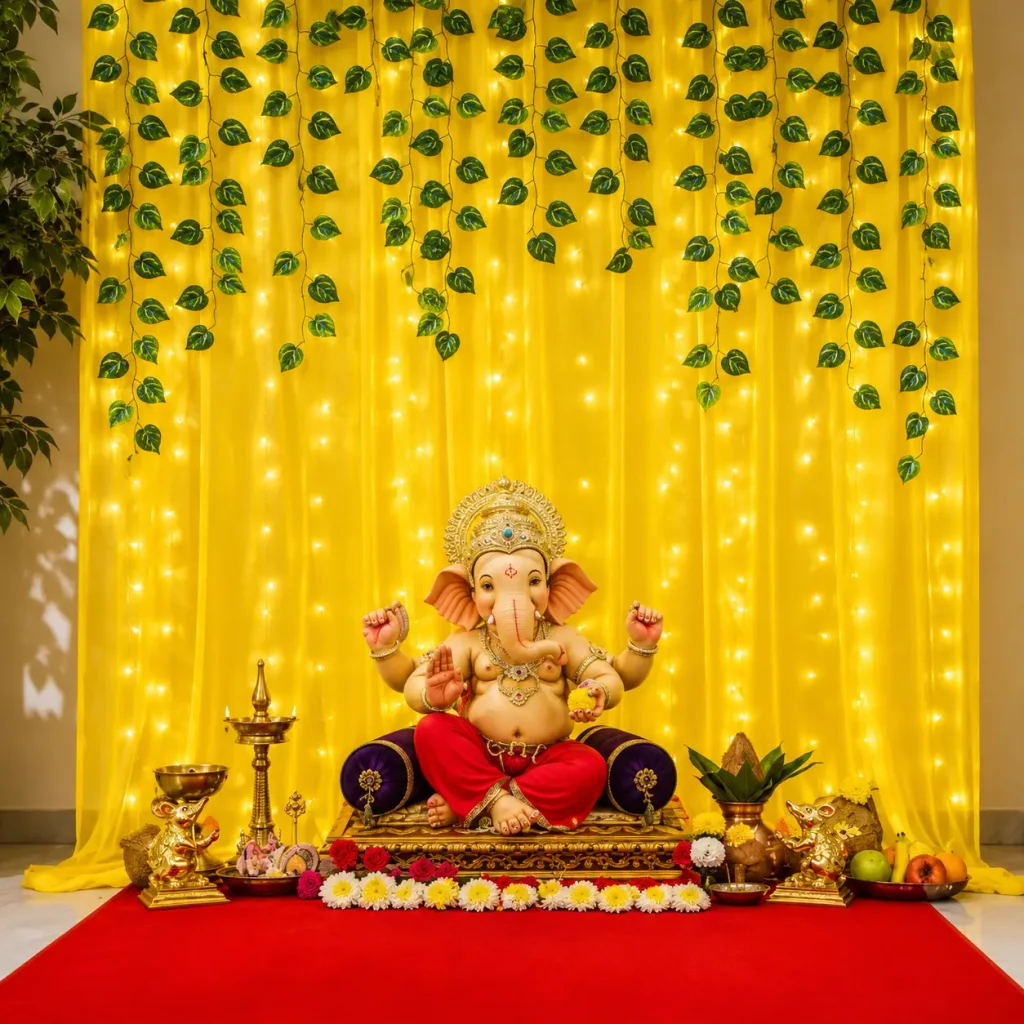
🪔 Ganesh Chaturthi Puja Vidhi
Different families follow different puja traditions. Nevertheless, a typical Ganesh Chaturthi puja includes several common steps.
1. 🧹 Clean the House and Puja Area
First, devotees clean the house and prepare the puja space. They may also create a rangoli near the entrance.
2. 🌸 Place the Ganesha Idol
Next, the family places the Ganesha idol on a clean and decorated platform.
3. 🕉️ Invoke Lord Ganesha
Then, devotees begin the puja by invoking Lord Ganesha and seeking his blessings.
4. 🌿 Offer Puja Items
Devotees offer flowers, durva grass, fruits, coconut, sweets and other traditional items.
5. 🪔 Perform Aarti
After the main offerings, family members perform Ganesha aarti with a diya while singing devotional songs.
6. 🍬 Offer Bhog
Devotees offer modaks and other sweets to Lord Ganesha. Later, they distribute the offerings as prasad.
7. 🙏 Complete the Prayer
Finally, everyone prays for wisdom, happiness, prosperity and the removal of obstacles.
The exact rituals may vary according to regional customs and family traditions. Therefore, devotees can follow the puja method traditionally followed in their household.
🍬 Why Are Modaks Offered to Lord Ganesha?
Modak holds a special place in Ganesh Chaturthi celebrations. Devotees traditionally consider it one of Lord Ganesha’s favourite sweets.
Families prepare several types of modaks during the festival. Traditional steamed modaks often contain coconut and jaggery filling wrapped in rice-flour dough. Fried modaks also remain popular.
In addition, modern families prepare chocolate, dry-fruit and other varieties of modaks.
The preparation of modaks also creates a wonderful family activity. Parents and grandparents often teach children how to prepare the traditional sweet.
Therefore, modak represents both devotion and the joy of celebrating together.
🌿 Importance of Durva Grass
Durva grass plays an important role in traditional Ganesha worship. Devotees offer durva to Lord Ganesha during the puja because Hindu traditions associate it with the deity.
Along with durva, devotees offer flowers, fruits and other natural items.
Thus, these traditional offerings add a simple and natural element to the celebration.
🌼 Flowers and Traditional Offerings
Flowers make Ganesh Chaturthi puja spaces colourful and attractive. Families use flowers to decorate the altar and offer them to Lord Ganesha.
Common offerings include:
- 🌿 Durva grass
- 🥥 Coconut
- 🍌 Fruits
- 🌸 Flowers
- 🍬 Modaks
- 🍡 Ladoos
- 🌾 Jaggery
- 🪔 Diya
- 🌿 Betel leaves and nuts
- 🕯️ Incense
However, the exact offerings can differ according to regional and family traditions.
🎨 Ganesh Chaturthi Decorations
Ganesh Chaturthi decorations add colour and excitement to the festival. Families often create special themes around their Ganesha idol.
For example, devotees may use flowers, fabric, paper crafts, lights, rangoli and natural materials to decorate the puja area.
Moreover, children can participate by creating handmade decorations. This approach not only saves money but also makes the celebration more personal.
Families can also choose reusable decorations. As a result, they can reduce waste while creating a beautiful festive atmosphere.
🎶 Aarti and Devotional Songs
Aarti forms an important part of Ganesh worship. Family members gather around the idol and sing devotional songs while holding a lit diya.
The sound of bells, prayers and devotional music creates a peaceful atmosphere. Meanwhile, large public pandals often organise group aartis for hundreds or thousands of devotees.
In addition, devotional songs and traditional drums become an important part of public celebrations and visarjan processions.
🎉 Ganeshotsav Celebrations Across India
Maharashtra remains particularly famous for its grand Ganeshotsav celebrations. Cities such as Mumbai and Pune host numerous public Ganesh pandals during the festival.
However, other states also celebrate Ganesh Chaturthi with great enthusiasm. Families in Karnataka, Goa, Telangana, Andhra Pradesh, Gujarat and several other regions follow their own local traditions.
Furthermore, Indian communities outside the country also organise Ganesh celebrations.
Although the decorations, food and rituals may differ, devotees share the same central purpose: welcoming Lord Ganesha and seeking his blessings.
🥁 Public Ganesh Pandal Celebrations
Public pandals add a unique dimension to Ganesh Chaturthi. Community groups create large and beautifully decorated spaces where people can visit Lord Ganesha.
Many pandals develop creative themes every year. Some focus on Indian culture and history, while others highlight social issues, environmental awareness or important achievements.
In addition, organisers often arrange cultural performances, devotional programmes and community activities.
As a result, Ganeshotsav has become an important cultural celebration as well as a religious festival.
🌱 Eco-Friendly Ganesh Chaturthi
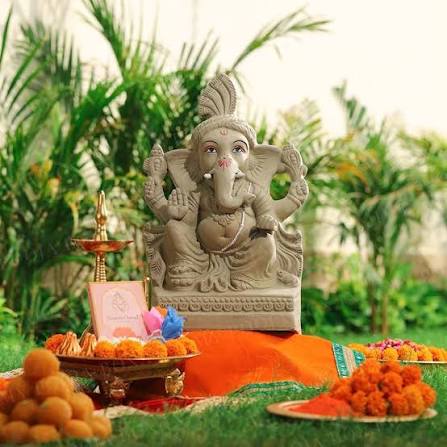
Environmental awareness has become increasingly important during Ganesh Chaturthi. Devotees can therefore adopt simple eco-friendly practices without reducing the festive spirit.
For example, families can choose idols made from natural clay and avoid materials that create unnecessary environmental waste.
They can also use:
🌿 Natural decorations
♻️ Reusable materials
🌸 Fresh flowers
🪔 Energy-efficient lights
📜 Paper decorations
🧺 Cloth-based decorative items
Moreover, families can reduce plastic use during the festival. They can also follow local rules and designated arrangements for idol immersion.
Therefore, an eco-friendly Ganesh Chaturthi allows devotees to celebrate responsibly while respecting nature.
🌊 Ganesh Visarjan 2026
Ganesh Visarjan marks the conclusion of the Ganesh Chaturthi celebration. In 2026, the main listed Visarjan date is Friday, September 25.
However, every family does not follow the same immersion day. Some devotees keep the idol for one and a half days, while others choose three, five, seven or ten days according to their traditions.
On the day of visarjan, devotees perform a final puja and aarti. Then, they carry the idol in a colourful procession.
People sing devotional songs, play traditional drums and chant “Ganpati Bappa Morya.”
Finally, devotees immerse the idol according to their local customs and regulations.
🌊 Spiritual Meaning of Visarjan
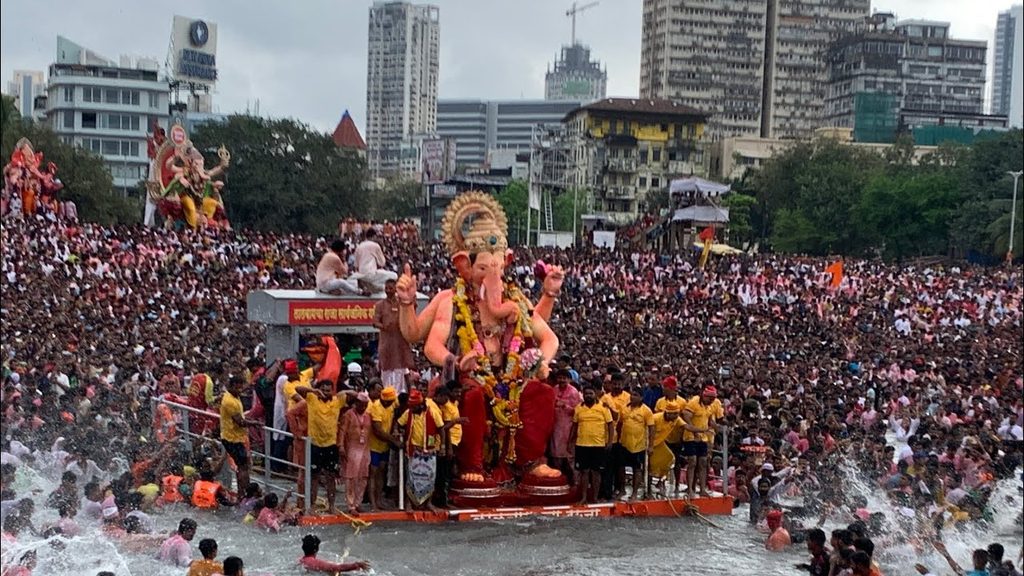
Ganesh Visarjan carries a deeper symbolic meaning. The idol begins as an earthly form and eventually returns to nature.
Therefore, visarjan reminds devotees about the temporary nature of material things. The festival teaches people to welcome happiness with gratitude and accept change with faith.
Although devotees feel emotional while saying goodbye to Bappa, they also believe that Lord Ganesha will return the following year.
Hence, the famous chant “Pudchya Varshi Lavkar Ya” expresses the hope of welcoming Bappa again soon.
👨👩👧👦 Ganesh Chaturthi and Family Traditions
Ganesh Chaturthi creates special memories for families. Children often help parents decorate the home, prepare sweets and arrange flowers.
Meanwhile, grandparents and elders pass traditional stories, prayers and customs to younger family members.
For families who live away from their hometowns, the festival can also provide an opportunity to reconnect with relatives.
In addition, many families invite friends and neighbours for aarti and prasad.
As a result, Ganesh Chaturthi strengthens relationships and keeps cultural traditions alive.
🍽️ Traditional Food During Ganesh Chaturthi
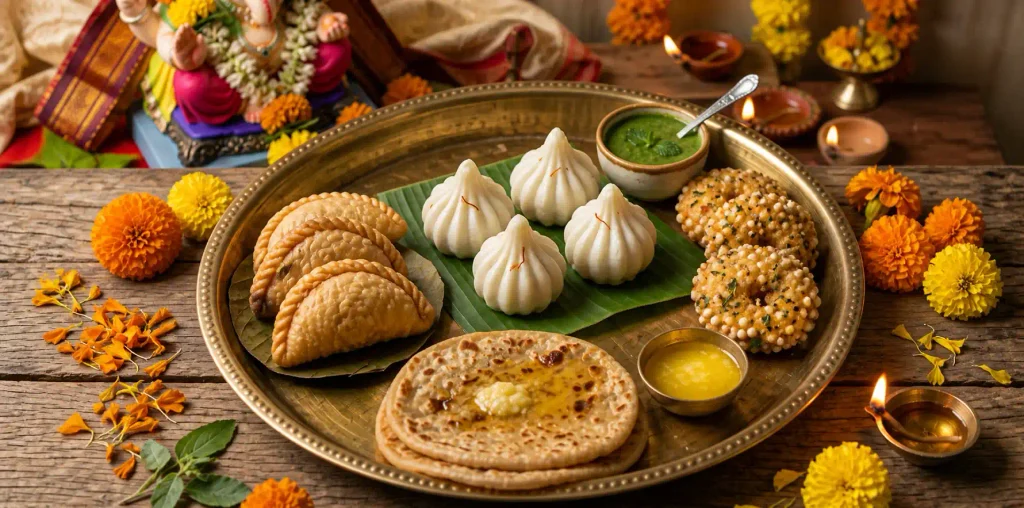
Food plays an important role in almost every Indian festival. Ganesh Chaturthi also features several traditional dishes and sweets.
Modaks remain the most famous offering. However, families also prepare ladoos, puris, fruits and other vegetarian dishes.
Depending on the region, devotees may prepare different festive foods according to local customs.
Usually, families offer the food to Lord Ganesha first. Then, they distribute it among family members and guests as prasad.
Thus, food becomes another way for families to express devotion and share happiness.
📿 Ganesh Mantras and Prayers
Devotees chant different mantras during Ganesh Chaturthi. One of the widely known Ganesha mantras is:
“Om Gan Ganapataye Namah.”
Devotees chant this mantra while praying for wisdom, peace and the removal of obstacles.
Furthermore, many families recite Ganesha aarti, Ganesh Atharvashirsha and other traditional prayers.
The choice of prayer can depend on the family’s religious tradition and regional customs.
🧡 How to Celebrate Ganesh Chaturthi Responsibly
Devotees can make the celebration meaningful and responsible by following a few simple practices.
First, they can choose an eco-friendly idol. Next, they can reduce plastic use and avoid unnecessary waste.
Similarly, families can keep noise levels under control and respect neighbours, especially during late hours.
They should also follow local instructions during visarjan. In addition, devotees should use designated immersion facilities wherever authorities provide them.
By following these simple steps, people can enjoy the festival while respecting the environment and their community.
📌 Important Things to Remember for Ganesh Chaturthi 2026
Before beginning the celebration, devotees should prepare everything in advance.
- 📅 Check the correct local Ganesh Chaturthi date.
- 🕉️ Confirm the local puja muhurat.
- 🏠 Clean and decorate the puja area.
- 🌸 Arrange flowers and traditional offerings.
- 🍬 Prepare modaks and other prasad.
- 🪔 Keep puja items ready before the ceremony.
- 🌱 Consider an eco-friendly Ganesha idol.
- ♻️ Reduce plastic and unnecessary waste.
- 🥁 Follow local rules for public celebrations.
- 🌊 Follow local guidelines for visarjan.
Therefore, proper planning can make the festival smoother, more enjoyable and more meaningful.
❓ Ganesh Chaturthi 2026 FAQs
When is Ganesh Chaturthi in 2026?
Ganesh Chaturthi will take place on Monday, September 14, 2026.
When does the Chaturthi Tithi begin?
The Chaturthi Tithi begins at 7:06 AM on September 14, 2026.
When does the Chaturthi Tithi end?
The Chaturthi Tithi ends at 7:44 AM on September 15, 2026.
What is the Ganesh Puja Muhurat in Mumbai?
The listed Madhyahna Ganesh Puja Muhurat in Mumbai runs from 11:20 AM to 1:48 PM on September 14, 2026.
What is the Ganesh Puja Muhurat in Pune?
In Pune, the listed Madhyahna puja muhurat runs from 11:16 AM to 1:44 PM.
When is Ganesh Visarjan in 2026?
The main listed Ganesh Visarjan date is Friday, September 25, 2026. However, families may choose different immersion days according to their traditions.
Why do people celebrate Ganesh Chaturthi?
People celebrate Ganesh Chaturthi to honour Lord Ganesha and seek his blessings for wisdom, prosperity, happiness and the removal of obstacles.
Why do devotees offer modaks to Lord Ganesha?
Modaks have a traditional association with Lord Ganesha. Therefore, devotees commonly prepare and offer them during Ganesh Chaturthi.
How can people celebrate an eco-friendly Ganesh Chaturthi?
People can choose natural clay idols, reusable decorations and environmentally responsible immersion methods. They can also reduce plastic use and unnecessary waste.
🌟 Conclusion
Ganesh Chaturthi 2026 will bring devotion, tradition and community spirit together on Monday, September 14. From Ganesh Sthapana and daily aarti to modak offerings and Ganesh Visarjan, every stage of the festival carries its own importance.
Moreover, the festival gives families an opportunity to preserve traditions and create beautiful memories together. Public celebrations also strengthen community bonds and encourage people to participate in cultural and social activities.
At the same time, devotees can make the festival more meaningful by choosing eco-friendly idols, reducing waste and following responsible celebration practices.
Ultimately, Ganesh Chaturthi teaches devotees to welcome new beginnings with faith, face obstacles with wisdom and accept change with positivity.
🙏 Ganpati Bappa Morya! Pudchya Varshi Lavkar Ya!