










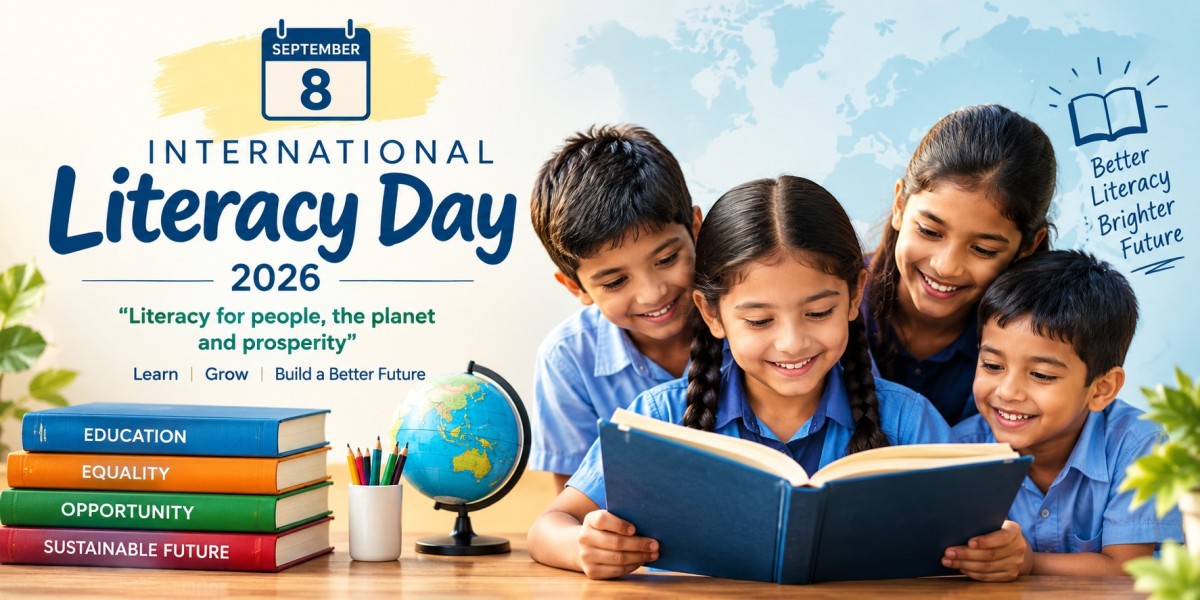
Every year on September 8, people across the world observe International Literacy Day to highlight the importance of reading, writing, education and lifelong learning. UNESCO has observed the day annually since 1967, using it to remind governments, educators and communities that literacy plays a vital role in building inclusive, peaceful and sustainable societies.
In 2026, International Literacy Day carries special importance as it marks the 60th anniversary of the observance. UNESCO is celebrating the occasion under the theme “Literacy for people, the planet and prosperity.”
Also Read: Brazilian Model Larissa Responds to Allegations of Rahul Gandhi’s Vote Chori Connection
📚 What Is International Literacy Day?
International Literacy Day draws attention to the importance of literacy as a fundamental part of human development. Literacy allows people to read and write, but its role goes far beyond basic skills.
A literate person can access information, understand important documents, communicate effectively and make better-informed decisions. Literacy also supports participation in education, employment and society.
UNESCO describes literacy as an important force for creating more literate, just, peaceful and sustainable societies.
🕰️ History of International Literacy Day
UNESCO established International Literacy Day in 1966, and the world began observing it annually on September 8 from 1967. The day emerged from the growing recognition that literacy should remain a global priority and that education can help people improve their lives and communities.
Over the decades, the meaning of literacy has expanded. Earlier discussions focused largely on reading and writing skills. Today, literacy also connects with digital skills, access to information, critical thinking and the ability to participate effectively in a rapidly changing society.
🌍 International Literacy Day 2026 Theme
The theme for International Literacy Day 2026 is “Literacy for people, the planet and prosperity.” UNESCO says the theme highlights how literacy can promote inclusion, support sustainable futures and expand opportunities for livelihoods and economic development.
The 2026 observance also marks the 60th anniversary of International Literacy Day. UNESCO is using the occasion to review global progress, examine continuing challenges and encourage stronger policies, programmes and partnerships for literacy.
👩🏫 Why Is Literacy Important?
Literacy provides people with the skills they need to navigate everyday life. It helps individuals understand information, communicate with others and participate more confidently in their communities.
Education and literacy can also open doors to better employment opportunities and economic participation. For children, strong literacy skills provide a foundation for further learning. For adults, literacy can support lifelong learning and professional development.
Literacy also strengthens people’s ability to understand information critically, especially in an environment where they encounter large amounts of content through television, social media and digital platforms.
📊 Global Literacy Progress and Challenges
The world has made significant progress in literacy over the past several decades. According to UNESCO, the global adult literacy rate for people aged 15 and above increased from 65% in 1975 to 88% in 2024. The global youth literacy rate also increased from 75% to 93% during the same broad period.
However, major challenges remain. UNESCO reports that at least 739 million adults worldwide still cannot read and write, and about two-thirds of them are women.
These figures show why governments and educational institutions still need to invest in accessible and inclusive learning opportunities.
💻 Literacy in the Digital Age
Modern literacy does not stop with books and paper. People increasingly need digital skills to find, understand, evaluate and use information responsibly.
Digital literacy helps people navigate online platforms, identify unreliable information and communicate safely. UNESCO also highlights the importance of media and information literacy in helping people engage critically with digital environments and counter misinformation and hate.
As artificial intelligence and digital technologies continue to influence education and employment, literacy will remain closely connected to the ability to adapt to technological change.
🇮🇳 Importance of Literacy in India
In India, literacy remains an important part of social and economic development. Education can help children build stronger futures while giving adults greater opportunities to participate in employment, financial activities and community life.
Improving literacy also requires attention to equal access. Girls, women, rural communities, economically disadvantaged families and other underserved groups can face barriers to education. Expanding learning opportunities can help reduce these gaps.
India can also benefit from combining traditional education with digital learning, vocational training and lifelong learning programmes.
🎯 How Is International Literacy Day Celebrated?
Schools, colleges, government institutions and organisations can mark the day through various educational activities, including:
- 📖 Reading and book-sharing programmes
- ✍️ Essay and writing competitions
- 🎤 Awareness campaigns and seminars
- 👩🏫 Literacy workshops
- 🧑💻 Digital literacy programmes
- 🏫 Community education drives
- 📚 Book donation and library initiatives
- 🌱 Discussions connecting literacy with sustainable development
UNESCO’s 2026 global celebration is taking place in Chiapas, Mexico, on September 8–9, alongside the UNESCO International Literacy Prizes, which recognise outstanding literacy programmes around the world.
🌟 Literacy Is More Than Reading and Writing
International Literacy Day reminds us that literacy can influence almost every part of life. It can help people understand their rights, access public services, pursue education, find employment and participate in social and economic activities.
In today’s world, literacy also means having the ability to understand information, use digital tools responsibly and continue learning throughout life.
🔚 Conclusion
International Literacy Day 2026 provides an opportunity to celebrate progress while recognising the work that remains. The theme “Literacy for people, the planet and prosperity” places literacy at the centre of inclusion, sustainable development and economic opportunity.
As the world marks the 60th anniversary of International Literacy Day, September 8 serves as a reminder that access to quality education and literacy can empower individuals, strengthen communities and contribute to a more inclusive future.
Also Read: Marbat Utsav 2026: Know the Story Behind Nagpur’s Famous Kali and Peeli Marbat