








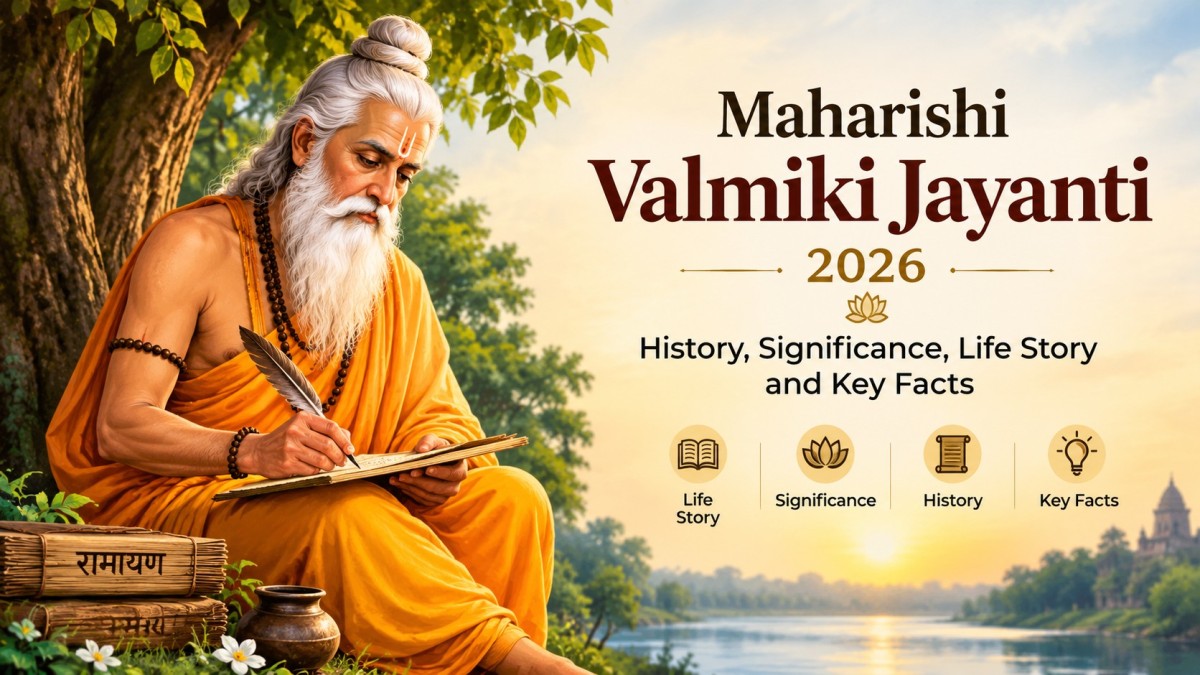
Maharishi Valmiki Jayanti celebrates the birth anniversary of Maharishi Valmiki, one of the most revered sages in Indian tradition and the celebrated author of the Hindu epic Ramayana. The occasion honours his literary contribution, spiritual journey and teachings about truth, justice, compassion and righteousness. Devotees observe the day with prayers, religious gatherings and cultural programmes across India.
📅 When Is Maharishi Valmiki Jayanti 2026?
Maharishi Valmiki Jayanti is traditionally observed on the full moon day, or Purnima, of the Hindu lunar month of Ashwin. The festival usually falls in September or October, depending on the Hindu calendar.
In 2026, October 26 is being observed as Maharishi Valmiki Jayanti in some calendars and regional traditions. Devotees should check their local Hindu calendar for the date and Purnima timings followed in their area.
📖 Who Was Maharishi Valmiki?
Maharishi Valmiki holds an important place in Indian literature and spiritual tradition. People widely regard him as the Adi Kavi, meaning the first poet, because of his association with the Sanskrit Ramayana.
The epic narrates the life of Lord Rama, his exile, the abduction of Sita by Ravana and the eventual battle against Ravana. Through its characters and events, the Ramayana explores important themes such as duty, loyalty, courage, sacrifice and the responsibilities of leadership.
Valmiki’s influence extends beyond literature. His legacy continues to inspire readers, scholars and devotees who study the epic’s moral and philosophical lessons.
🌿 The Life Story of Maharishi Valmiki
Traditional accounts describe Valmiki’s life as a remarkable journey of transformation. According to popular legends, he once lived as Ratnakara and supported himself through robbery before undergoing a profound spiritual change.
One widely known story says that a meeting with sages encouraged him to reflect on his actions and pursue spiritual discipline. He subsequently devoted himself to meditation and gained recognition as a revered sage.
These accounts form part of religious tradition, and different versions describe aspects of his early life differently. His transformation nevertheless remains a powerful symbol of personal change, self-reflection and the possibility of choosing a more righteous path.
🕉️ Why Is Maharishi Valmiki Called the Adi Kavi?
The title Adi Kavi means the first poet. Hindu tradition associates this title with Valmiki because of his pioneering role in Sanskrit poetic literature.
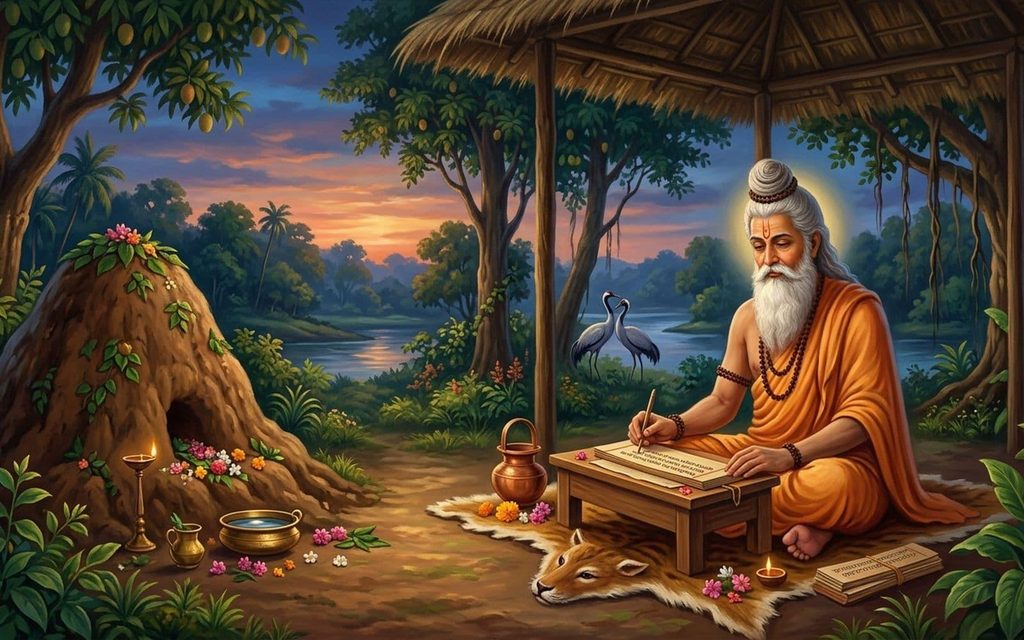
According to a traditional account, Valmiki composed a verse after witnessing a hunter kill one bird from a pair of cranes. The sorrowful incident inspired an expression of grief that became associated with the emergence of Sanskrit poetic metre.
The story connects compassion with creative expression. It also highlights how literature can transform human emotions into meaningful poetry that communicates moral and spiritual ideas.
🙏 Significance of Maharishi Valmiki Jayanti
Maharishi Valmiki Jayanti celebrates wisdom, knowledge, compassion and spiritual growth. The occasion encourages people to reflect on the values found in the Ramayana and apply them in everyday life.
The festival also recognises Valmiki’s contribution to Indian literary and cultural heritage. His work has influenced generations of writers, artists, performers and storytellers across South Asia.
For many communities, the occasion carries additional social and cultural importance. Devotees gather to honour the sage, remember his teachings and promote equality, education and respect for all people.
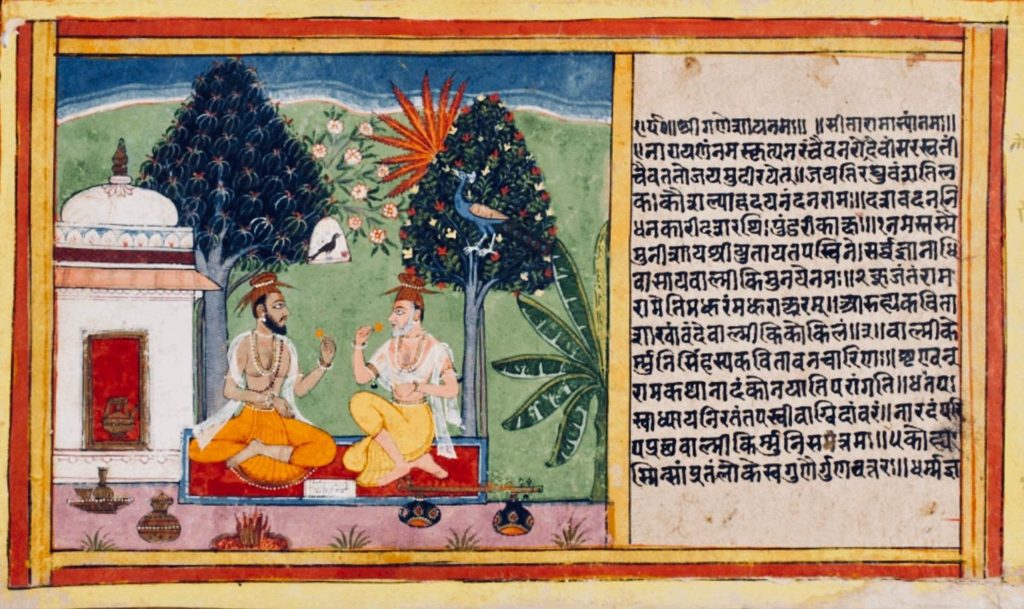
🎉 How Is Valmiki Jayanti Celebrated?

Devotees celebrate Maharishi Valmiki Jayanti through religious and cultural activities. Temples and community organisations arrange prayers, devotional singing and readings from the Ramayana.
In several places, communities organise processions featuring portraits or images of Maharishi Valmiki. People also hold public gatherings, cultural performances and programmes highlighting his life and teachings.
Some organisations use the occasion to promote education, community service and social awareness. These activities reflect the continuing influence of Valmiki’s legacy on religious and public life.
💡 Key Facts About Maharishi Valmiki
- Title: Adi Kavi, meaning the first poet.
- Famous work: The Sanskrit epic Ramayana.
- Language: Sanskrit.
- Festival: Maharishi Valmiki Jayanti.
- Observance: Traditionally celebrated on Ashwin Purnima.
- Central themes: Truth, duty, compassion, courage and righteousness.
- Legacy: A lasting influence on Indian literature, culture and spiritual traditions.
✨ Teachings and Legacy of Maharishi Valmiki
Maharishi Valmiki’s legacy encourages people to value knowledge, reflect on their actions and pursue personal growth. The stories associated with his life highlight the importance of discipline, repentance and transformation.
The Ramayana also explores the responsibilities people carry towards family, society and their principles. Its characters offer opportunities to discuss difficult moral choices, leadership, loyalty and justice.
Although interpretations of the epic differ across traditions, its influence remains significant in literature, religious practice, theatre, music and popular culture. Valmiki Jayanti provides an opportunity to revisit this heritage and consider its relevance to contemporary life.
🪔 Conclusion
Maharishi Valmiki Jayanti honours a sage whose name remains closely connected with the Ramayana and the development of Sanskrit literature. His traditional life story represents transformation, while his literary legacy continues to inspire generations.
As devotees mark the occasion, the festival offers an opportunity to celebrate knowledge, compassion and righteousness. Maharishi Valmiki’s enduring influence reminds people that literature can preserve cultural traditions and encourage reflection on the values that shape human life.