




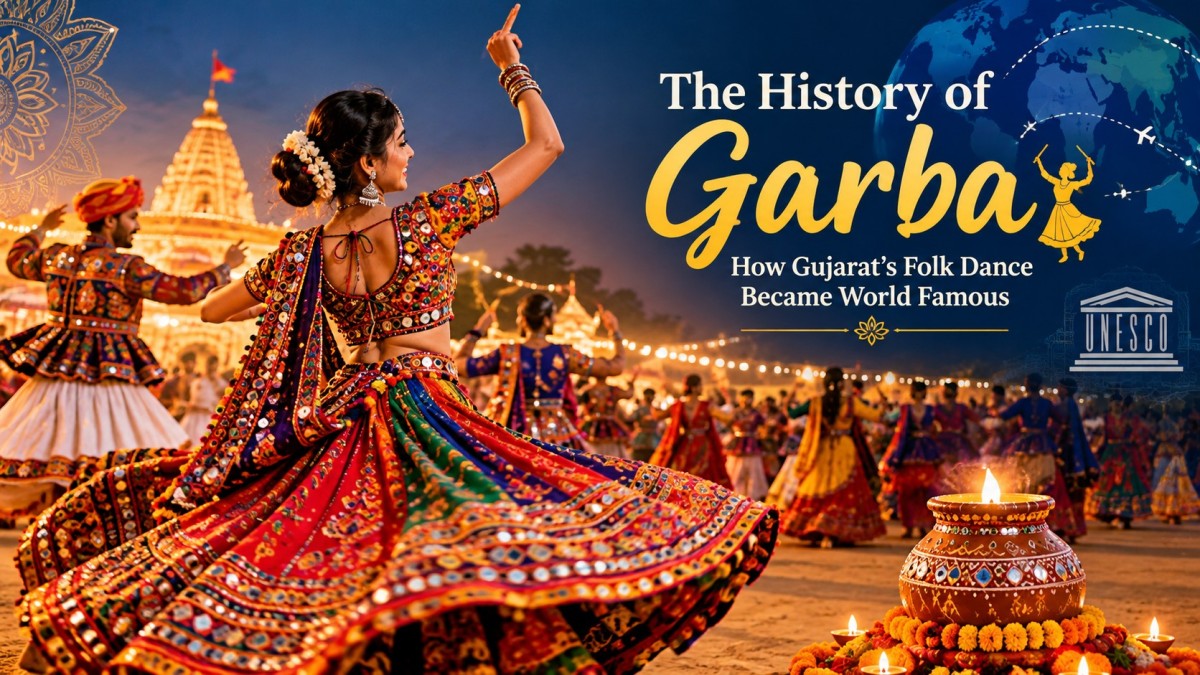
Garba is one of India’s most colourful traditional dance forms, celebrated with great enthusiasm during Navratri. Originating in Gujarat, this vibrant folk dance has grown from a regional devotional tradition into a global cultural celebration. With rhythmic music, traditional outfits, circular dance movements and a strong spiritual connection, Garba brings people together across generations and countries.
🪔 What Is Garba?
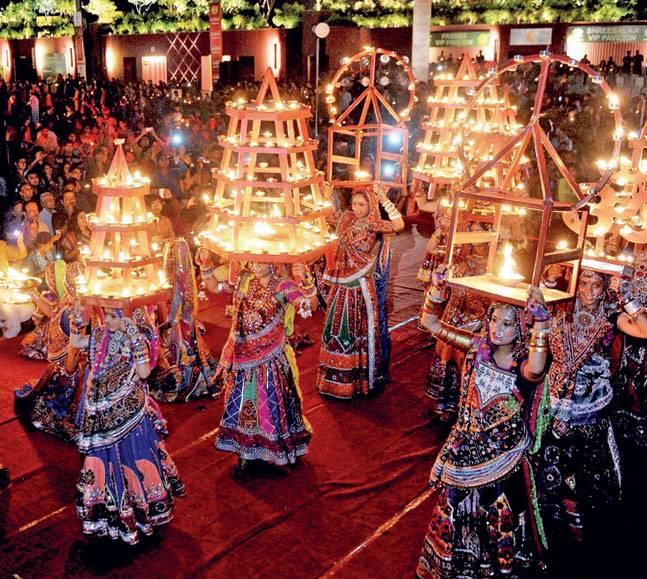
Garba is a traditional folk dance from Gujarat, India, performed mainly during the nine nights of Navratri in honour of Goddess Durga and her various forms. Participants dance in circles, often around a decorated earthen pot with a lamp, known as a garbo, or an image of the goddess.
The circular formation symbolises continuity, life and the cycle of existence. The light at the centre represents divine energy and the power of the goddess.
📜 The Origin and History of Garba
Garba has deep roots in Gujarat’s folk traditions and Hindu devotional practices. The name is commonly linked to the Sanskrit word garbha, meaning womb, reflecting themes of life, creation and fertility.
Traditionally, women performed Garba around an illuminated earthen pot called a garbo. The light inside symbolised life and divine power. Over time, the dance developed into a larger community celebration, with men and women joining in during Navratri.
Although its exact origins are difficult to trace to a single date, Garba has been passed down through generations as an important expression of Gujarati culture, devotion and community life.
🙏 Why Is Garba Celebrated During Navratri?
Navratri is a Hindu festival dedicated to the worship of Goddess Durga and her forms. Garba is performed as an expression of devotion, gratitude and celebration.
Each night, devotees gather at temples, community grounds and public venues to dance and sing devotional songs. The celebrations commonly reach their peak on the final nights of Navratri, when large groups participate in traditional and contemporary Garba events.
🥁 Traditional Music and Dance Movements
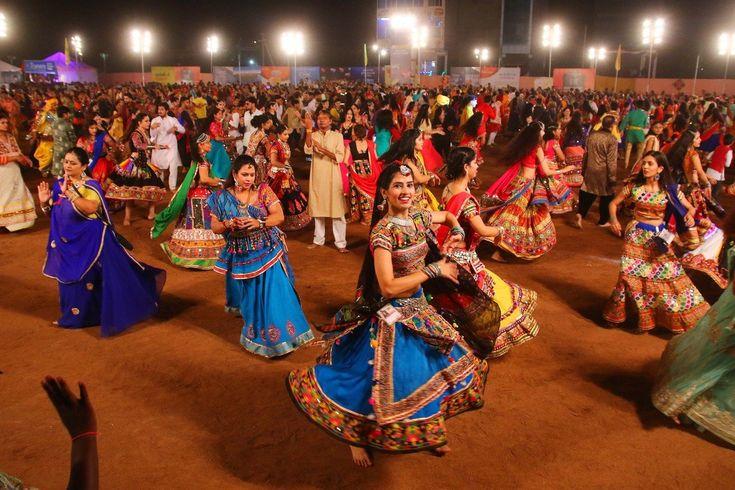
Garba traditionally features folk songs, rhythmic clapping and percussion instruments such as the dhol and dholak. Singers lead the songs while dancers move in coordinated circles, following the rhythm.
Common movements include graceful turns, rhythmic hand claps, coordinated steps and energetic footwork. Modern Garba performances may also incorporate electronic music, amplified instruments and contemporary arrangements while retaining traditional elements.
👗 Traditional Garba Outfits
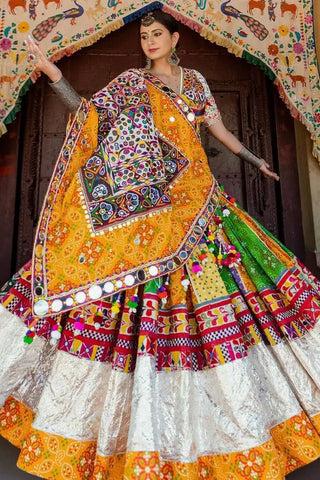
Traditional clothing is an important part of Garba celebrations. Women often wear colourful chaniya cholis decorated with embroidery, mirror work and vibrant patterns, while men commonly wear kediyu outfits with trousers or dhotis.
Jewellery, turbans and accessories add to the festive atmosphere. Today, many participants blend traditional designs with modern fashion, making Garba nights a celebration of both dance and Gujarati craftsmanship.
💃 Garba vs Dandiya Raas: What Is the Difference?
Garba and Dandiya Raas are both popular during Navratri, but they have distinct styles.
- Garba: Usually performed in circular formations, with rhythmic clapping and hand movements.
- Dandiya Raas: Performed using decorated wooden sticks that dancers tap together in coordinated patterns.
At many Navratri events, both dances are performed on the same evening, giving participants a chance to enjoy different aspects of Gujarat’s folk traditions.
🌍 How Garba Became World Famous
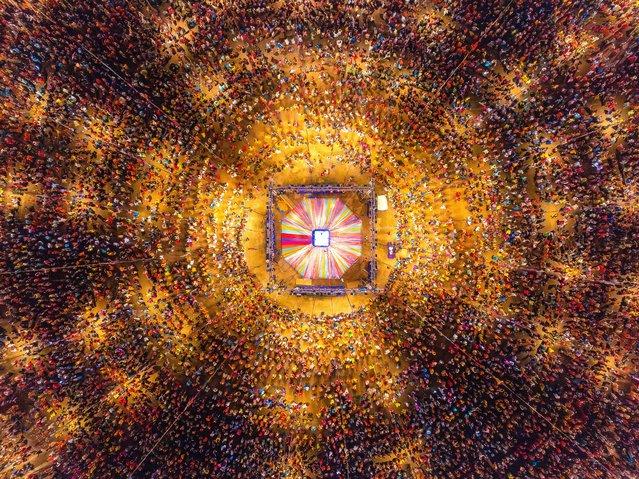
Garba spread beyond Gujarat as Gujarati communities settled in different parts of India and around the world. Community associations, cultural organisations and temples helped preserve the tradition by organising Navratri celebrations overseas.
Today, Garba events are held in countries including the United States, the United Kingdom, Canada, Australia and New Zealand. Large gatherings feature traditional songs, colourful costumes and performances that attract people from different cultural backgrounds.
Social media, music releases, films and celebrity appearances have also helped introduce Garba to wider audiences. In 2023, Garba was inscribed on UNESCO’s Representative List of the Intangible Cultural Heritage of Humanity, recognising its cultural importance and its role in bringing communities together.
🏆 Why Is Garba So Important to Gujarati Culture?
Garba is much more than a dance. It connects people with their heritage, religious traditions and local communities. During Navratri, people of different ages and backgrounds gather to celebrate, making the dance a symbol of shared identity and belonging.
It also supports musicians, dancers, costume makers, event organisers and local businesses. Through community participation and cultural exchange, Garba continues to thrive in both traditional and modern settings.
✨ Interesting Facts About Garba
- Garba is closely associated with the nine-night festival of Navratri.
- The circular dance formation is often interpreted as a symbol of continuity and the cycle of life.
- Traditional Garba songs frequently praise Goddess Durga and other forms of the divine feminine.
- Gujarat is widely recognised as the cultural home of Garba.
- Garba and Dandiya Raas are different dance forms, although they are often performed together during Navratri.
- Garba was added to UNESCO’s Intangible Cultural Heritage list in 2023.
- Modern Garba events combine traditional folk music with contemporary arrangements and large-scale celebrations.
❤️ The Lasting Legacy of Garba
From village courtyards and temple grounds in Gujarat to large cultural festivals across the world, Garba has continued to evolve while preserving its devotional roots. Its music, circular movements and colourful traditions make it an enduring symbol of Gujarati identity.
As more people discover and participate in Garba, the dance continues to connect generations and cultures—showing how a local folk tradition can become a celebration recognised around the world.