










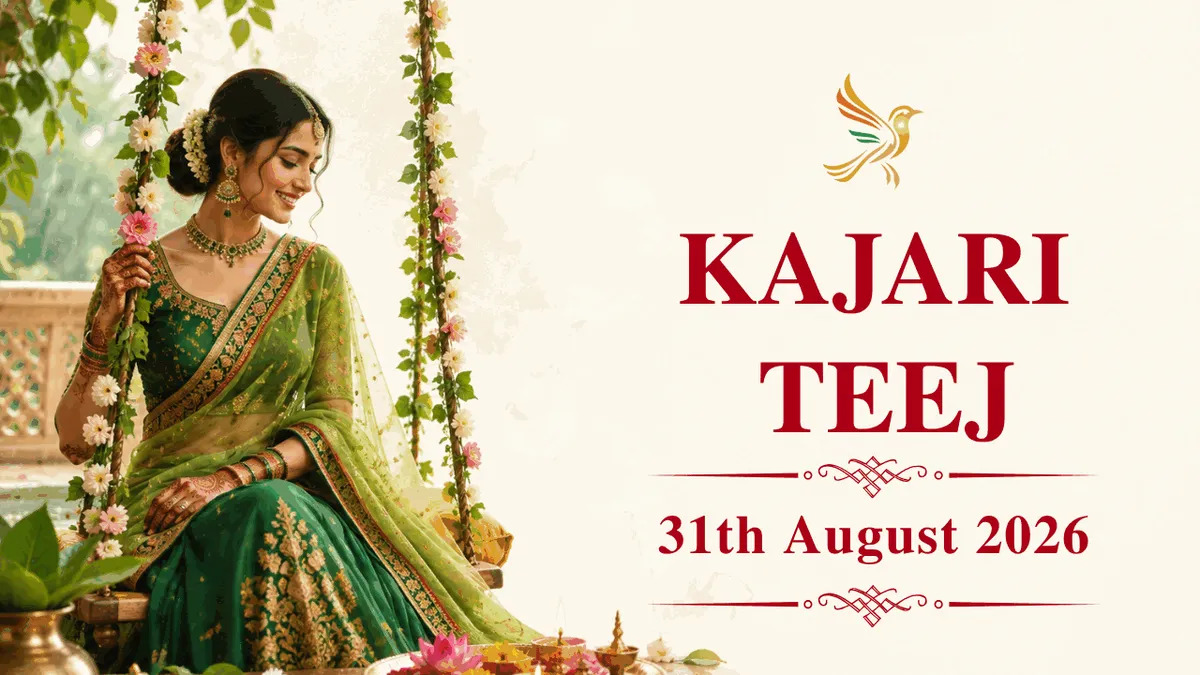
Kajari Teej 2026 will be celebrated on Monday, August 31, 2026. The festival falls on the Tritiya Tithi of Krishna Paksha in the month of Bhadrapada according to the North Indian Hindu calendar. It is one of the three major Teej festivals, along with Hariyali Teej and Hartalika Teej.
Known by names such as Kajari Teej, Kajali Teej, Badi Teej and Satudi Teej, the festival combines religious devotion, monsoon traditions, folk music and family celebrations. Women traditionally observe a vrat and worship Goddess Parvati and Lord Shiva while praying for marital happiness, family well-being and prosperity.
Also Read: Brazilian Model Larissa Responds to Allegations of Rahul Gandhi’s Vote Chori Connection
🌿 What Is Kajari Teej?
Kajari Teej is a Hindu festival that arrives during the monsoon season. The festival carries a strong connection with marriage, devotion, family relationships and the changing beauty of nature during the rainy season.
Women, particularly married women, traditionally observe the festival with prayers and fasting. Many unmarried women also participate in the vrat and pray for a suitable life partner.
The celebration has a distinctive cultural identity because of its Kajri folk songs, neem worship, traditional food, festive gatherings and Moon-related rituals.
📅 Kajari Teej 2026 Date and Tithi
Kajari Teej will be observed on August 31, 2026.
According to Panchang calculations cited by multiple sources, the Bhadrapada Krishna Tritiya Tithi begins on August 30 and ends on the morning of August 31. Since the Tritiya Tithi is present at sunrise on August 31, devotees observe Kajari Teej on that day.
Kajari Teej 2026: Monday, August 31
Tithi: Bhadrapada Krishna Tritiya
Festival season: Monsoon
Puja timings can vary according to location and the Panchang followed by a family, so devotees should check their local Panchang for precise timings.
🕉️ History and Religious Background
Kajari Teej has developed through centuries of Hindu religious and regional traditions. Like the other Teej festivals, it is closely associated with the devotion of Goddess Parvati toward Lord Shiva.
According to traditional belief, Parvati undertook severe penance and demonstrated unwavering devotion to Shiva. Devotees connect this story with the ideals of love, commitment, patience and marital devotion.
Over generations, communities incorporated their own customs into the festival. As a result, Kajari Teej today combines religious worship with regional traditions such as folk singing, neem worship, traditional foods and community gatherings.
Different regions also follow different versions of the vrat story and puja customs, so practices can vary from one community to another.
🙏 Why Is Kajari Teej Celebrated?
Kajari Teej carries both religious and cultural significance.
Married women traditionally observe the fast and pray for the long life, health and well-being of their husbands. They also seek happiness and stability in their married lives.
Unmarried women may observe the vrat while praying for a good and suitable life partner.
Devotees also worship Shiva and Parvati to seek peace, prosperity, family harmony and divine blessings. The festival provides an opportunity for families and communities to come together and preserve traditional customs.
🌺 Kajari Teej Puja Rituals
The exact rituals differ according to regional and family traditions, but devotees generally follow several important steps:
1. Begin the day with cleanliness
Devotees wake up early, take a bath and clean the place where they will perform the puja.
2. Observe the vrat
Women traditionally observe a fast according to their family and regional customs. Some follow a strict fast, while others consume fruits or permitted fasting foods.
3. Prepare the puja area
Devotees decorate the puja space and arrange images or idols of Goddess Parvati and Lord Shiva. In some regions, devotees also worship Neemdi Mata or associate the ritual with the neem tree.
4. Offer traditional items
Devotees offer flowers, water, fruits, sweets and other items according to their family tradition.
5. Listen to the vrat katha
Many devotees read or listen to the traditional Kajari Teej vrat katha during the puja.
6. Perform aarti
Devotees perform aarti and offer prayers to Shiva, Parvati and the deity worshipped in their local tradition.
7. Worship the Moon
In several traditions, women offer arghya to the Moon in the evening before concluding the fast.
🌙 Importance of Moon Worship
Moon worship forms an important part of Kajari Teej traditions in several regions.
After observing the day’s vrat, devotees may wait for the Moon to appear and offer water or arghya while praying for family happiness and well-being. The exact practice and time for breaking the fast depend on regional and family traditions.
This ritual also adds a distinctive feature to Kajari Teej and separates some of its customs from those associated with other Teej festivals.
🌳 Significance of Neem Worship
The neem tree holds a special place in several Kajari Teej traditions. Devotees may decorate or worship the neem tree and offer water and other puja items near it.
The tradition connects the festival with nature, health and the monsoon season. In some communities, Neemdi Mata becomes an important part of the day’s worship.
🎶 Kajri Folk Songs and Cultural Traditions
Music gives Kajari Teej a unique cultural character.
Women traditionally sing Kajri or Kajali folk songs, which reflect the emotions of the monsoon season. These songs often express themes of love, separation, relationships, rain and longing.
Communities in parts of Uttar Pradesh, Rajasthan, Madhya Pradesh and Bihar have particularly strong Kajari Teej traditions. Women may gather together, sing folk songs and participate in festive activities.
Through these songs, the festival preserves regional languages, folk traditions and stories and passes them from one generation to another.
🍚 Traditional Food Associated With Kajari Teej
Food also forms an important part of Kajari Teej celebrations.
Sattu has a special connection with the festival in several regions, which explains the name Satudi Teej used in some communities. Families may also prepare traditional sweets and fasting foods according to local customs.
The exact menu varies significantly between regions and families.
👩🦰 How Women Celebrate Kajari Teej
Women often wear traditional clothes, apply mehendi and participate in household and community celebrations.
Married women may dress in festive attire and offer prayers for the well-being of their families. Women may also exchange traditional gifts and sweets and spend time with relatives and friends.
The festival therefore creates a space where religious faith and social bonding come together.
🌧️ Kajari Teej and the Monsoon
The festival’s identity is closely connected with the rainy season.
The arrival of monsoon transforms the landscape with greenery and creates a natural setting for songs, gatherings and celebrations. Kajri folk music captures this seasonal mood through songs about rain, love and separation.
This connection between nature, music and devotion makes Kajari Teej culturally distinct.
🔱 Kajari Teej vs Hariyali Teej vs Hartalika Teej
Although all three festivals are called Teej, they have different identities.
- Hariyali Teej: Celebrated during the monsoon and strongly associated with greenery, swings, traditional dress and the worship of Shiva and Parvati.
- Kajari Teej: Known for Kajri folk songs, neem-related traditions, Moon worship and regional customs involving sattu.
- Hartalika Teej: Closely associated with Goddess Parvati’s devotion and penance for Lord Shiva and is widely observed with fasting and elaborate worship.
Kajari Teej therefore occupies its own important place within the broader Teej festival tradition.
🌸 Cultural Significance of Kajari Teej
Kajari Teej represents more than a religious fast. It brings together faith, family, music, food, nature and community traditions.
The festival gives younger generations an opportunity to learn traditional songs, rituals and stories from older family members. It also strengthens social connections as relatives, friends and neighbours come together to celebrate.
At the same time, modern celebrations have adapted to changing lifestyles. Many families now combine traditional puja with contemporary gatherings while continuing to preserve the festival’s cultural essence.
✨ Conclusion
Kajari Teej 2026, celebrated on August 31, will bring together devotion, tradition and the vibrant cultural spirit of the monsoon season. Women across several parts of India will observe the festival through fasting, prayers, worship and traditional celebrations.
From the worship of Shiva and Parvati to Kajri folk songs, neem traditions and Moon worship, every element reflects India’s rich cultural diversity. The festival continues to preserve centuries-old traditions while giving families an opportunity to celebrate love, faith, togetherness and prosperity.
Kajari Teej reminds us that festivals do not only preserve religious traditions; they also preserve the songs, stories, relationships and cultural memories that connect one generation with another.
Also Read: National Sports Day 2026: History, Significance and Why India Celebrates It on August 29